


US charges California tech owner over alleged $300M server smuggling scheme
A technology-company owner in California reportedly sent more than $300 million worth of computer servers subject to export regulations to China via Malaysia and Singapore, the Justice Department says.
The case illustrates a fundamental challenge for the US export control regime: ensuring that restricted AI-related hardware does not make it into the hands of unauthorized parties means not only making sure no such components are sold out of the country, but also tracking their movements in a global supply chain.
The charges against Greg Lui and Earthmade Computer
Greg Lui, 38, who is also known as “Yiu Kong Lui,” is the founder of Earthmade Computer Inc., a tech company located in the City of Industry, California. He was arrested on October 1 for allegedly contravening US export laws, for smuggling, and for engaging in money laundering, among other allegations that are still under investigation.
As the US prosecutors claim, between 2023 and 2024 Lui and his accomplices procured expensive servers that contained GPUs manufactured in the U.S., filled in false documents with fictitious destinations and end-users, and exported the systems via Malaysia and Singapore to China.
A January 2024 deal was for 27 servers valued at $7.6 million. From January to October 2024, Earthmade received in excess of $176 million from two shipping companies based in Malaysia believed to be connected to this scheme.
This defendant allegedly used false paperwork and shipments through third countries to smuggle more than $300 million in export-controlled computer servers to China.
— First Assistant US Attorney Bill Essayli, US Department of Justice
Why Malaysia and Singapore sit at the center
The alleged pathway is significant as U.S. regulations may apply to advanced-computing equipment after its initial foreign destination.
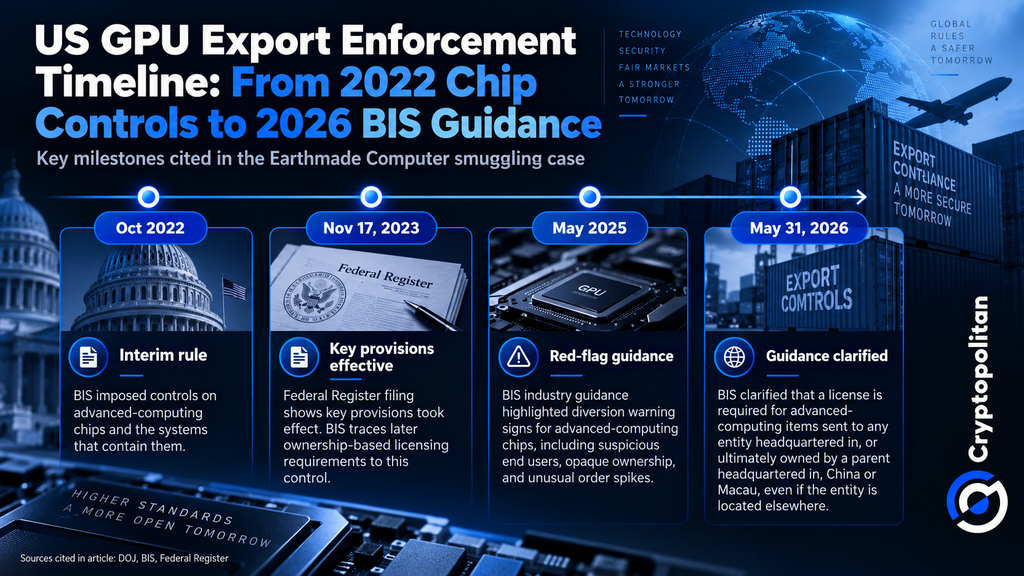
In guidance outlined in May 2026, the Bureau of Industry and Security explained that licensing obligations may exist when the covered items end up in the hands of entities that are organized, or that have parents whose headquarters are in China, Macau, or other Country Group D:5 countries, even when the recipient of the items has a different location.
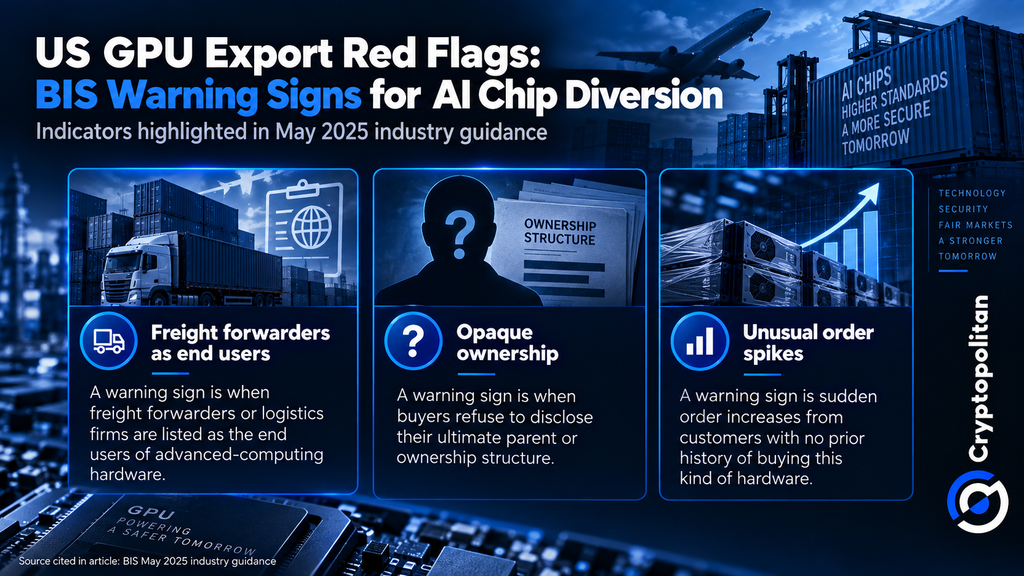
In an earlier release, BIS has provided guidance on red flags that a diversion is taking place, which includes freight forwarders or logistics firms acting as end users, buyers not wanting to disclose the name of their ultimate parent company, and sudden increase in orders by customers with little previous purchasing history.
From the October 2022 rules to tightening enforcement
The US began restricting the export of advanced-computing chips in October 2022, and this regulation has been tightened multiple times since. The Federal Register regulation provided more details in 2023.
A September report from CSIS says that export regulations might limit access to strategic technological solutions, but might also encourage circumvention and domestic substitution. The general conclusion is that regulations function best when combined with investment in research, talent, and manufacturing.
The access gap controls are meant to close
China’s demand for AI compute is still rising. TrendForce points to major infrastructure spending, while access to advanced logic, high-bandwidth memory, and CoWoS packaging remains constrained. BCG similarly argues that US and Chinese AI strategies are pushing the two markets toward increasingly separate technology ecosystems.
The boundary is not absolute, however. Cryptopolitan has reported that Nvidia’s RTX Pro 5500 may fall outside existing restrictions, while some Chinese companies have received licenses to buy H200 chips.
That is what makes the Earthmade case significant: enforcement now depends not only on which chips are restricted, but on who ultimately receives them and how they get there.
The smartest crypto minds already read our newsletter. Want in? Join them.
บทความแนะนำ


