


How Will the U.S.-Iran Situation Evolve? What Is Behind the Nasdaq’s Record High?

 Trending Articles
- Gold Price Forecast: US Non-Farm Payrolls Miss Expectations, Gold Surges Over $100, Can the Bull Run Continue?
- Trump's Account May Contain BTC. US President Proposes Another Bitcoin Policy, Just Another Political Talk Show?
- Gold declines as Trump scraps Iran memorandum, markets await Fed minutes
- US President Trump: I think MoU with Iran is over
- Gold Price Forecast: XAU/USD struggles to extend recovery above 20-day EMA
- Gold gains momentum above $4,100 after weak US NFP data
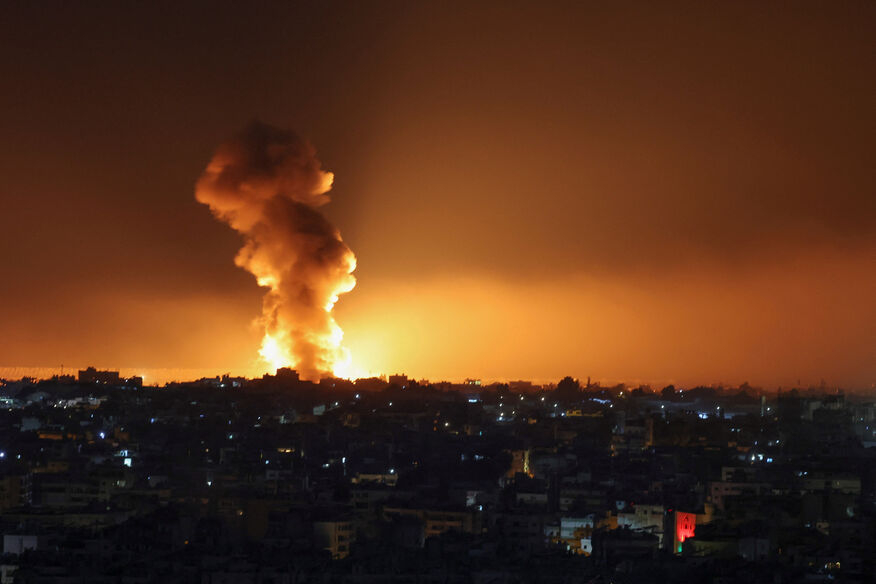
TradingKey - The conflict in the Middle East escalated further over the weekend. Optimistic signals released by Trump were refuted by the Iranian side. According to Reuters, the U.S. military seized an Iranian cargo ship that attempted to breach its blockade, while Iran stated it would not participate in the second round of peace talks, despite President Trump's threat to launch a new round of air strikes.
Reportedly, the U.S. has maintained a blockade of Iranian ports. Meanwhile, Iran temporarily lifted and then reinstated its blockade of the Strait of Hormuz. It is worth noting that the two-week temporary ceasefire between the U.S. and Iran will expire on Tuesday night. Developments in the coming days will be crucial in determining whether both sides return to the negotiating table or if conflict resumes.
Although the short-term geopolitical situation remains uncertain, the market has provided a different answer: the Nasdaq recorded its 13th consecutive daily gain and hit a record high on April 17, reaching an intraday high of 24,519.51 points and closing at 24,468.48, an increase of 1.52%.
Behind the record highs in US stocks is not a broad-based rally, but a "sentiment bull market" in tech stocks.
Catalyzed by recurring news regarding the "reopening" of the Strait of Hormuz, the three major U.S. stock indices have fully recovered their losses since the conflict began. However, even within the same market, discrepancies between different assets persist: while the Nasdaq has reached new highs, the Dow Jones Industrial Average continues to lag significantly; while the stock market hits record peaks, oil prices and U.S. Treasury yields remain elevated, and gold has yet to return to its pre-conflict levels. Beneath the surface of a seemingly strengthening market lies a deep divergence in asset price trends across various sectors.
At the sector level, structural divergence revolves around two primary themes: oil price shocks and a contraction in risk appetite. The technology sector—including semiconductor stocks and tech hardware—has been the primary driver behind the market's new highs, while the most significant corrections have been concentrated in durable goods and transportation. A common characteristic of these tech stocks is that the direct impact of geopolitical conflicts and oil price volatility is far less than that on midstream and downstream sectors where energy is a major cost. In other words, the rally in tech stocks is primarily driven by a combination of the equity risk premium and earnings expectations.
Simply put, assets hitting periodic highs only need to rely on market optimism stemming from the easing of tensions, without having to face the substantial earnings pressure brought about by high oil prices.
Citigroup holds a similar view, noting in a research report that while earnings per share (EPS) across all global sectors are expected to grow by 2026, approximately 50% of that incremental growth is projected to come from the technology sector. This highly concentrated earnings structure is the core logic behind the bullish stance on U.S. equities—the rising weight of American tech companies in global earnings growth gives U.S. stocks a structural advantage in global allocations. The firm further noted that expectations for a de-escalation in the Middle East have, to some extent, reduced the tail risk of oil-driven inflation, leading it to upgrade U.S. equities to an "Overweight" rating.
How will the US-Iran geopolitical landscape evolve? What will be the impact on the market outlook?
Since the early stages of the conflict starting on February 28, hostilities have continuously escalated. Iran announced the closure of the Strait of Hormuz and shifted from temporary waterway controls to a normalized blockade, fueling market concerns over tail risk (Tail Risk). During this phase, geopolitical risk premiums began to be steadily priced into various asset classes, with market prices primarily revolving around energy shocks and panic-driven liquidity sell-offs. This phase was characterized by energy assets rising in isolation while all other assets declined.
As both sides signaled a de-escalation through dialogue, some assets insensitive to energy prices have rebounded. This suggests the market has largely priced out the tail risk associated with extreme conflict.
Currently, significant differences remain between the U.S. and Iran on core issues such as passage through the Strait of Hormuz and uranium enrichment, making a comprehensive short-term resolution unlikely. However, from a macro perspective, crude oil prices and pressures from U.S. Treasury yields may serve as key drivers pushing both parties back to the negotiating table.
For the U.S., rising oil prices and interest rates impose the dual constraints of inflation and higher financing costs, which in turn dampen consumer spending and corporate investment.
For Iran, a prolonged blockade of the Strait of Hormuz would similarly impair its own crude exports and fiscal revenue. On April 12, the U.S. announced a blockade of the outer Persian Gulf, a move that directly severed Iran's primary channels for oil shipments and foreign trade, significantly increasing Iran's fiscal and economic costs.
Therefore, looking ahead from the current juncture, escalating the conflict does not align with the core interests of either party. Future scenarios will likely alternate between recurring tactical maneuvering and a definitive resolution of the conflict.
CICC has modeled the following two scenarios:
Scenario 1: The situation in Iran enters a stalemate characterized by intermittent skirmishes that neither escalate systematically nor lead to a swift comprehensive agreement. Oil prices would likely continue to fluctuate around previous mean levels. In this scenario, extreme geopolitical risks would continue to trend downward, overall risk appetite would not experience a systemic contraction, and the market would maintain its structural trend, with technology remaining the core theme.
However, it is important to note that sustained high oil prices would drive up midstream and downstream manufacturing costs, potentially weighing on pro-cyclical sectors such as resource-based industries, financials, and traditional consumer sectors.
Scenario 2: Tensions in Iran ease comprehensively in the short term, and a formal ceasefire agreement is reached, triggering a rapid decline in oil prices.
Under this scenario, pro-cyclical, global trade, and macro-demand sectors previously suppressed by rising oil prices and geopolitical risks would likely see a valuation recovery. Once prices return to a reasonable pre-event range, market performance would again be driven by industrial cycles. Meanwhile, the technology sector, which led the previous rally, is unlikely to experience a deep correction, seeing instead a periodic rebalancing of the market's main themes.
Overall, regardless of which geopolitical scenario unfolds, structural industrial themes will remain the market's primary focus. The continued dissipation of tail risks also provides a relatively favorable environment in terms of liquidity and risk appetite for structural market trends.
Read more
* The content presented above, whether from a third party or not, is considered as general advice only. This article should not be construed as containing investment advice, investment recommendations, an offer of or solicitation for any transactions in financial instruments.


