


If a Stock Market Crash Is Coming in 2027, Warren Buffett’s Advice Makes My Next Move Clear
Key Points
A 2027 crash can't be ruled out, so investors should have a plan in place ahead of time.
With a diversified portfolio, investors can insulate themselves from the worst outcomes during a crash.
Buffett’s 2013 letter advocates low costs, broad stock ownership, and spreading purchases over time.
- Motley Fool Issues Rare "Total Conviction" Buy Alert ›
Volatility has returned to the stock market. Since hitting a record high on Oct. 6, 2026, the Nasdaq Composite has dropped more than 10%. That leaves many investors asking a rational, if concerning, question: Is a stock market crash on the horizon?
This anxiety leads many investors to pull up stakes and retreat from the market altogether. That strategy creates a new problem: when to get back into the market.
Missed AI’s "Act 1"? Act 2 Could Be 15x Bigger. Most investors think they missed the AI boat because they didn't buy Nvidia in 2005. But according to our analysts, we’re only at the end of "Act 1"—the R&D phase. "Act 2" is the global rollout. Continue »
Therefore, I would suggest that during volatile periods – like right now – investors should take a page from Warren Buffett's playbook. Namely, build an investing strategy and schedule that can withstand volatility. Here's how to do it.
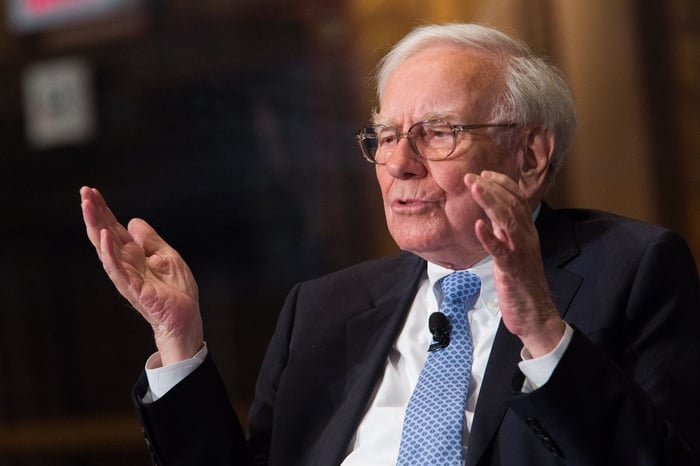
Image source: Getty Images.
You do not need to predict the next crash
First things first, investors don't need to be fortune tellers. Indeed, even if someone could accurately predict market crashes, they would still need to accurately predict market bottoms – something that is just as unlikely as predicting tops.
A better strategy accepts that negative outcomes are inevitable, but rare, and can be mitigated with some planning.
To illustrate, think of someone who enjoys spending time outdoors but wants to avoid getting soaked by the rain. They could be 100% sure to avoid the rain by canceling every outdoor activity for the next year, but that would be a massive hassle. Conversely, they could simply check the weather forecast each morning and carry an umbrella on days when the chance of rain is high.
Buy a collection of businesses
Once investors have planned for downturns, they can focus on which investments best carry them safely through volatile periods. Here, it's best to turn directly to the Oracle of Omaha for advice.
Rather than chasing short-term market fads, Buffett has advised investors to take long-term positions in real businesses they can easily understand. That's why Buffett's Berkshire Hathaway (NYSE:BRKB) (NYSE:BRKA) has owned large stakes in companies like Coca-Cola (NYSE:KO), American Express (NYSE:AXP), and Moody's (NYSE:MCO) for decades.
By stretching the time horizon out to 10, 20, 30 years or more, recent interest rate movements, unemployment reports, and GDP forecasts all fade in importance. Over long periods, what matters most is whether a company's business model is resilient and whether its management team is guiding it properly.
To borrow a line from Buffett himself, he quipped that he looks for companies so wonderful that "an idiot can run them, because sooner or later, one will."
Make the next purchase small enough to repeat
Once you have the right mindset and the right stocks on your watch list, it's time to talk execution. A great strategy will still fail if it's not executed properly. Therefore, it's best to write rules that can be followed – even on a bad day.
Start small. If a person can only put $10 in the market each month, it's better than nothing. Raise the contribution amount when possible. Ensure there's an emergency reserve, separate from investment funds, for unexpected bills, large purchases, and similar expenses.
Finally, remember that investing during volatile periods can be emotionally taxing. Find ways to see the bright side when the market is moving lower. If a normal monthly contribution of $100 normally buys 1 share of stock, remind yourself that during volatile periods, $100 might buy 1.5 shares. Over time, those additional shares will add up.
The big takeaway
No one knows what 2027 holds. A stock market crash could be on the way, but that won't keep anyone from investing. Instead, stick to the investing strategy and rules laid out by one of the best to ever do it: Contribute regularly, invest in great companies, and play the long game.
Over time, that strategy made Warren Buffett one of the wealthiest people on the planet, and it can no doubt help many others achieve their financial goals – regardless of whether a stock market crash is on the horizon.
Should you buy stock in NASDAQ Composite Index right now?
Before you buy stock in NASDAQ Composite Index, consider this:
The Motley Fool Stock Advisor analyst team just identified what they believe are the 10 best stocks for investors to buy now… and NASDAQ Composite Index wasn’t one of them. The 10 stocks that made the cut could produce monster returns in the coming years.
Consider when Netflix made this list on December 17, 2004... if you invested $1,000 at the time of our recommendation, you’d have $335,171!* Or when Nvidia made this list on April 15, 2005... if you invested $1,000 at the time of our recommendation, you’d have $1,000,640!*
Now, it’s worth noting Stock Advisor’s total average return is 823% — a market-crushing outperformance compared to 208% for the S&P 500. Don't miss the latest top 10 list, available with Stock Advisor, and join an investing community built by individual investors for individual investors.
See the 10 stocks »
*Stock Advisor returns as of November 16, 2026.
American Express is an advertising partner of Motley Fool Money. Jake Lerch has positions in Coca-Cola. The Motley Fool has positions in and recommends American Express, Berkshire Hathaway, and Moody's. The Motley Fool has a disclosure policy.
Recommended Articles


