


Amazon Plans to Sell Data Center Stakes at $5 Billion Valuation to Free Up Capital for AI Infrastructure
TradingKey - Amazon (AMZN) plans to bring in external capital by transferring stakes in certain data centers and leasing back the facilities on a long-term basis, reducing capital tied up in property holdings while retaining AWS's right to use the facilities.
On November 16, Eastern Time, Blackstone Digital Infrastructure Trust (BXDC) announced that it has signed an agreement to acquire a 75.1% controlling stake in two Amazon data center joint ventures at an overall asset valuation of approximately $5 billion.
The transaction involves 13 newly constructed data center buildings located in northern Indiana and Mississippi, with a total installed IT capacity of 647 megawatts. An Amazon affiliate will retain a 24.9% non-controlling interest, while AWS will lease all facilities on a long-term basis. The transaction is expected to close in the fourth quarter of 2026.
Following the announcement, as of press time, BXDC rose nearly 8% in pre-market trading, while Amazon fell 0.75%.
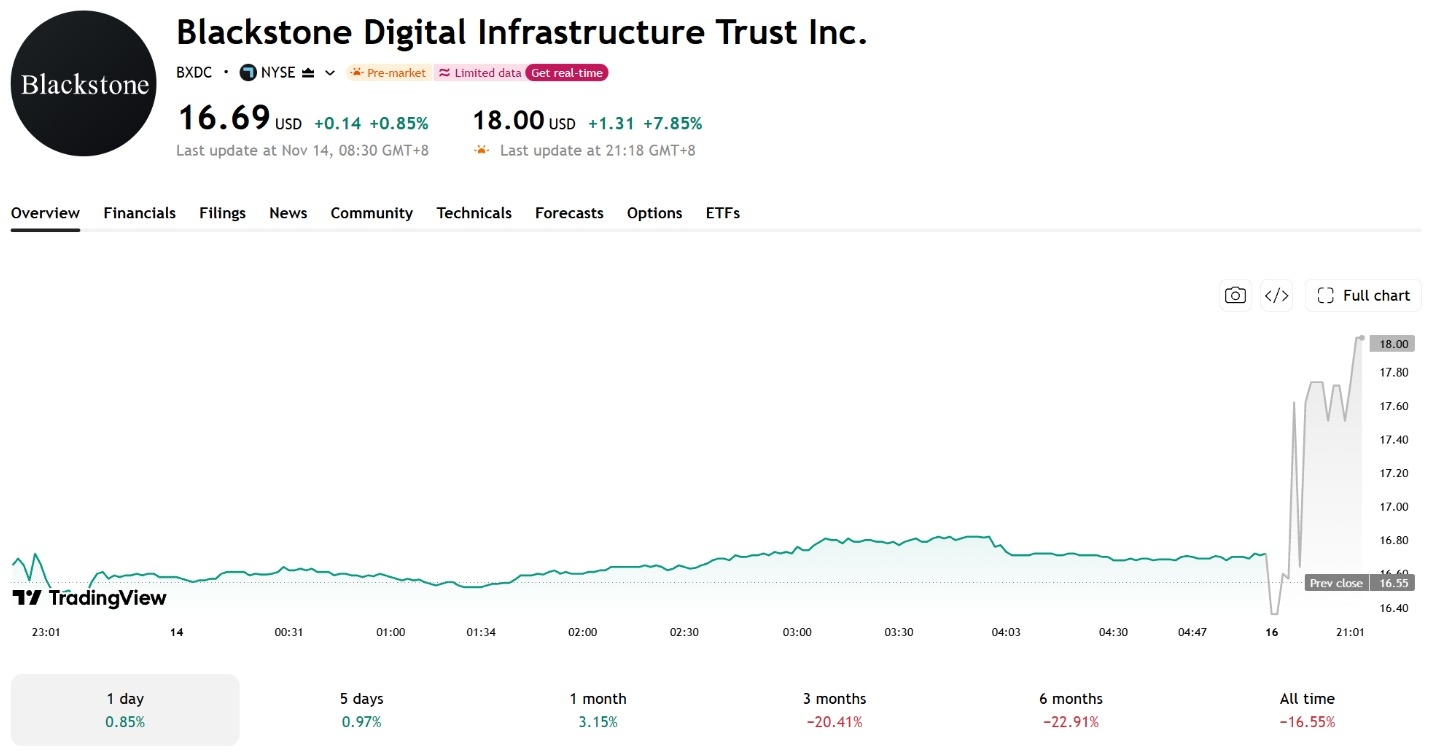
[Source: TradingView]
Why Did Amazon Bring In Blackstone to Invest in Data Centers?
The transaction employs a sale-and-leaseback structure. By transferring a controlling interest in the data center projects, Amazon brings in external capital and reduces capital tied up in property holdings.
As demand for generative AI grows, AWS continues to scale up investments in data centers and computing power, placing Amazon under substantial capital expenditure pressure. Bringing in Blackstone helps recoup capital, freeing up capacity for subsequent infrastructure investments.
Following the transaction, AWS will continue to lease all 13 data centers under long-term agreements, while Amazon affiliates will also retain a 24.9% stake in the projects. This means Amazon can retain the right to use the facilities while introducing external capital to share construction and holding costs.
However, whether the gains from releasing this capital can cover long-term lease costs still depends on subsequent investment returns.
Amazon Unlocks Capital as BXDC Secures Long-Term Rent
According to BXDC's SEC filing, the transaction involves two data center projects with a total asset value of approximately $5 billion and an initial capitalization rate of 7% based on total assets.
Funding for the transaction primarily comes from two sources: BXDC plans to contribute approximately $1.9 billion in net proceeds from its IPO, while a wholly owned subsidiary of the joint venture plans to seek approximately $2.5 billion in non-recourse mortgage loans secured by the underlying properties.
An Amazon affiliate will inject the data center assets into the joint venture, retaining a 24.9% equity stake valued at approximately $600 million while receiving cash distributions. The related funding comes primarily from BXDC's contribution and the project mortgage loans.
Notably, the $5 billion figure represents the total asset value of the two projects rather than the actual cash received by Amazon, and the approximately $2.5 billion loan is assumed by the joint venture rather than being direct borrowing by Amazon.
Following the transaction, AWS will continue to lease all 13 data centers. The leases have an average initial term of 12 years, which can be extended to an average of 32 years if renewal options are exercised. Rents will increase by 2.75% annually, with related payments guaranteed by Amazon's parent company.
The leases are structured as triple-net leases, requiring AWS to cover contractually stipulated property taxes, insurance, and maintenance expenses in addition to paying rent.
For Amazon, the deal allows it to recoup a portion of its capital while continuing to use the data centers, though it will still need to pay long-term rent going forward. For BXDC, investing in these projects enables it to secure rental income generated by Amazon's long-term leases.
What Does This Deal Mean for Amazon?
This transaction will not directly increase AWS's computing capacity or cloud computing revenue. The 13 data centers involved have a combined IT power capacity of 647 megawatts, representing the scale of existing projects rather than new computing capacity added by the deal.
For Amazon, the transaction allows it to recoup part of its capital, freeing up room for investments in AI infrastructure. However, AWS will still need to pay rent over the long term, with an annual increase of 2.75%, and bear contractually agreed property taxes, insurance, and maintenance expenses.
Therefore, what investors should focus on is not the change in data center ownership itself, but whether Amazon can leverage the freed-up capital to achieve higher returns, and whether AWS's revenue and profit growth can offset the long-term lease costs.
Overall, the transaction enables Amazon to reduce the capital tied up in property ownership, but does not eliminate the long-term costs of using the data centers. Ultimately, whether it improves returns on capital depends on whether subsequent investment returns can exceed leasing costs.
Recommended Articles


