


Microsoft, Amazon Jump Over 6% as Cloud Giants Rally: Midterm Uncertainty Fades, Meta Financing Progress Supports Buying
TradingKey - On November 4 US Eastern Time, hyperscale cloud providers surged across the board, driving the Nasdaq Composite Index up over 2% at one point. Microsoft (MSFT), Amazon (AMZN), Google (GOOGL), and Meta (META) staged a strong collective rebound. Market concerns over tighter AI regulation briefly mounted after the Democrats won control of both houses of Congress, but the swift clarity of election results and declining U.S. Treasury yields provided breathing room for tech stocks that had faced previous sell-offs.
Meanwhile, sustained growth in cloud businesses and financing progress among major tech companies also provided a basis for investors to re-evaluate stock prices.
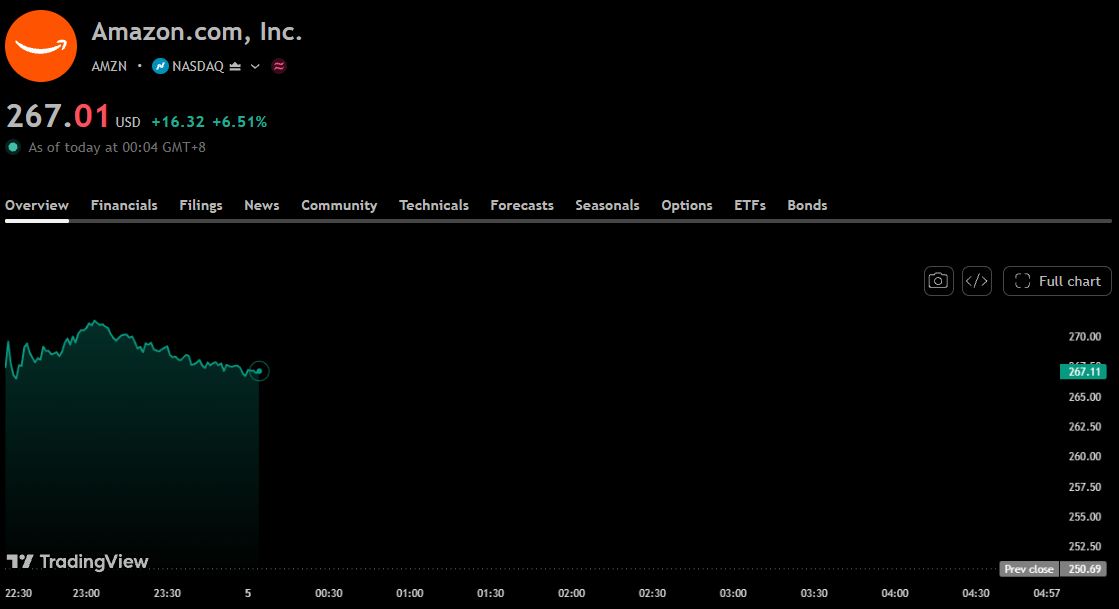
Amazon stock price chart, source: TradingView
Midterm Election Uncertainty Fades, Low Tech Stock Positioning Creates Conditions for Rally
According to Reuters, Nasdaq 100 Index futures fell by as much as 2.4% following the announcement of the election results, before recovering losses after US President Donald Trump accepted the outcome. A clear result explicitly reduced the risk of prolonged political dispute, prompting the market to reassess previous safe-haven trades.
Democratic control of Congress could increase scrutiny of AI and data centers, though policy changes would still require legislative and enforcement processes. However, Barclays told Bloomberg that given Trump's support for AI, concerns over a nationwide US ban on data centers are unrealistic.
Earlier position reductions also set the stage for a rebound. Deutsche Bank noted that tech stock positioning had dropped significantly, pricing in substantial risks regarding AI demand and post-election regulatory pressure. Consequently, when the outcome materialized without an immediate, harsher policy shock, investors rebuilding positions served to amplify the gains.
Meanwhile, interest rate movements provided additional support. Reuters reported earlier that morning that the 10-year US Treasury yield fell to 4.92% from around 4.95% on the previous trading day, after touching 4.89% overnight. The pullback in yields helped ease pressure on discounting future tech earnings.
Cloud Growth and Meta Financing Support Tech Stock Recovery
Recent financial reports show that cloud computing demand remains strong. Microsoft's Azure revenue for the quarter ended late September grew 48% year-over-year. During the same period, Amazon's AWS revenue increased 39.3% to $46 billion, with operating profit rising from $11.4 billion in the prior-year period to $17.8 billion, demonstrating that business expansion is delivering tangible profit growth.
Google Cloud's third-quarter revenue grew 103% year-over-year to $30.7 billion, with operating profit reaching $11.1 billion and the profit margin expanding from 23.7% to 36.2%. Sales of TPU systems also contributed to revenue growth. These data points released last week provide fundamental support for valuation recovery following a stock price pullback.
On the financing front, Meta announced on November 3 that it raised $15 billion through a five-tranche U.S. dollar bond issuance. Amid market concerns over the funding sources for AI buildouts, this development indicates that major tech companies can still secure capital market support, helping to ease fears of investment plans slowing due to financing constraints.
However, following revenue growth and secured financing, cash returns remain key to determining the sustainability of the rally. Amazon's free cash flow for the trailing 12 months ended late September still saw a net outflow of $42.4 billion. As election risks temporarily recede, the market will continue to weigh whether incremental cloud profits can gradually cover the cash burn from AI infrastructure investments.
Recommended Articles


