


Japan and South Korea Stocks Drop 3% at Open; Kospi Breaches 6,900 as Samsung Electronics, SK Hynix and Kioxia Plunge 4%
TradingKey - Japanese and South Korean stock markets plummeted at the open, with the KOSPI tumbling 3.3% to fall below the 6,900 mark as chip stocks dived across the board.
On September 11 Asian time, Japanese and South Korean stock markets both opened sharply lower in early trading, putting Asia-Pacific risk assets under pressure across the board. Among them, South Korea's KOSPI Index suffered a notable pullback, opening down 3.30% to break below the 6,900 mark, standing at 6,848.73 points; core tech chip stocks dropped sharply across the board, with Samsung Electronics falling 3.81% to lose the 260,000 mark, trading at 259,000 won; SK Hynix opened down 4.37%, trading at 1,772,000 won.
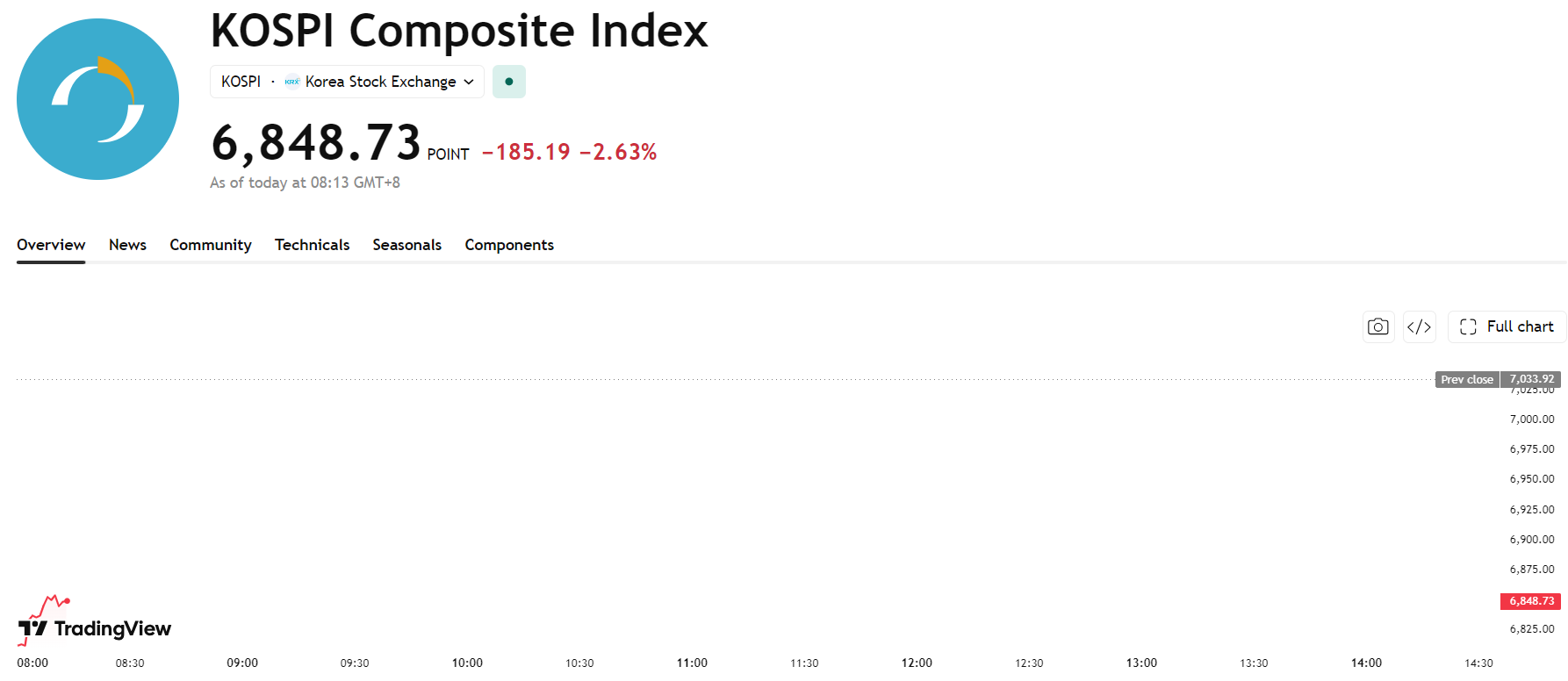 KOSPI Index Chart, Source: TradingView
The Nikkei 225 Index also opened lower and trended downward, falling 2.96% to approach the 63,000 level, standing at 63,336.18 points; two major heavyweights both faced downward pressure, with SoftBank's share price dropping 4.36% to trade at 6,513 yen; Kioxia fell 5.54% to trade at 54,870 yen.
Yesterday, the newly released U.S. inflation indicators such as the PPI exceeded expectations, pushing the market probability of a 25-basis-point Fed rate hike in September above 70%, while the expected probability of another 25-basis-point hike in October rose above 60%. As rate hike expectations mounted, the three major U.S. stock indices moved lower for the fourth consecutive trading day, with the Philadelphia Semiconductor Index slumping 2.66%, while chip giants such as Micron Technology (MU), Western Digital (WDC), and Intel (INTC) fell across the board, as the sell-off sentiment directly impacted the opening sentiment in both Japanese and South Korean markets.
In addition, the 10-year U.S. Treasury yield remained near its high of 4.85%, suppressing the valuation room for global high-valuation growth stocks and prompting foreign investors to accelerate cash-outs from Asia-Pacific emerging markets and high-beta assets in the region to wait on the sidelines. Notably, both Japan and South Korea are heavily dependent on energy imports, and the surge in crude oil prices has reignited market concerns over escalating imported inflation, rising corporate production costs, and consumer spending suppression in both countries.
Recommended Articles


