


US August CPI Preview: Will Inflation Reaccelerate? US Stocks, Dollar and Gold Face Key Test


TradingKey - On Friday, September 11 (ET), the U.S. Bureau of Labor Statistics will release the Consumer Price Index (CPI) for August, the final major inflation report before the Federal Reserve's September 15–16 policy meeting. Against the backdrop of August nonfarm payrolls coming in significantly stronger than expected, international oil prices surging past $100, and U.S. Treasury yields remaining elevated, this CPI data could directly influence market expectations regarding whether the Fed will raise interest rates in September.
Headline Inflation May Accelerate, Core Inflation Expected to Slow Further
In terms of market expectations, U.S. headline CPI for August is expected to rise 0.4% month-over-month, significantly higher than July's 0.1%, while year-over-year growth is expected to remain at 3.4%. Core CPI is projected to increase 0.2% month-over-month, flat from July, and further decline from 2.5% to 2.4% year-over-year.
Recent conflicts in the Middle East have continued to disrupt energy supplies, with Brent crude breaking above $100 and U.S. diesel and other energy prices rising in tandem. Consequently, the market currently expects headline CPI month-over-month growth to rise from 0.1% to 0.4%, making energy a potentially significant factor driving the acceleration in August's headline inflation.
However, core inflation expectations have not risen in tandem. The market expects core CPI, which excludes food and energy, to remain at 0.2% month-over-month, with year-over-year core growth slowing from 2.5% to 2.4%. If the final data aligns with these forecasts, it implies that U.S. inflation may exhibit a structure where energy drives up headline prices while underlying inflation continues to cool slowly.
For investors, the primary focus should be on core CPI as well as sub-components such as shelter and services in this release. If headline CPI exceeds expectations but is mainly driven by gasoline and energy prices while core CPI remains around 0.2%, the Federal Reserve may assess persistent inflation pressures with relative caution. On the other hand, if month-over-month core CPI rises to 0.3% or higher, it would imply that price pressures extend beyond energy and that the cooling of underlying inflation may be slower than previously anticipated.
It is worth noting that the U.S. labor market had previously shown strong resilience. Nonfarm payrolls increased by 162,000 in August, well above market expectations of approximately 56,000, with the unemployment rate holding steady at 4.1%. Following the data release, the market-implied probability of a 25-basis-point rate hike in September briefly rose from 52% to 61% and currently remains around 60%.
If both headline and core CPI for August exceed expectations, particularly if month-over-month core CPI tops 0.2%, it could bolster the case for the Federal Reserve to further hike rates in September. Conversely, if headline CPI is pushed up by energy while core inflation continues to cool, considerable uncertainty will remain regarding policy decisions in September. Federal Reserve Governor Waller previously stated that if upcoming data continues to show progress toward the 2% inflation target, he would lean toward supporting keeping interest rates unchanged.
How Will August CPI Release Affect US Stocks, the Dollar, and Gold?
Regarding U.S. equities, one of the main macroeconomic pressures currently facing U.S. stocks is elevated U.S. Treasury yields. On September 9, the 10-year U.S. Treasury yield rose to around 4.84% at one point, while the S&P 500 Index fell 0.48% and the Nasdaq Composite Index fell 0.64% over the same period.
If August core CPI is significantly higher than the market expectation of 0.2%, the probability of Fed rate hikes and bond yields could rise further, weighing on high-valuation tech and growth stocks; if core CPI meets or comes in below expectations and indicates that underlying inflation continues to cool, U.S. Treasury yields could have room to pull back, which would be relatively favorable for tech stock valuations.
Regarding the U.S. dollar, it has not strengthened continuously despite rising expectations for U.S. rate hikes, partly because expectations also exist for further policy tightening by the European Central Bank and the Bank of Japan. If core CPI comes in above 0.2% while the market further prices in Fed rate hikes, short-term U.S. Treasury yields may gain support, which would be relatively favorable for the dollar; if core CPI is lower than expected while the overall increase stems mainly from gasoline and energy, the support received by the dollar may be limited.
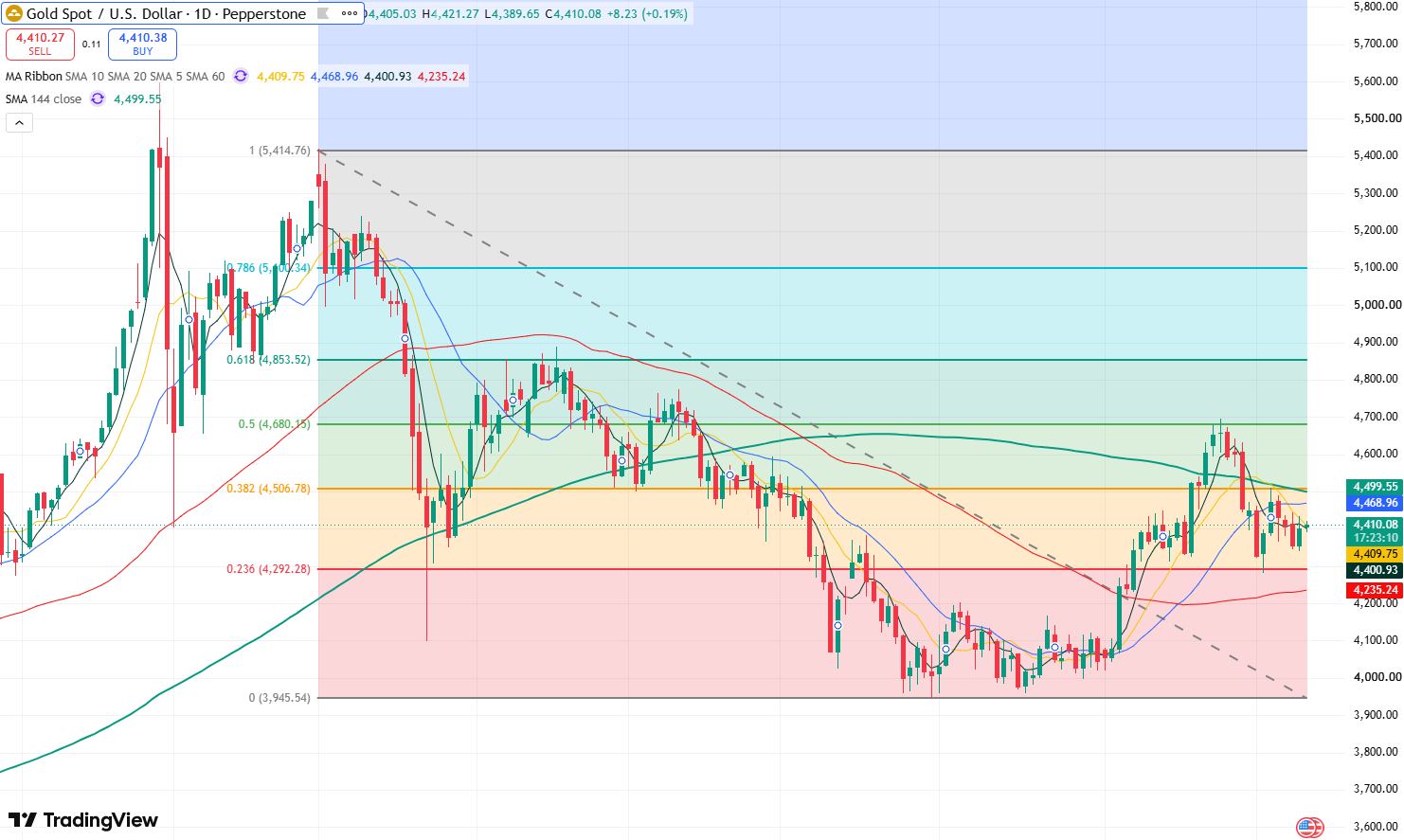
Gold price daily chart, Source: TradingView
Regarding gold (XAUUSD), as the 10-year U.S. Treasury yield recently rose to its highest level since November 2023, gold faces heavy upside pressure. If core CPI comes in significantly higher than expected and prompts the market to further raise rate hike probabilities, gold may continue to be affected by U.S. Treasury yields and remain under pressure to pull back, potentially retesting the $4,300 support level on the downside. If this level fails to hold, gold prices could pull back toward $4,200.
If headline CPI rises but core CPI continues to drop to around 2.4%, the market may ease concerns over persistent inflation re-accelerating, providing a degree of support for gold. Gold prices are expected to test $4,500 on the upside and may even challenge the $4,700 threshold.
Read more
* The content presented above, whether from a third party or not, is considered as general advice only. This article should not be construed as containing investment advice, investment recommendations, an offer of or solicitation for any transactions in financial instruments.


