


Brent Crude Surpasses $100 Mark as Escalating Middle East Conflict Sparks Market Concerns


TradingKey - On September 9, Brent crude futures broke above $100 per barrel intraday, crossing this threshold for the first time since July 24. As the military conflict between the US and Iran continues to escalate, market concerns that Persian Gulf crude oil exports and shipping through the Strait of Hormuz could face more severe disruption have driven a rapid rise in oil risk premiums.
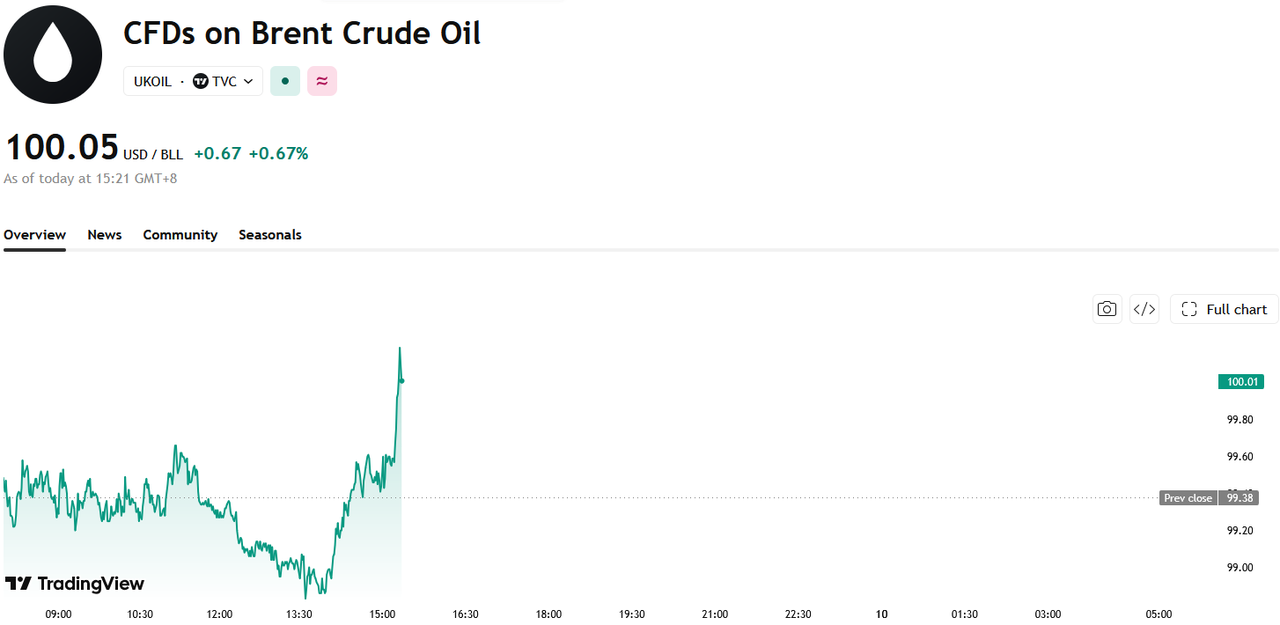
Source: TradingView
The latest round of oil price gains stems from the US military announcing the destruction of five Iranian tankers, calling it a response to Iran's previous attacks on US naval assets. Subsequently, Iran launched missile attacks against US targets in Jordan and warned Gulf states including Kuwait and Bahrain against providing support to US forces, further deteriorating regional tensions.
Meanwhile, Iran-backed Houthi forces attacked multiple targets in southern Saudi Arabia, impacting energy and economic facilities. Saudi officials stated that fires broke out at several energy facilities, including the Jazan refinery, with overall damage currently under assessment. US Secretary of State Rubio also stated that Washington will continue to strike Iran-related tankers, heightening market concerns over a further expansion of the regional conflict.
The Strait of Hormuz is the central focus of the market. As a crucial global oil transportation route, shipping activity in the strait has declined significantly recently, and Iran has also announced plans to establish a maritime exclusion zone nearby. Although some tankers are still passing through and Persian Gulf oil producers are seeking alternative transport routes and ports, the risk of supply chain disruptions is steadily rising.
Goldman Sachs (GS) previously warned that if attacks on Middle Eastern shipping and energy facilities continue to escalate and transport disruptions are prolonged, crude oil prices could even rise further to $120 per barrel.
Read more
* The content presented above, whether from a third party or not, is considered as general advice only. This article should not be construed as containing investment advice, investment recommendations, an offer of or solicitation for any transactions in financial instruments.


