


The Probability of a July Fed Rate Hike Has Tripled Over the Last Week -- Here's Why
Key Points
As of July 22, there's a nearly 35% chance that the Federal Open Market Committee (FOMC) will raise interest rates at its July 28-29 meeting.
Three catalysts appear to be fueling the growing possibility of a Fed rate hike.
Making borrowing costlier may prove devastating to a historically expensive stock market that's being driven by a partially debt-financed artificial intelligence data center build-out.
- 10 stocks we like better than S&P 500 Index ›
Throughout history, the Dow Jones Industrial Average (DJINDICES: ^DJI), S&P 500 (SNPINDEX: ^GSPC), and Nasdaq Composite (NASDAQINDEX: ^IXIC) have demonstrated a knack for climbing the proverbial wall of worry. Thus far, geopolitical concerns stemming from the Iran war haven't stopped Wall Street's major stock indexes from reaching new highs.
However, inflation isn't a concern that's easily swept under the rug -- just ask the policymakers at the Federal Reserve.
Where to invest $1,000 right now? Our analyst team just revealed what they believe are the 10 best stocks to buy right now, when you join Stock Advisor. See the stocks »
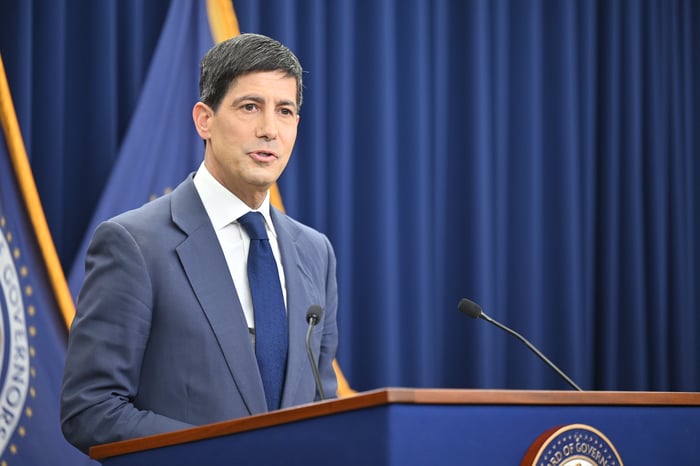
A tough decision on interest rates awaits Fed Chair Kevin Warsh and the FOMC next week. Image source: Official Federal Reserve Photo.
The probability of a July FOMC rate hike has soared over the last week
In five days, on July 29, the 12-member Federal Open Market Committee (FOMC), including Fed Chair Kevin Warsh, will render its verdict on whether to raise or stand pat on interest rates. This decision can send shockwaves through the equity and bond markets.
On July 15, the CME Group's proprietary FedWatch Tool, which tracks 30-day Fed funds futures prices to gauge the probability of changes to the federal funds target rate at upcoming meetings, predicted a 10.7% chance of an FOMC rate hike on July 29. By July 22, the probability of the FOMC raising interest rates had more than tripled to 34.7%.
There are likely three catalysts behind this projected surge in rate-hike probability.
Rate-hike odds priced by the market for the upcoming July meeting next Wednesday have increased up to 31.5% from just 10.7% a week ago. pic.twitter.com/8rZb62cgQ8
-- Bespoke (@bespokeinvest) July 22, 2026
Firstly, peace talks between the U.S. and Iran have deteriorated throughout the month, leading to military escalation. For its part, Iran has announced yet another closure of the Strait of Hormuz. This international waterway sees a fifth of the world's liquid petroleum pass through it daily.
Choking off 20 million barrels per day of petroleum supply has sent crude oil prices significantly higher over the last week. In other words, the short reprieve consumers enjoyed at the fuel pump in recent weeks may quickly disappear.
Secondly, Trumpflation (i.e., inflation specifically driven by President Donald Trump's policies) has entered its next phase. The price stickiness of Core Personal Consumption Expenditures (PCE) indicates that the inflationary effects of the Iran war extend well beyond the energy sector.
Historically, energy supply shocks are relatively short-lived. In comparison, broad-based inflation, as indicated by Core PCE, is considerably more challenging for FOMC policymakers to combat without raising interest rates.
BREAKING: US May PCE inflation, the Fed's preferred inflation metric, rises to 4.1%, the highest reading since April 2023.
-- The Kobeissi Letter (@KobeissiLetter) June 25, 2026
Core PCE inflation rose to 3.4%, its highest since October 2023.
US inflation is now officially running at more than double the Fed's 2% target.
And thirdly, the inflationary effects of the artificial intelligence (AI) data center build-out continue to ramp up. While investors in graphics processing unit makers and memory/storage solutions suppliers are smiling from ear to ear, persistent AI hardware supply shortages, coupled with otherworldly pricing power for these businesses, are pushing up prices for consumers.
Fed Chair Warsh and the FOMC have ample justification to raise interest rates next week. But if they do, it could rightly spell the end to the stock market's AI-driven rally. Debt financing is playing a meaningful role in the AI data center build-out. If borrowing costs climb, even a minor slowdown in this expansion could leave the second-priciest stock market in history vulnerable to significant downside.
Should you buy stock in S&P 500 Index right now?
Before you buy stock in S&P 500 Index, consider this:
The Motley Fool Stock Advisor analyst team just identified what they believe are the 10 best stocks for investors to buy now… and S&P 500 Index wasn’t one of them. The 10 stocks that made the cut could produce monster returns in the coming years.
Consider when Netflix made this list on December 17, 2004... if you invested $1,000 at the time of our recommendation, you’d have $369,577!* Or when Nvidia made this list on April 15, 2005... if you invested $1,000 at the time of our recommendation, you’d have $1,301,557!*
Now, it’s worth noting Stock Advisor’s total average return is 908% — a market-crushing outperformance compared to 208% for the S&P 500. Don't miss the latest top 10 list, available with Stock Advisor, and join an investing community built by individual investors for individual investors.
See the 10 stocks »
*Stock Advisor returns as of July 24, 2026.
Sean Williams has no position in any of the stocks mentioned. The Motley Fool has positions in and recommends CME Group. The Motley Fool has a disclosure policy.
Recommended Articles


