


Tesla Q2 Earnings Slump Over 14%, Musk Backs Retail Investors: They Are Insightful
TradingKey - Global electric vehicle manufacturer Tesla ( TSLA) is experiencing its toughest week since 2026. Affected by a sharp drop in operating margin and free cash flow turning negative in the second fiscal quarter of 2026, the stock has fallen over 16% cumulatively this week, marking its largest weekly decline since December 2025.
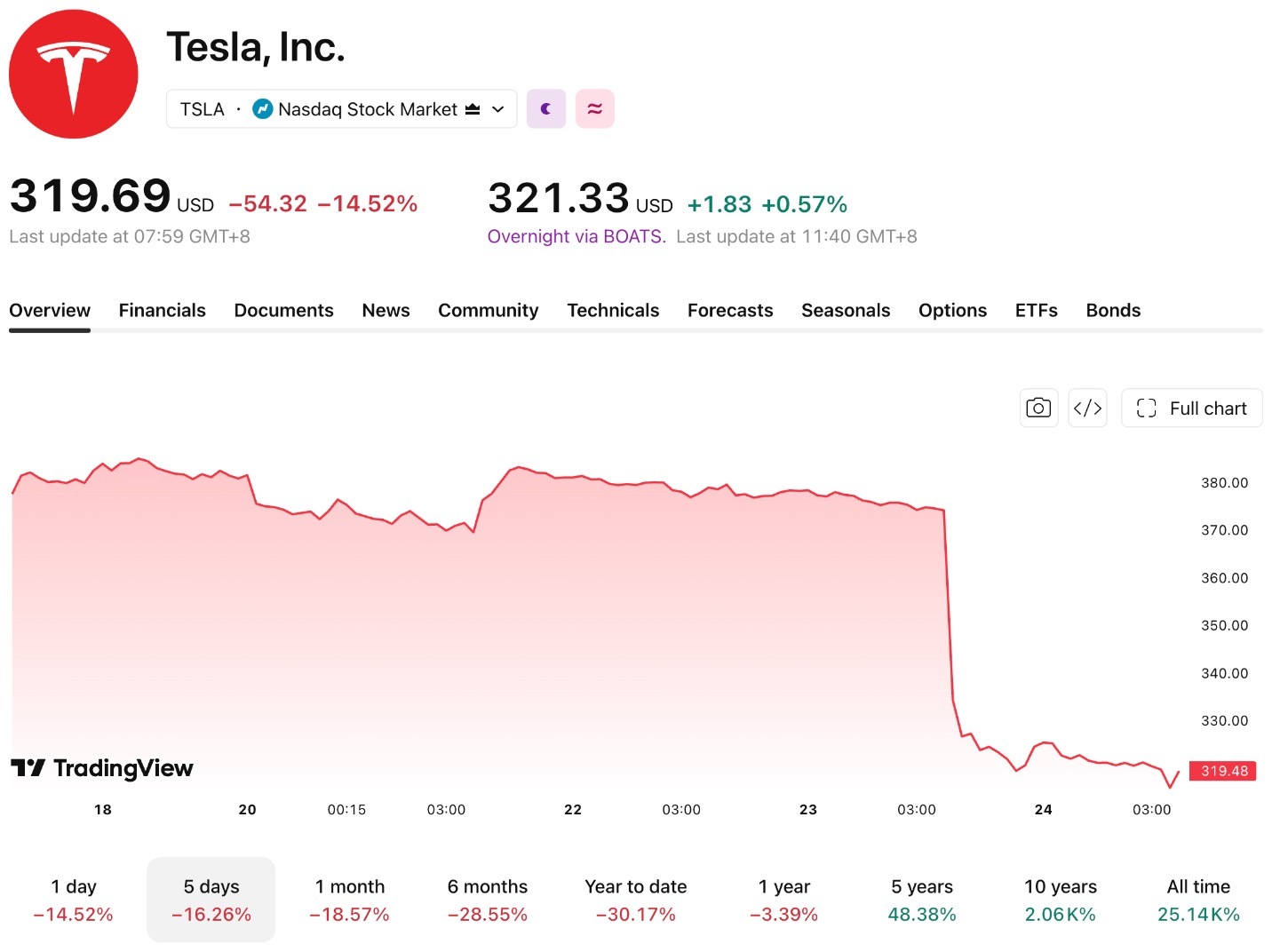
[Source: TradingView]
The second-quarter earnings report was released after market close on July 22, with revenue reaching $28.24 billion, up 26% year-over-year, and vehicle deliveries increasing by about 25% year-over-year. However, the profit side, which the market focuses on more, failed across the board: the overall gross margin fell to 16.8%, lower than the 19.4% expected by analysts; operating profit plummeted by 57% year-over-year, with the operating margin down to just 1.4%. Free cash flow turned negative for the first time in two years at -$1.09 billion.
Impacted by this, Tesla's stock price plummeted by over 14% intraday on July 23. Although it rebounded slightly post-market, overall sentiment remains fragile.
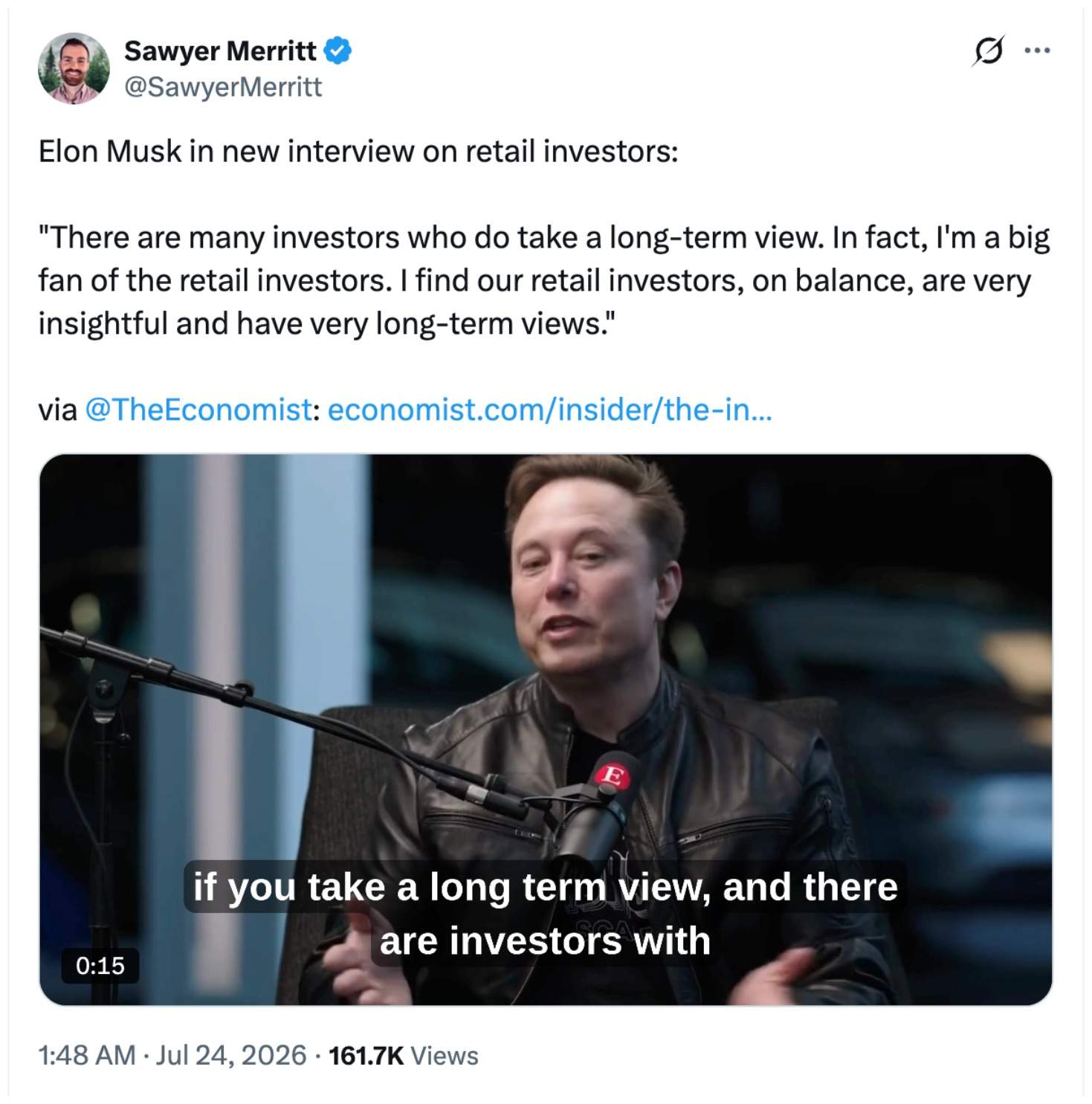
Just as several Wall Street firms cut their target prices and hedge funds were rumored to be accelerating their exit, CEO Elon Musk rarely directed public praise toward another group. In an interview with The Economist, he spoke highly of Tesla's retail investor base, saying, "There are a lot of investors who take a long-term view. In fact, I like retail investors a lot. I find that our retail investors on the whole are extremely insightful and have a very long-term view."
[Source: X]
Musk's remarks are intriguing. With the stock price retracing by about 30% from its peak, Musk did not attempt to reassure institutional analysts but instead addressed retail investors directly. In Tesla's shareholder structure, retail investors have long accounted for around 40%, higher than most mega-cap tech stocks. This group of investors, known for their sensitivity to information and holding patience, played a key role in driving the rally from 2020 to 2021. With fundamentals weakening continuously since the first quarter of this year, whether Tesla can stabilize this group of long-term holders might carry more weight for the company than any institutional rating.
It is worth noting that despite short-term pressure on the automotive business, some institutions have begun to shift their focus from quarterly deliveries to a longer-term business architecture narrative, namely the synergy between Tesla and SpaceX ( SPCX) in fields such as AI, robotics, satellite internet, and chip design. This trend has even led some investors to contemplate a more aggressive integration between the two companies.
Gene Munster, founder of Deepwater Asset Management, posted on X on Wednesday, raising his assessment of the probability of a merger between the two companies within the next few years to 90%, and stating that Tesla's long-term prospects remain positive.
The core issue right now is whether investors are still willing to believe in Musk's vision of synergies across AI, robotics, and space operations, given the weakening profitability of the automotive business. In the short term, the company's performance may not have bottomed out yet, and cautious market sentiment will likely persist.
Musk's appeal to retail investors this time does not focus on whether next quarter's performance can rebound, but rather on whether investors continue to endorse the company's long-term direction. Going forward, the market will watch whether the company can provide clearer guidance on product planning and pricing strategies.
Recommended Articles


