


SK Hynix ADR Conversion Quota 2.5% Exhausted, Arbitrage Channel Temporarily Closed, High Premium Still to Be Released
TradingKey - On July 23 Eastern Time, the Korea Securities Depository (KSD) confirmed that the initial quota for converting SK Hynix's Korean shares into ADRs has been fully exhausted, with the conversion cap set at 2.5% of the company's total outstanding shares. The KSD previously stated that it would accept two-way conversion applications starting July 29, but the depositary bank, Citigroup ( C) has not yet announced a specific conversion timetable. The actual conversion also involves procedures such as foreign exchange reporting, making it impossible to complete instantly on the day of application.
SK Hynix ( SKHY) initially issued approximately 177.9 million ADRs when it listed on Nasdaq on July 10, corresponding to 17.79 million Korean common shares, representing about 2.5% of the company's total share capital. This $26.5 billion ADR offering has fully exhausted the conversion quota. This means that until existing ADR holders first convert their depositary receipts back into Korean shares to release quota, investors are temporarily unable to initiate new conversions from Korean shares to ADRs.
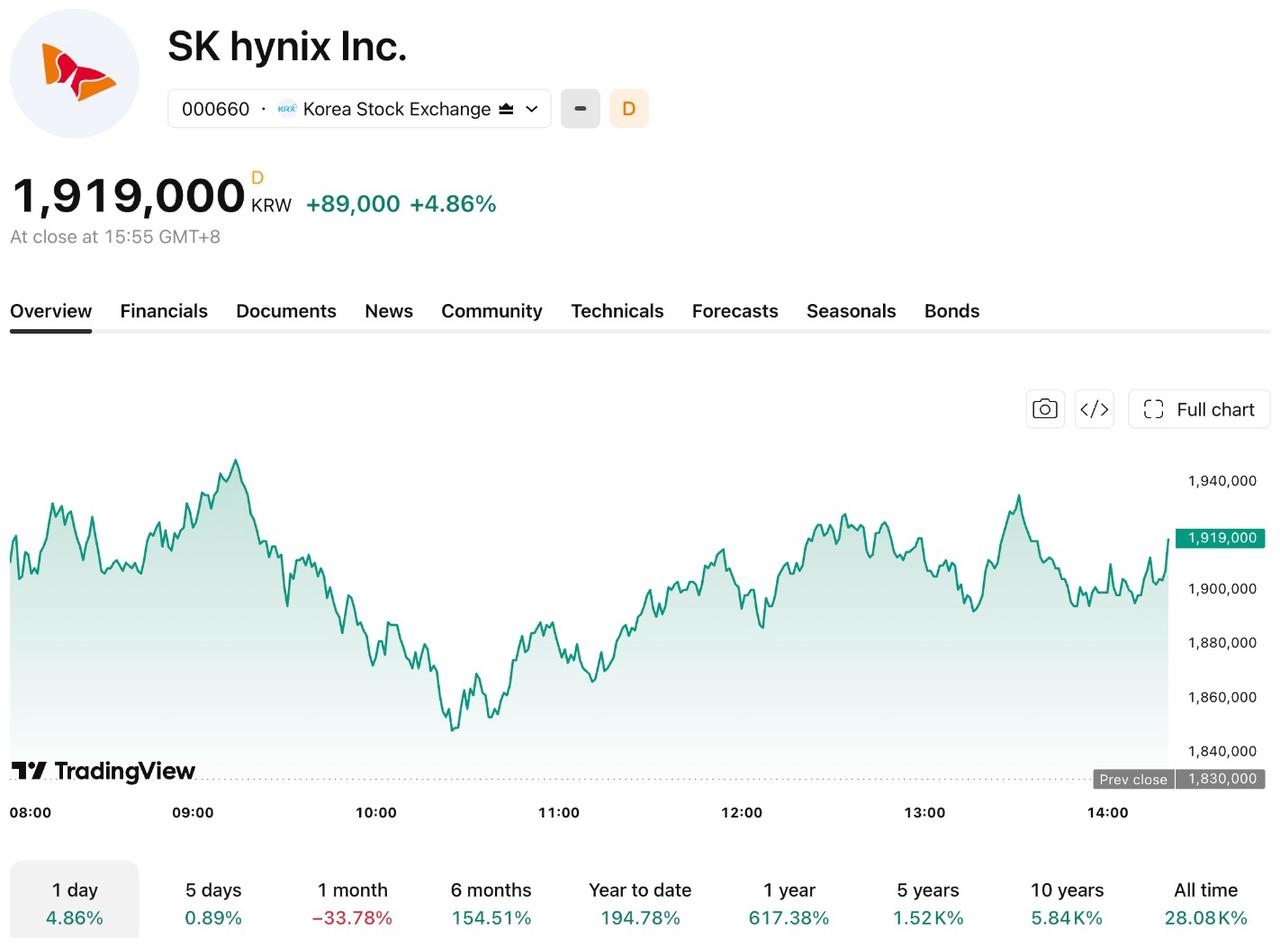
[SK Hynix's Korean Stock Performance Today, Source: TradingView]
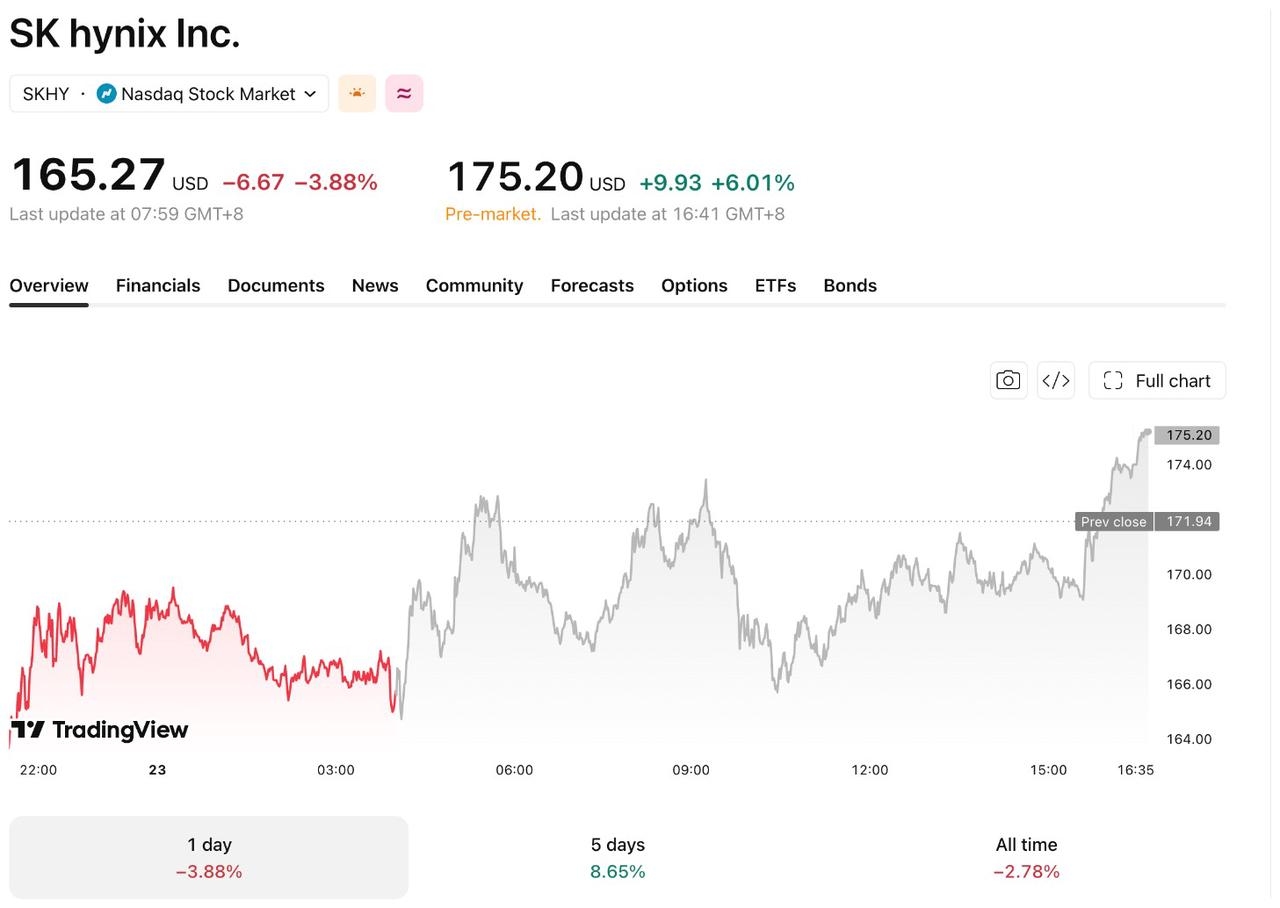
[SK Hynix ADR Premarket Performance Today, Source: TradingView]
Why SK Hynix ADR Premium Is Struggling to Decline Rapidly?
Under normal arbitrage mechanisms, when the ADR price is significantly higher than that of the underlying Korean shares, arbitrageurs can buy the Korean stock, deposit and convert it into ADRs, and then sell them in the US market to profit from the spread. However, as the quota is currently exhausted, this pathway is temporarily blocked, preventing new ADRs from entering the market and forcing the premium to remain elevated.
As a result, SK Hynix's ADR premium surged to a high of 51% on July 14, and although it has recently pulled back to 25%, it remains well above normal levels.
Long-Term Premium Can Refer to TSMC ADR
TSMC ( TSM) ADRs provide a reference. Currently, TSMC ADRs trade at a premium of about 13% to 14% over their Taiwan-listed underlying shares. Historical data shows that this premium has fluctuated roughly within a range of 1% to 26% over the past decade. By extension, SK Hynix's premium may eventually converge to a similar range rather than disappearing entirely. Part of the premium persists due to U.S. investors' preference for dollar-denominated assets and U.S. stock market liquidity.
After the two-way conversion application channel opens on July 29, the speed of premium convergence will depend on two factors: first, whether KSD will release new conversion quotas, and second, the actual influx speed of arbitrage capital. If quotas are released again, the arbitrage window will gradually narrow the premium; if quotas remain restricted, the SK Hynix ADR premium could remain in a relatively high range for the long term. For investors holding ADRs, the quota management method after July 29 is more worthy of attention than the opening of applications itself.
Recommended Articles


