


Japan and South Korea Stocks See Deep V-Shaped Recovery. KOSPI Index Surges Over 5%, SK Hynix, Kioxia and Samsung Soar Past 8%.
TradingKey - Japanese and South Korean stock markets stage deep V-shaped reversals: KOSPI surges over 5%, SK Hynix skyrockets nearly 11%, Kioxia rises over 9%, Samsung gains over 8%, while SoftBank alone falls.
During the Asian trading session on July 3, Japanese and South Korean stock markets reversed their declines, ultimately staging a dramatic deep V-shaped reversal. Among them, the KOSPI index recouped some of yesterday's losses, surging 5.76% to reclaim the 8,000-point milestone and closing at 8,088.35 points; the Nikkei 225 rose 1.47% to close at 69,744.02 points.
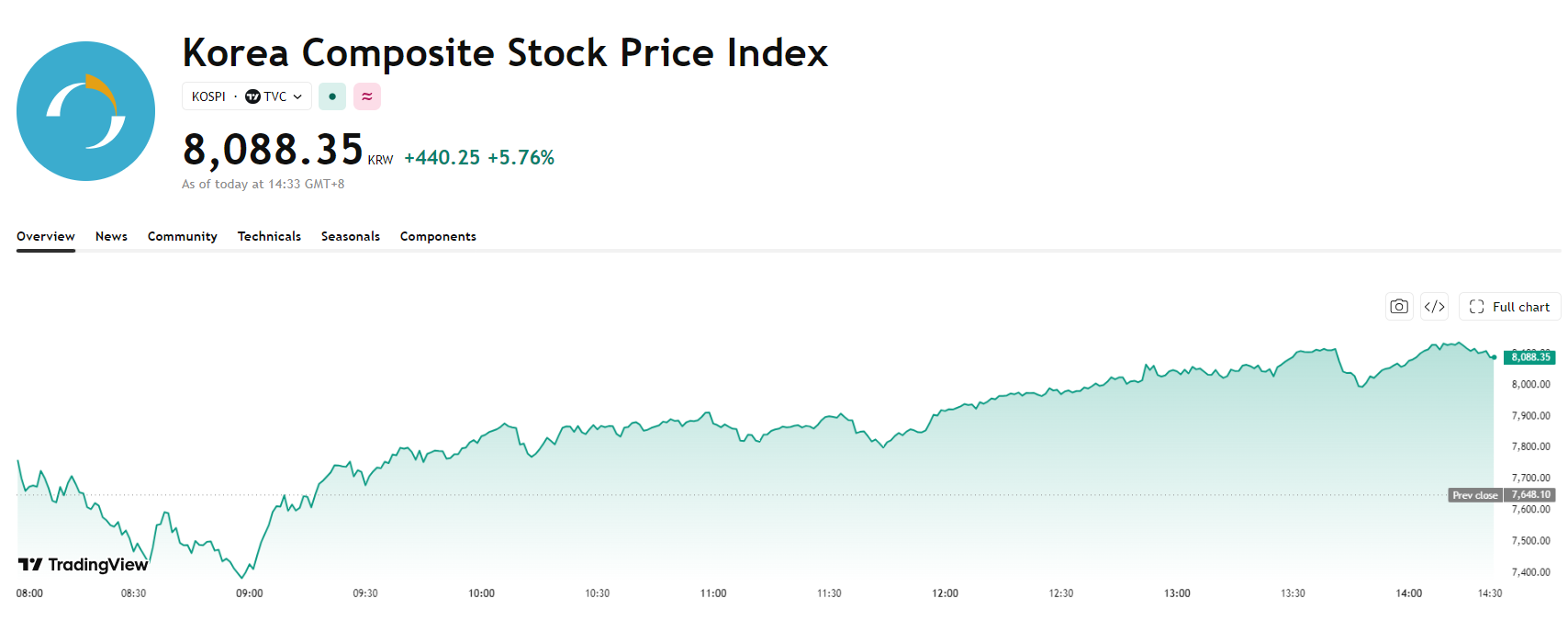 KOSPI Index Chart, Source: TradingView
In terms of individual stocks, heavyweight shares basically retraced yesterday's losses. Among them, SK Hynix performed the strongest, surging 10.88% to close at 2,425,000 KRW; followed by Kioxia, which rose 9.23% to close at 83,300 JPY; Samsung Electronics climbed 8.22%, breaking through the 300,000 KRW threshold to close at 309,500 KRW; SoftBank alone closed down 0.42% at 6,169 JPY.
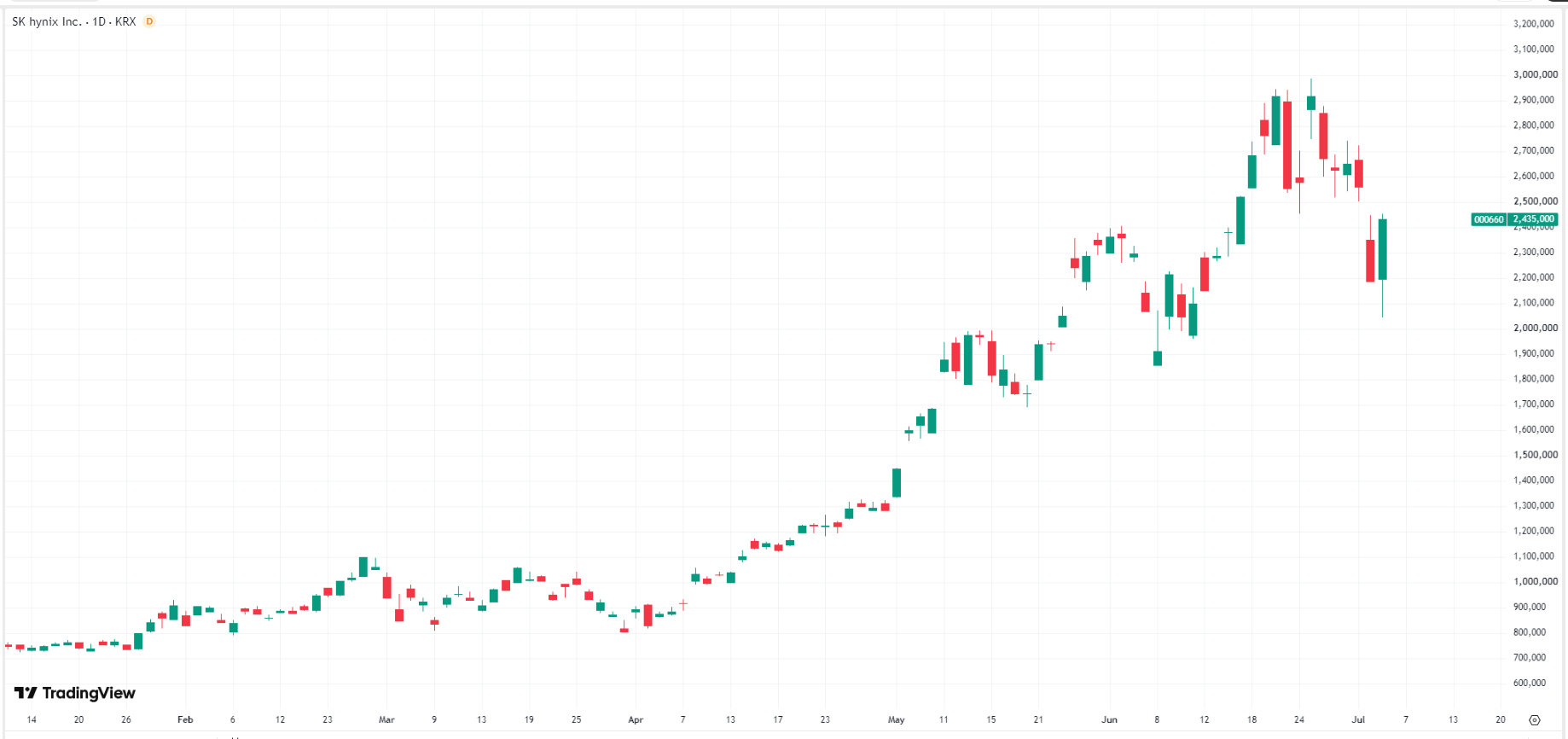 Kioxia Stock Price Chart, Source: TradingView
Japanese and South Korean stock markets staged an incredibly thrilling "epic V-shaped reversal." In early trading, although Japanese and South Korean stocks opened higher collectively—stimulated by overnight U.S. markets and the disappointing non-farm payrolls data—they immediately suffered a new round of panic selling at the market open. Just when the market thought Asia-Pacific equities were about to face a systematic bloodbath for the second consecutive day, multiple heavyweight policies and industry tailwinds exploded during the session, forcing short sellers into frantic short-covering and leading the major indices of both countries to reverse losses into gains around the midday session.
The Korea Economic Daily disclosed that South Korea's Ministry of Economy and Finance and the Ministry of Science and ICT are urgently discussing a brand-new national strategy. The plan aims to earmark the entirety of the 5 trillion KRW (approximately $3.6 billion) in incremental tax revenue generated by the booming semiconductor industry as "dedicated special funds" for the development of proprietary AI models and computing power infrastructure.
In addition, Japanese Finance Minister Satsuki Katayama personally stepped forward to declare that authorities are "prepared to take appropriate measures to address currency and market volatility." This verbal intervention effectively suppressed the frantic, one-sided volatility of the yen, driving the Nikkei 225 index to shoot up rapidly during the session and break above the 69,000-point mark.
Recommended Articles


