


Japan and South Korea Stocks Bloodied at Open, Kioxia Tumbles 10%, Samsung and SK Hynix Plunge 7%.
TradingKey - Japanese and South Korean stock markets plunged at the open, with the KOSPI index falling over 6%, the Nikkei 225 index once again losing the 70,000-point mark, Kioxia plummeting 10%, and both Samsung Electronics and SK Hynix dropping by about 7%.
During the Asian trading session on July 2, Japanese and South Korean stock markets experienced a sudden plunge, opening lower and continuing to slide. Among them, South Korea's KOSPI fell sharply by 6.43%, losing the 8,000-point mark to temporarily trade at 7,769.20 points, hitting a new low for the past half-month. The Nikkei 225 index opened below 70,000 points, falling about 2% to temporarily trade at 69,140.45 points.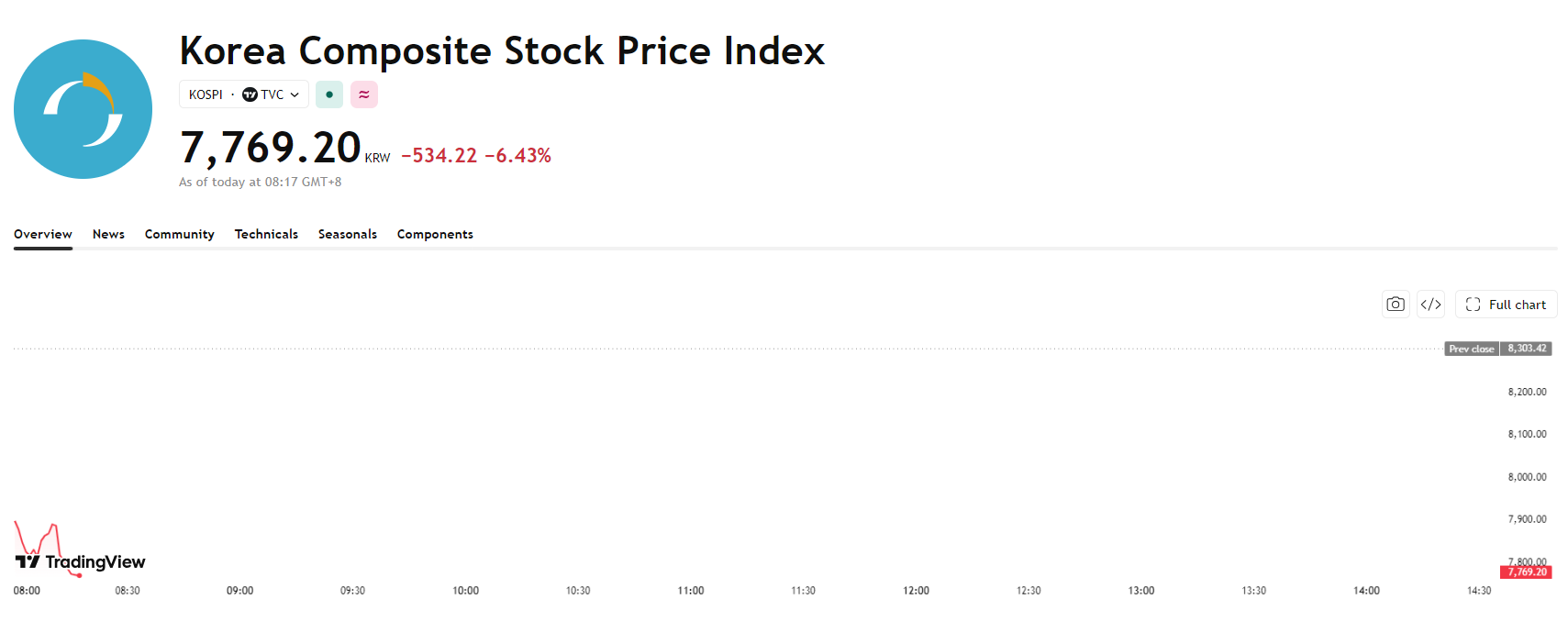 KOSPI Index Chart, Source: TradingView
In terms of individual stocks, heavyweight stocks plunged collectively. Among them, SK Hynix fell sharply by 7.5% to temporarily trade at 2,368,000 KRW; Samsung Electronics dropped 6.84% to temporarily trade at 293,000 KRW; Kioxia plummeted 10%, losing the 80,000 JPY mark to temporarily trade at 79,080 JPY, touching its lowest point since June 11; SoftBank fell 2.55%, once again losing the 6,000 JPY mark to temporarily trade at 5,847 JPY.
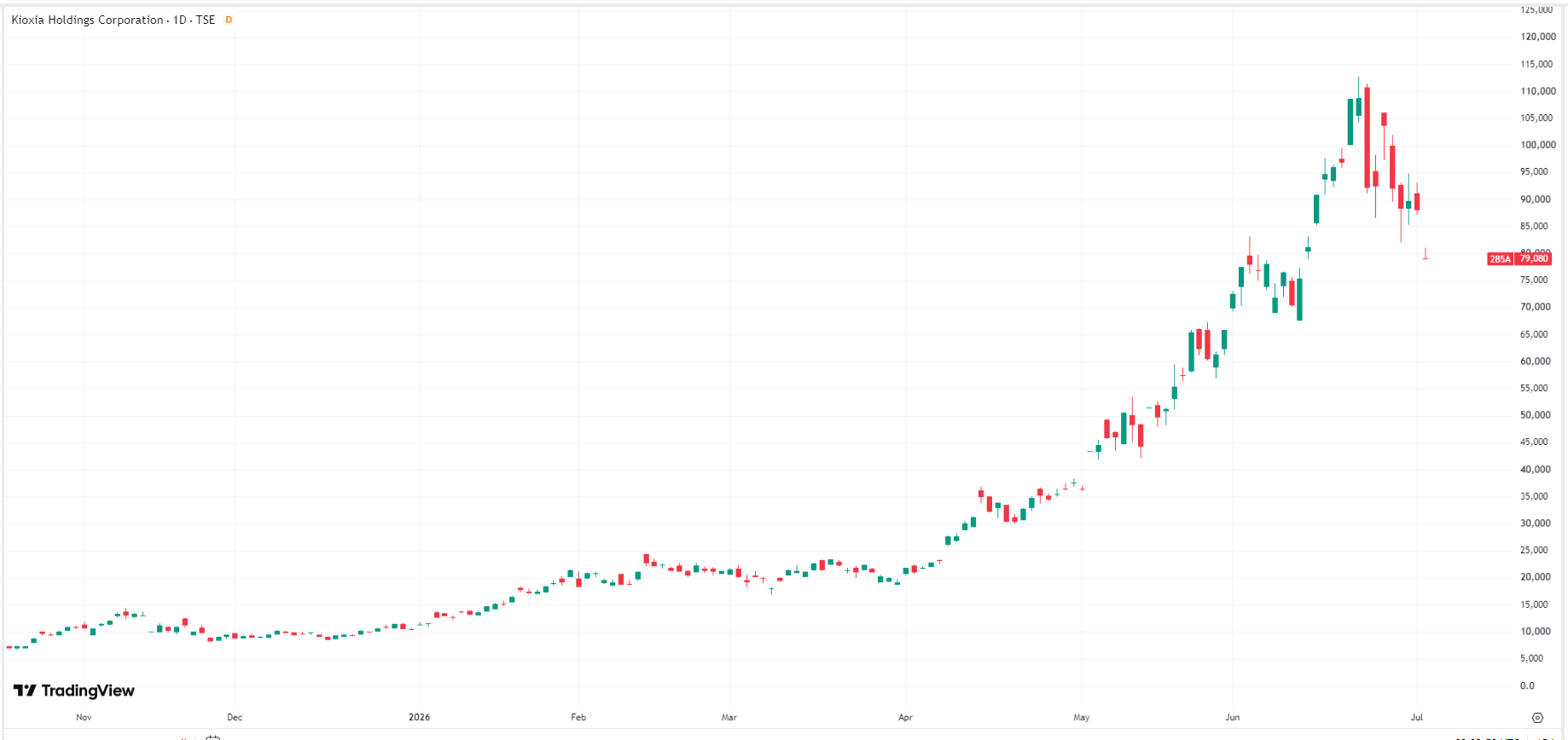 Kioxia Stock Price Chart, Source: TradingView
The Japanese and South Korean stock markets suffered a devastating collapse right at the open today, primarily hit by a double whammy of massive negative news from the overnight European and American macro markets and geopolitical flare-ups. Overnight, the US stock market took a dramatic turn for the worse, with all three major indices falling. To make matters worse, the Philadelphia Semiconductor Index (SOX), a bellwether for Japanese and South Korean tech stocks, plummeted over 6%.
In addition, Federal Reserve Chairman Warsh clearly warned in his latest speech that "the current inflation level remains too high," which once again dealt a heavy blow to market expectations for rate cuts in the second half of the year. This triggered a massive sell-off in high-valuation chip stocks and AI infrastructure sectors, directly battering the Japanese and South Korean stock markets today, which are heavily weighted toward tech.
Recommended Articles


