


Lithium Is on the Rise Again. Does That Make Albemarle a Buy?
Key Points
Albemarle paid down a large amount of debt in the first quarter.
The lithium miner has also been tightening expenses.
In the first quarter, it grew sales by 33% year over year.
- 10 stocks we like better than Albemarle ›
Shares of Albemarle (NYSE: ALB) are flat so far this year, thanks to an oversupply of lithium and a flattened demand for electric vehicles (EVs) in the United States.
However, the long-term need for this critical metal is projected to increase 353% by the end of the decade, according to a report by the United Nations Conference on Trade and Development.
Where to invest $1,000 right now? Our analyst team just revealed what they believe are the 10 best stocks to buy right now, when you join Stock Advisor. See the stocks »
Albemarle, the largest lithium miner in the world in terms of production, is in a good position to benefit from that trend.
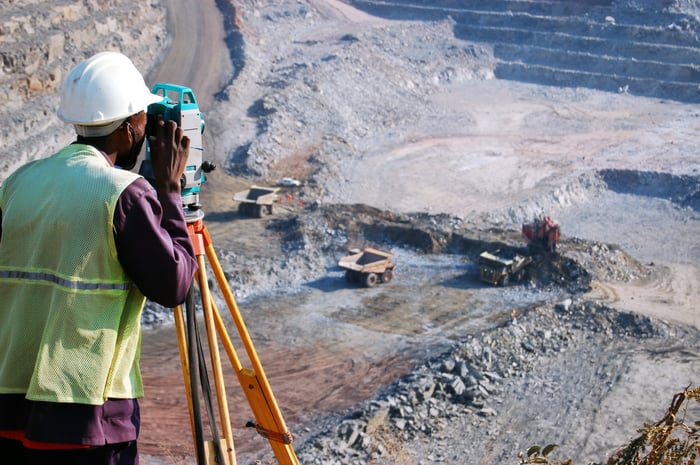
Image source: Getty Images.
The price of lithium is bouncing back
After lithium prices collapsed from their 2022 peaks, the market finally found its floor in late 2024 and has staged a resilient year-to-date rebound. Chinese spot prices have climbed back into the $23 per kilogram (kg) range, up from their $10 kg low in the fall of 2024, thanks to a restocking cycle by battery manufacturers.
While EV demand is steady, a new catalyst has emerged: utility-scale battery energy storage systems (BESS). Driven by renewable energy mandates and surging power demands from artificial intelligence (AI) data centers, BESS output is projected to jump roughly 35% year over year.
Because major producers curtailed expansion plans during the downturn, analysts project a 4% global lithium supply deficit for 2026, which should act as a powerful tailwind for realized pricing.
Radical cost discipline and blowout earnings
Albemarle has pivoted from a pure growth mindset to a stricter focus on operational efficiency. It slashed capital expenditures by 46% year over year in the first quarter, idled high-cost capacity, including its Kemerton Train 1 facility in Western Australia in February, and divested its Ketjen catalyst division in March, to become a lean, pure-play energy transition company.
The strategy is already paying off. In the first quarter, Albemarle reported sales of $1.4 billion, up 33% year over year, driven mainly by higher pricing and volume in energy storage. And adjusted earnings before interest, taxes, depreciation, and amortization (EBITDA) totaled $664 million, up 148% from the same period a year ago.
Even with disciplined spending, Albemarle remains on track to deliver a 15% volumetric compound annual growth rate (CAGR) in Energy Storage through 2027 by focusing strictly on high-return, tier-one assets such as its Greenbushes mine in Australia and the Salar de Atacama mine in Chile.
A repaired balance sheet and an underpriced stock
The company has used its surging free cash flow to execute a dramatic debt-clearing program. In the first quarter, Albemarle used $248 million in free cash flow alongside strategic actions to pay down $1.3 billion in debt, bringing its debt-to-EBITDA ratio down to a more secure 1.0x. This debt reduction slashed its weighted average interest rate to 3.1%, permanently lowering annual interest expenses.
Despite strong fundamental momentum, the stock has recently experienced short-term technical weakness, pulling back to the $140 range, while analysts' average price target is $214.65. The company's shares are trading for less than 12 times forward earnings. This leaves the stock trading at a discount to its intrinsic value, offering an excellent entry point for long-term investors.
The company's dividend yields an above-average 1.15% at its current share price, and with a payout ratio of 46%, there's room to grow its dividend. That means investors can afford to ride the stock's swings until it rises.
Should you buy stock in Albemarle right now?
Before you buy stock in Albemarle, consider this:
The Motley Fool Stock Advisor analyst team just identified what they believe are the 10 best stocks for investors to buy now… and Albemarle wasn’t one of them. The 10 stocks that made the cut could produce monster returns in the coming years.
Consider when Netflix made this list on December 17, 2004... if you invested $1,000 at the time of our recommendation, you’d have $398,052!* Or when Nvidia made this list on April 15, 2005... if you invested $1,000 at the time of our recommendation, you’d have $1,181,688!*
Now, it’s worth noting Stock Advisor’s total average return is 892% — a market-crushing outperformance compared to 205% for the S&P 500. Don't miss the latest top 10 list, available with Stock Advisor, and join an investing community built by individual investors for individual investors.
See the 10 stocks »
*Stock Advisor returns as of June 29, 2026.
James Halley has no position in any of the stocks mentioned. The Motley Fool has no position in any of the stocks mentioned. The Motley Fool has a disclosure policy.
Recommended Articles


