


Japan, South Korea Stocks Diverge: Samsung Electronics and SK Hynix Positive News Rescues Market, KOSPI Surges Over 3%, Nikkei Index Suffers Continued Decline
TradingKey - The Nikkei 225 Index extended its decline, while South Korea's KOSPI Index staged a retaliatory rebound, driven primarily by Samsung Electronics and SK Hynix.
During the Asian trading session on June 24, Japanese and South Korean stock markets diverged significantly, with Korean stocks staging a retaliatory rebound while Japanese stocks weakened. South Korea's main board KOSPI Index rebounded higher after opening today, then continued to weaken, before strengthening again after midday to form a distinct V-shape. As of press time, the KOSPI Index closed up 3.26% at 8,471.02 points.
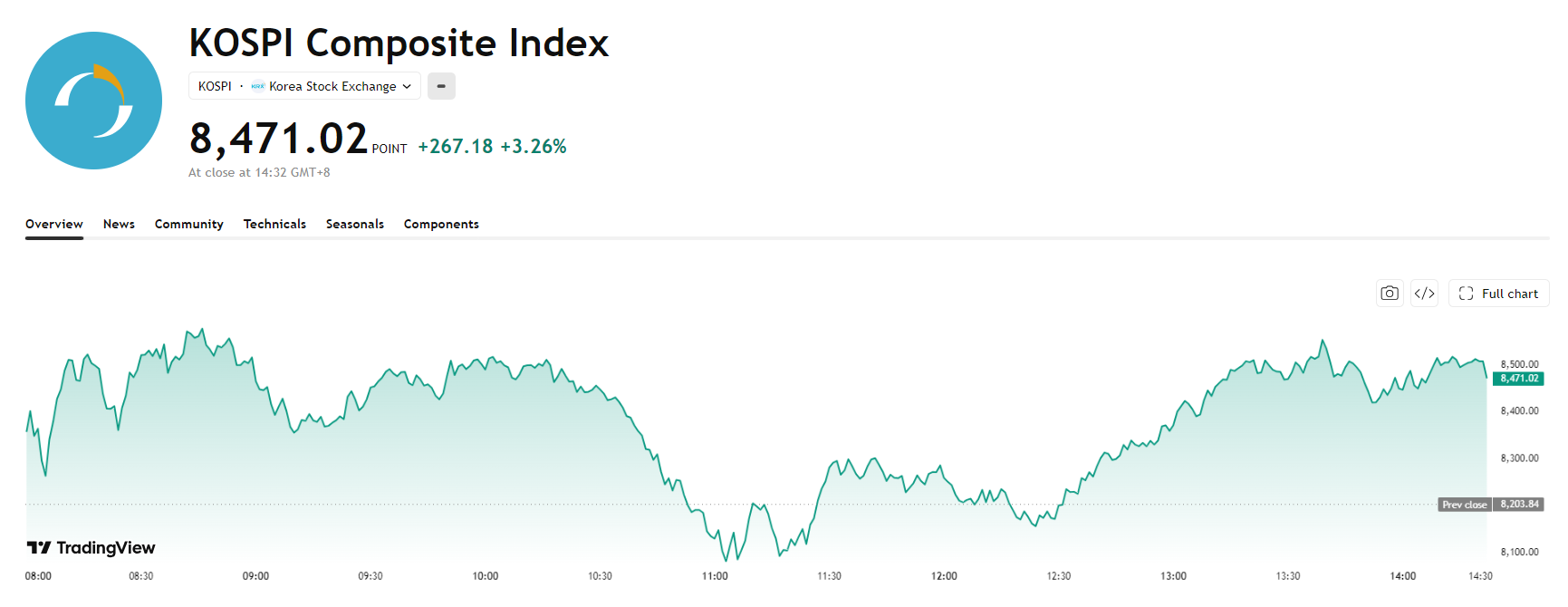 KOSPI Index Chart, Source: TradingView
The rebound in South Korean stocks today was highly dramatic, driven primarily by fluctuations in its two heavyweight stocks. This morning, Samsung Electronics announced plans to spend 90 trillion won on a share buyback. This epic bullish news boosted its stock price, stabilized the broader market, and forced short covering. Following Samsung, news broke that SK Hynix is accelerating its $26 billion U.S. ADR listing, reigniting bullish sentiment in the market.
Catalyzed by the positive news, the stock prices of both Samsung Electronics and SK Hynix saw some recovery. Samsung Electronics surged nearly 10% today, reclaiming the 340,000 won mark to close at 340,500 won; SK Hynix saw a relatively smaller gain, rebounding just 2.58% to close at 2,621,000 won. Yesterday, both Samsung Electronics and SK Hynix plummeted by around 12%.
Compared to the short-covering of oversold liquidity in South Korean stocks, the Japanese stock market showed a completely different correction. Among them, the Nikkei 225 Index extended its losses, falling 0.88% to close at 69,174.75. In terms of individual stocks, Kioxia and SoftBank posted modest gains, with Kioxia rising 0.23% to close at 92,500 yen, and SoftBank rising 1.29% to close at 6,597 yen.
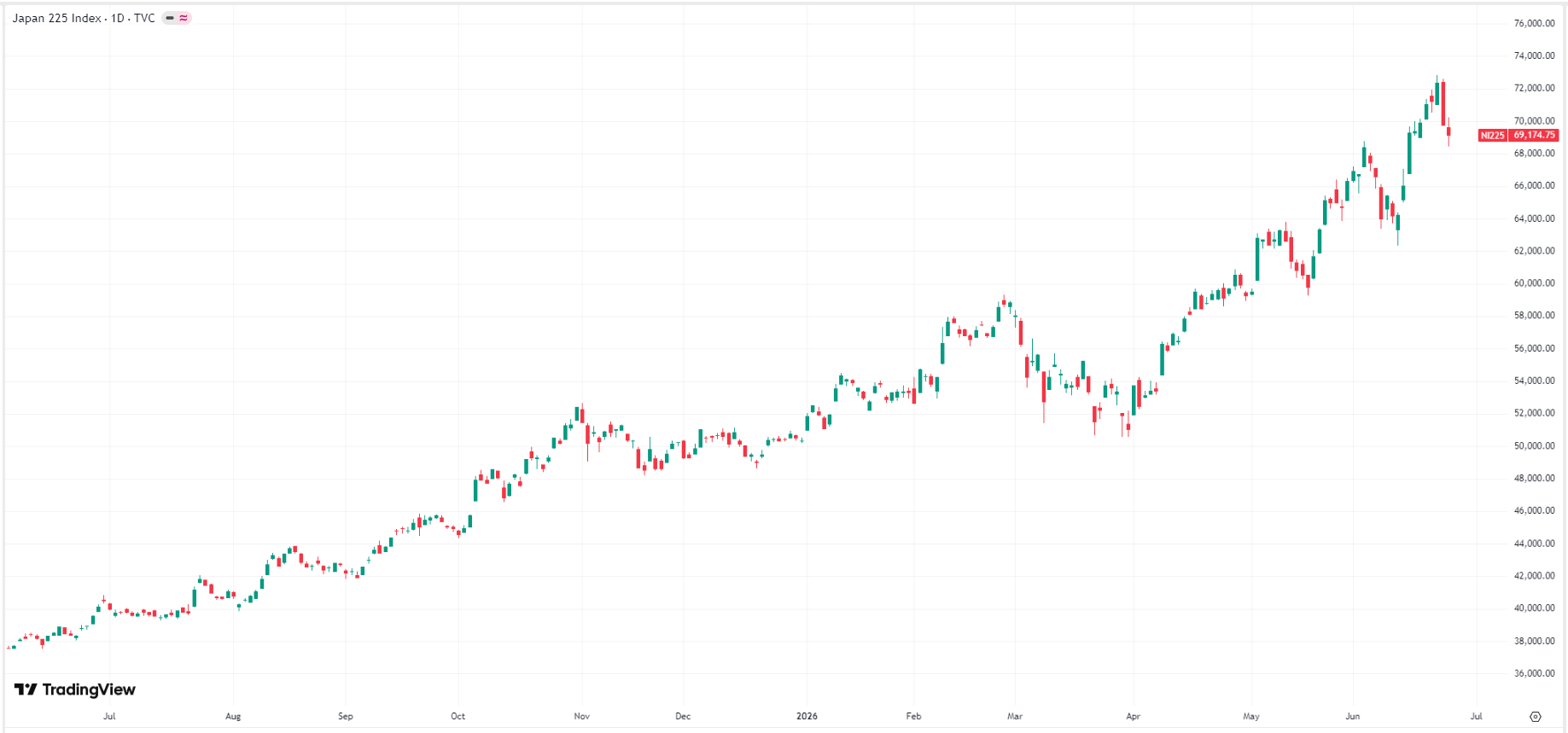 Nikkei 225 Index Chart, Source: TradingView
This divergence between Japan and South Korea is not a simple departure from economic fundamentals, but rather a capital seesaw effect resulting from the collision between South Korea's 'liquidity recovery after being extremely oversold' and Japan's 'risk aversion and capital outflows after reaching historic highs.' Before Micron's earnings report and the repricing of global tech stocks become clearer, this rapid rotation of regional capital is expected to continue.
Recommended Articles


