


4 Reasons Short Sellers Should Think Twice Before Betting Against SpaceX
Key Points
SpaceX has nearly returned to its IPO price, but it still looks overvalued.
It’s too risky and expensive to short the stock before its lockup periods expire.
- 10 stocks we like better than Space Exploration Technologies ›
SpaceX (NASDAQ: SPCX) has taken investors on a wild ride since its public debut on June 12. The aerospace and AI company went public at $135 per share, and its stock started trading at $150 before soaring to a record high of $225.64 on June 16. But today, it trades at about $155.The market hype initially propelled SpaceX's stock to a record high, but it fizzled out as its early buyers flipped the stock for quick profits and its valuation hit meme-stock levels. At its peak, SpaceX's market cap reached $2.66 trillion, or 142 times its 2025 revenue of $18.7 billion.
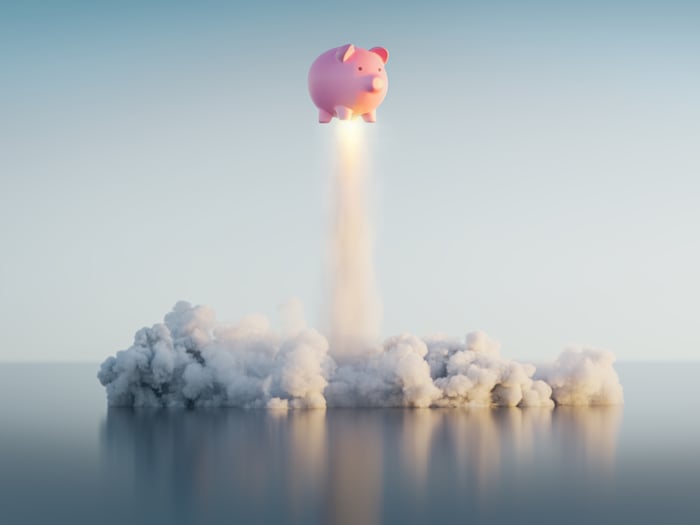
Image source: Getty Images.
Where to invest $1,000 right now? Our analyst team just revealed what they believe are the 10 best stocks to buy right now, when you join Stock Advisor. See the stocks »
SpaceX's market cap has since dropped to $2.07 trillion, but it still trades at 111 times last year's sales. That high price-to-sales ratio might make it seem like an easy target for a short sale, but shorting this volatile stock right now could backfire for four simple reasons.
1. High borrowing costs
SpaceX offered less than 5% of its shares in its IPO. Most of its shares are still held by insiders, employees, and early investors, who can't sell them until their phased lockup periods expire.
That low public float makes it hard for brokers to lend shares to short sellers, which drives up the stock loan fee (the fee a short-seller pays to borrow the stock). Those fees accumulate every day for positions held overnight, and they can quickly drain your capital. As of this writing, SpaceX is classified as "Hard to Borrow" at the major brokerages, with annualized borrowing rates ranging from 15% to 50%. That makes it very difficult to profitably short SpaceX.
2. Lockup expirations will be the real catalyst
Most people who want to short SpaceX are likely waiting for its lockup periods to expire. Instead of using a traditional 180-day lockup period, SpaceX will allow its insiders and early investors to sell their shares in several scheduled waves.
The first wave will occur on the second trading day after its second quarter earnings (in late July or early August). On that day, 20% of SpaceX's shares held by employees and early pre-IPO holders (roughly 4.6 billion shares) will be unlocked. If it closes at or above $175.50 per share for at least five of the ten consecutive days before the earnings release, it will unlock an additional 10% of its shares.
It will continue to unlock 7% of its shares on Aug. 20, Sept. 9, Sept. 24, Oct. 9, and Oct. 24. It will unlock another 28% of its shares on the second trading day after its third quarter earnings in late October or early November, and unlock all of its remaining shares on Dec. 8. In 2027, Elon Musk and SpaceX's major institutional backers will be allowed to sell their shares.
As those lockup periods expire, SpaceX's stock loan fees will decline as more shares flood the market. Many of those insiders will also likely take profits in the high-flying stock, making it much easier to short SpaceX profitably.
3. Potential index inclusions
SpaceX is now the world's seventh-most-valuable company, which puts it on a fast track for inclusion in major indexes like the Nasdaq-100. If that happens, passive index funds and ETFs must automatically accumulate a large share of the available float, creating a baseline of buying pressure that makes the stock difficult to short.
4. The Musk Factor
Last but not least, Elon Musk often uses his massive social media presence to promote his own investments, including Tesla and Dogecoin. Any tweets about SpaceX could drive its stock higher and abruptly squeeze out short sellers.
Short SpaceX at your own risk
I believe SpaceX is overvalued, and I wouldn't buy the stock at these levels. However, those four issues are also preventing me from shorting the stock. It will likely become a much more attractive target for the short sellers in the second half of the year.
Should you buy stock in Space Exploration Technologies right now?
Before you buy stock in Space Exploration Technologies, consider this:
The Motley Fool Stock Advisor analyst team just identified what they believe are the 10 best stocks for investors to buy now… and Space Exploration Technologies wasn’t one of them. The 10 stocks that made the cut could produce monster returns in the coming years.
Consider when Netflix made this list on December 17, 2004... if you invested $1,000 at the time of our recommendation, you’d have $393,037!* Or when Nvidia made this list on April 15, 2005... if you invested $1,000 at the time of our recommendation, you’d have $1,280,627!*
Now, it’s worth noting Stock Advisor’s total average return is 913% — a market-crushing outperformance compared to 208% for the S&P 500. Don't miss the latest top 10 list, available with Stock Advisor, and join an investing community built by individual investors for individual investors.
See the 10 stocks »
*Stock Advisor returns as of June 23, 2026.
Leo Sun has no position in any of the stocks mentioned. The Motley Fool has positions in and recommends Tesla. The Motley Fool has a disclosure policy.
Recommended Articles


