


Meta’s TPU Deal with Google: What It Means for Nvidia
TradingKey - According to a news from The Information on Thursday, citing people familiar with the matter, Meta Platforms Inc. (META) and Alphabet Inc. (GOOGL) have reached a multiyear, multibillion‑dollar AI‑chip partnership under which Meta will lease Google’s custom‑built TPUs (Tensor Processing Units) to provide computing power for training and inference of its next‑generation large models. The deal secures long‑term, stable access to TPU capacity for Meta and confirms a deepening overlap between two of the most powerful players in the AI economy.
A second phase could make the deal even bigger. Beginning as soon as 2027, Meta may directly purchase TPU chips to equip its own data centers — a move that would push Google further into the external AI‑infrastructure market.
Only weeks earlier, Meta had declared plans to buy “millions” of NVIDIA Corp. (NVDA) GPUs to train its Llama family of models. Now, pouring billions into TPU rentals might look like “straddling both boats.” In reality, it underscores the intensity of AI demand. NVIDIA hardware remains the primary engine for training, but supply is tight, lead times are stretching, and prices are sky‑high. Any disruption upstream could freeze an entire product roadmap. No large‑model developer can afford to tie all its workloads to a single supplier.
In other words, the deal does not weaken NVIDIA so much as highlight how massive current AI‑compute demand has become. Meta must now construct a diversified stack blending NVIDIA GPUs, Google TPUs, and potentially other options if it hopes to keep pace with its own AI ambitions.
NVIDIA’s “Blowout Quarter, Falling Stock”
Shift the timeline back a step and the impact becomes clearer: the TPU announcement landed during NVIDIA’s earnings week, amplifying market reactions. NVIDIA had just released another near‑flawless report — both revenue and EPS beat expectations, and guidance for the next quarter was again bullish. The company projected sales of US $76.4 – 79.6 billion, with the midpoint far above the consensus estimate of US $72.8 billion — an explicit reminder that “the AI train is still accelerating.”
Investors, however, reacted differently. Following the results, NVIDIA’s stock fell 5.4% in a single session. The issue was not performance; it was “expectations that had grown almost un‑expandable.” The debate is no longer whether NVIDIA is strong, but whether tech giants such as Microsoft Corp. (MSFT), Meta, and Amazon.com Inc. (AMZN) can — or are willing to — maintain their current “spend‑at‑all‑costs” AI‑investment rhythm. The second question is whether these enormous capex outlays can generate reasonable returns rather than maturing into a capital‑expenditure bubble requiring a brake.
In that context, even a stellar outlook could not prevent skepticism. When universal optimism begins to crack, valuations inevitably deflate. News of Meta’s TPU deal arrived simultaneously, fueling the narrative that “Meta is moving to Google chips — NVIDIA’s monopoly is ending.” Emotionally, that reinforced fears of NVIDIA shifting from *the only* to merely *one among many*, amplifying the post‑earnings decline.
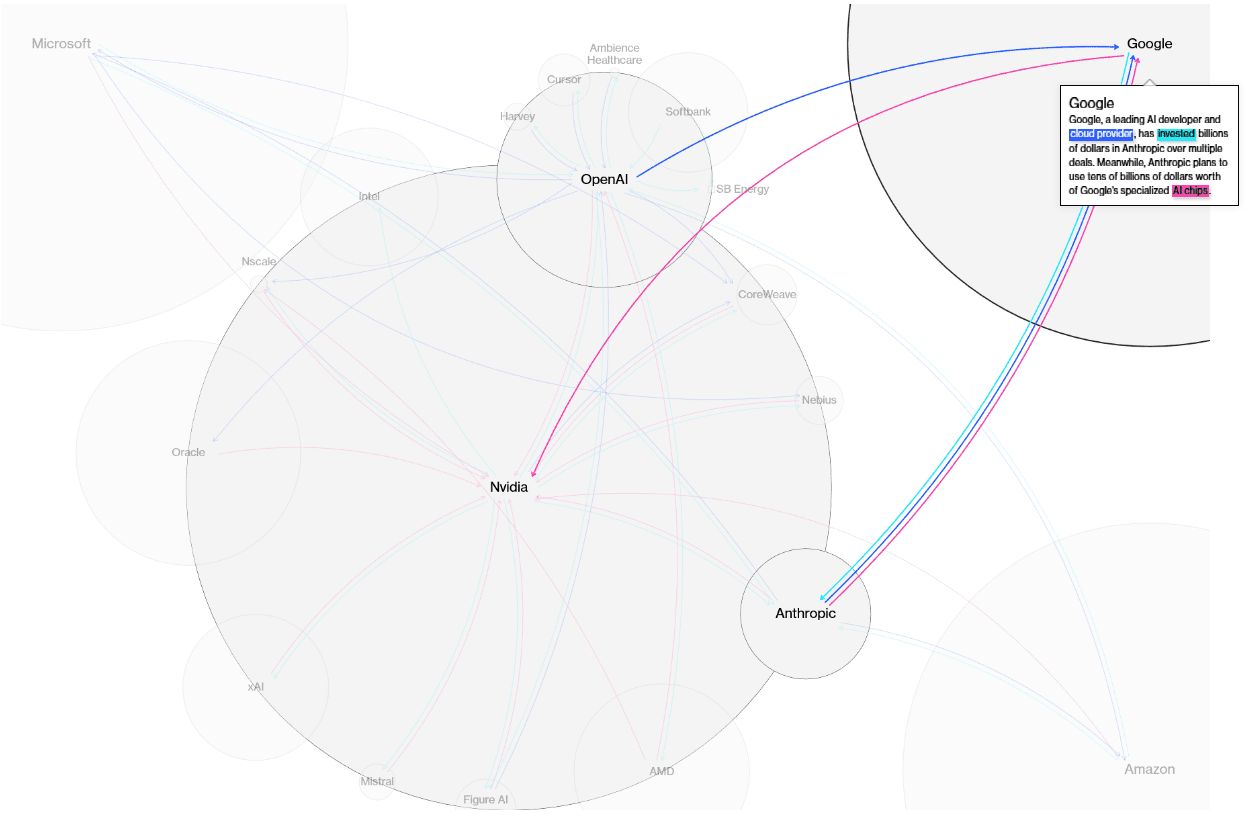
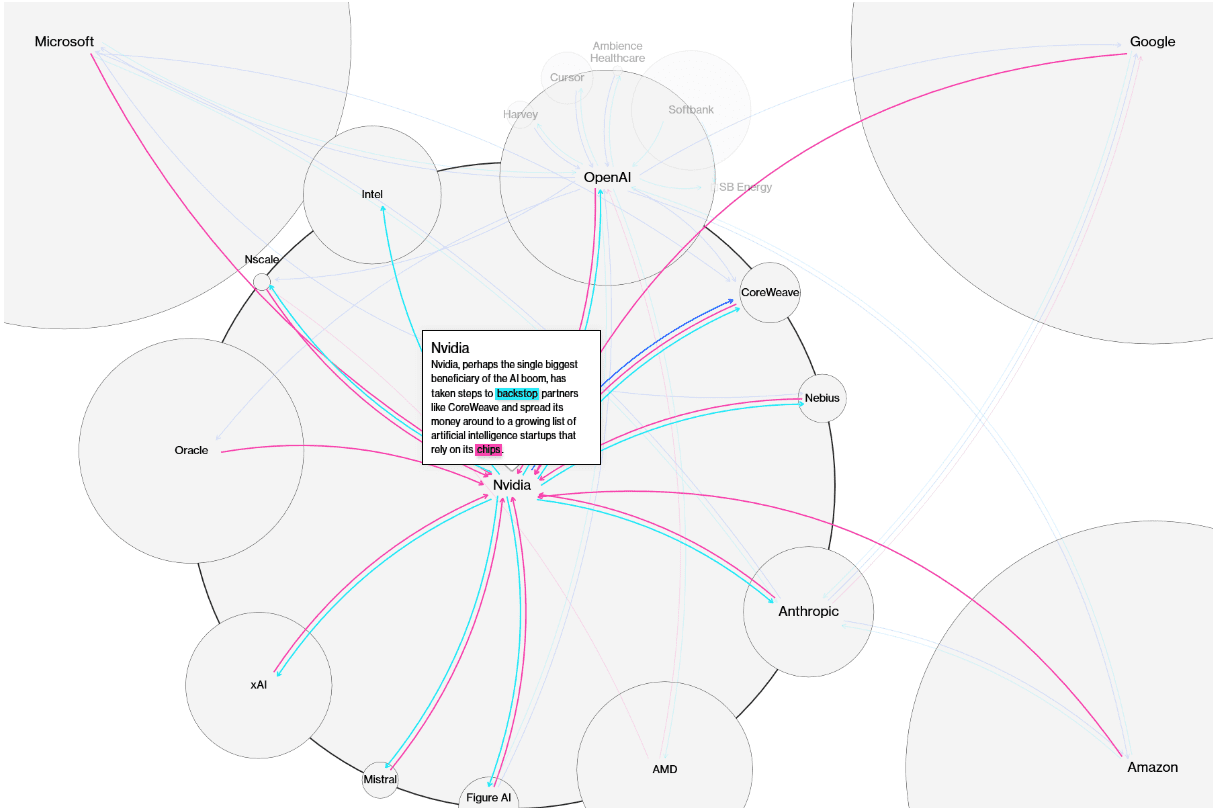
NVIDIA Remains at the Core of the AI Boom; Source: Bloomberg
It’s a Win for Google
For Google, the transaction is far more than a large contract. Over the past two years, headlines about the company have centered on defense — whether it could withstand disruption from newer search and model competitors. Now, by releasing Gemini while simultaneously selling TPU cloud capacity to a rival like Meta, Google is telling a different story: it is back on offense.
Google’s TPUs Are Starting to Go External; Source: Bloomberg
The partnership also marks the true commercialization of TPUs. What began as internal infrastructure is now becoming a high‑margin, externally sold product line. Leasing TPU capacity to outside giants not only augments Google Cloud’s top line but also cements its role in the “AI‑compute supply chain,” putting it in direct competition with NVIDIA, Advanced Micro Devices Inc. (AMD), and other hyperscalers developing proprietary chips.
Within the same AI wave, Google embodies the “new‑slope story,” while NVIDIA faces the “how long can it sustain the high altitude” story. Markets tend to reward the former with a short‑term sentiment premium.
What It Means for Investors
From a trading perspective, the takeaway is straightforward. In the short run, capital is gravitating toward firms that can tell fresh growth stories — here, Google. NVIDIA, meanwhile, is transitioning from an untouchable myth to a still‑dominant but more normally valued powerhouse.
From an industry perspective, this contract signals that the total AI‑compute market is expanding, not rotating. Meta’s willingness to buy NVIDIA GPUs and simultaneously rent Google TPUs demonstrates optimism, not contradiction. Maintaining multiple hardware and software stacks is expensive; doing so only makes sense if Meta believes future AI demand will justify it. No single vendor can meet the throughput needs of global AI leaders anymore — the pie itself is growing faster than any one company’s share.
Investors should therefore shift focus from asking whether NVIDIA will be replaced to considering how large the overall AI‑hardware market can become, and what share each major vendor — NVIDIA, Google’s TPU unit, AMD, and others — can capture.
Ultimately, the real story is simpler: the competitive race for AI is forcing every major platform to broaden compute sources and build multi‑vendor ecosystems. For the long‑term trajectory of the sector, that evolution matters far more than week‑to‑week moves in any single stock price.
Recommended Articles


