


Trump Withdrawal Intent Reshapes Liquidity, Bitcoin Breaks $68,000 Mark


TradingKey - US and Iran signal ceasefire talks; Bitcoin breaks $68,000, expected to continue rebounding in the short term.
On April 1, Bitcoin ( BTC) prices continued to rebound, strengthening further to break above $68,000. Over the past three trading sessions, Bitcoin has risen by more than $4,000, a cumulative gain of 6%, with the current price at $68,452.
On March 31, ET, both the United States and Iran signaled a willingness to enter ceasefire negotiations. The VIX plummeted as market risk appetite recovered, leading to broad gains across equities, precious metals, and cryptocurrencies. The total market capitalization of the crypto market rose 1.31% to $2.36 trillion.
As tensions in the Middle East cooled, U.S. spot Bitcoin ETFs recorded significant net inflows of $117.31 million after yesterday's opening, indicating that institutional funds are "covering" positions. Furthermore, short-hedging positions previously accumulated below $67,000 were heavily liquidated, with $166 million in liquidations over the past 24 hours, resulting in a fierce short squeeze.
From a technical perspective, Bitcoin saw three consecutive days of gains after touching the lower band (around $64,000) on March 30, signaling strong bullish momentum. It is expected to further rebound and strengthen, facing resistance at the middle and upper bands at $72,000 and $80,000, respectively.
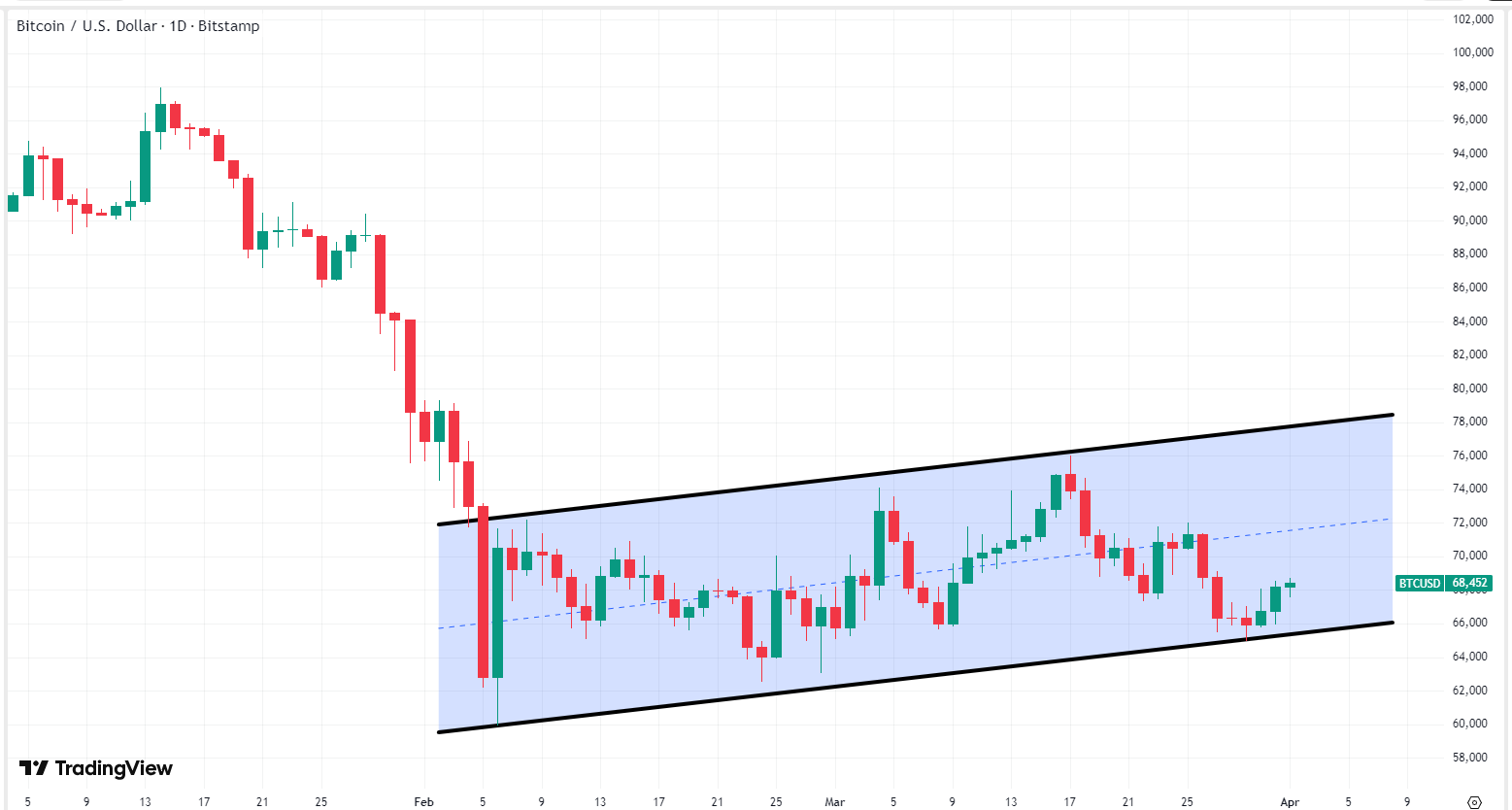 Bitcoin price chart, source: TradingView
In April, if the U.S. intent to withdraw troops is successfully translated into an agreement, Bitcoin will be shielded from political conflicts and is likely to follow its technical structure to continue trending upward. However, if the situation fluctuates, BTC is highly likely to retest the $65,000 support level, though a further breakdown remains unlikely.
Additionally, Bitcoin's price movement may be influenced by two other variables. Federal Reserve Chair Jerome Powell's term ends on May 15, 2026; whether a Trump administration appoints a more aggressive "dovish" successor will determine the liquidity ceiling for the year. This July, the stablecoin legislation (GENIUS Act) will enter its formal implementation phase, and the establishment of this regulatory framework will directly impact the liquidity depth of USDC and Circle ( CRCL) within the ecosystem.
While the Middle East situation has some impact on Bitcoin's price, since the onset of US-Iran tensions, Bitcoin has generally maintained a wide range of volatility between $60,000 and $75,000. The event with the most profound impact remains whether the Federal Reserve will cut interest rates; therefore, its developments warrant close attention. Once a rate cut signal is released, Bitcoin is highly likely to break through $80,000; otherwise, it will continue to fluctuate below that level.
Read more
* The content presented above, whether from a third party or not, is considered as general advice only. This article should not be construed as containing investment advice, investment recommendations, an offer of or solicitation for any transactions in financial instruments.


