


Gold Second-Quarter Outlook: Safe-Haven Failure or Pricing Logic Reshaping? Can Gold Enter a Major Rally?

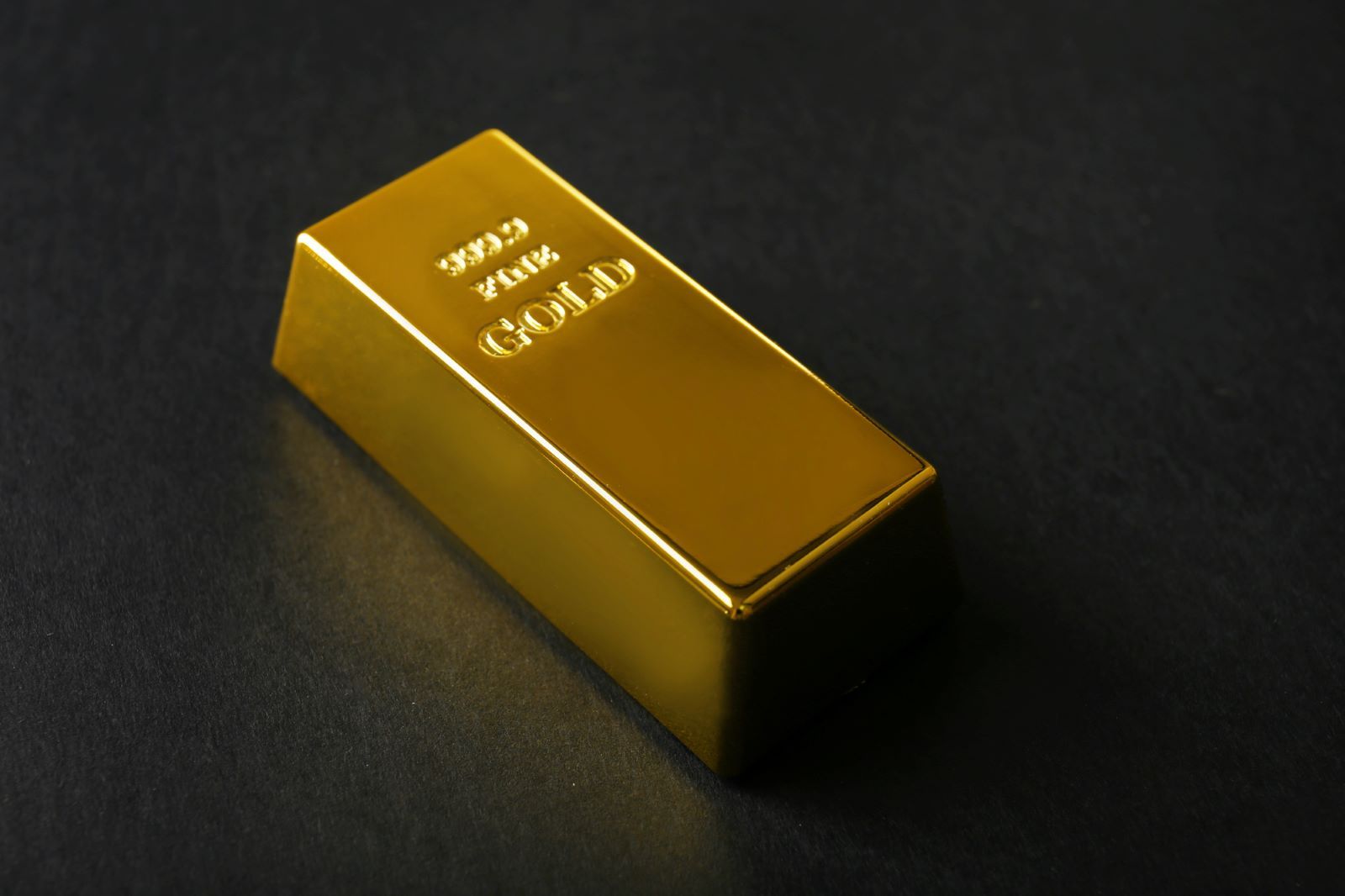
TradingKey - In the first quarter of 2026, gold prices experienced a classic "roller-coaster" ride. Against a macroeconomic backdrop of escalating geopolitical conflicts, gold prices briefly broke through historic highs before sharply retracing in a short period, with the maximum drawdown approaching 30%.
This violent volatility shattered investors' traditional perception of gold as a "stable safe-haven asset" and sparked deep market discussions regarding whether structural changes have occurred in gold's pricing mechanism.
In terms of price action, gold continued its strong upward momentum at the beginning of the first quarter, rising steadily under the resonance of safe-haven demand and speculative capital, reaching an all-time high in late January. At that time, the market broadly reinforced a singular logic that "geopolitical conflict drives gold higher," with significant capital flowing in at peaks, pushing prices away from fundamental support in the short term.
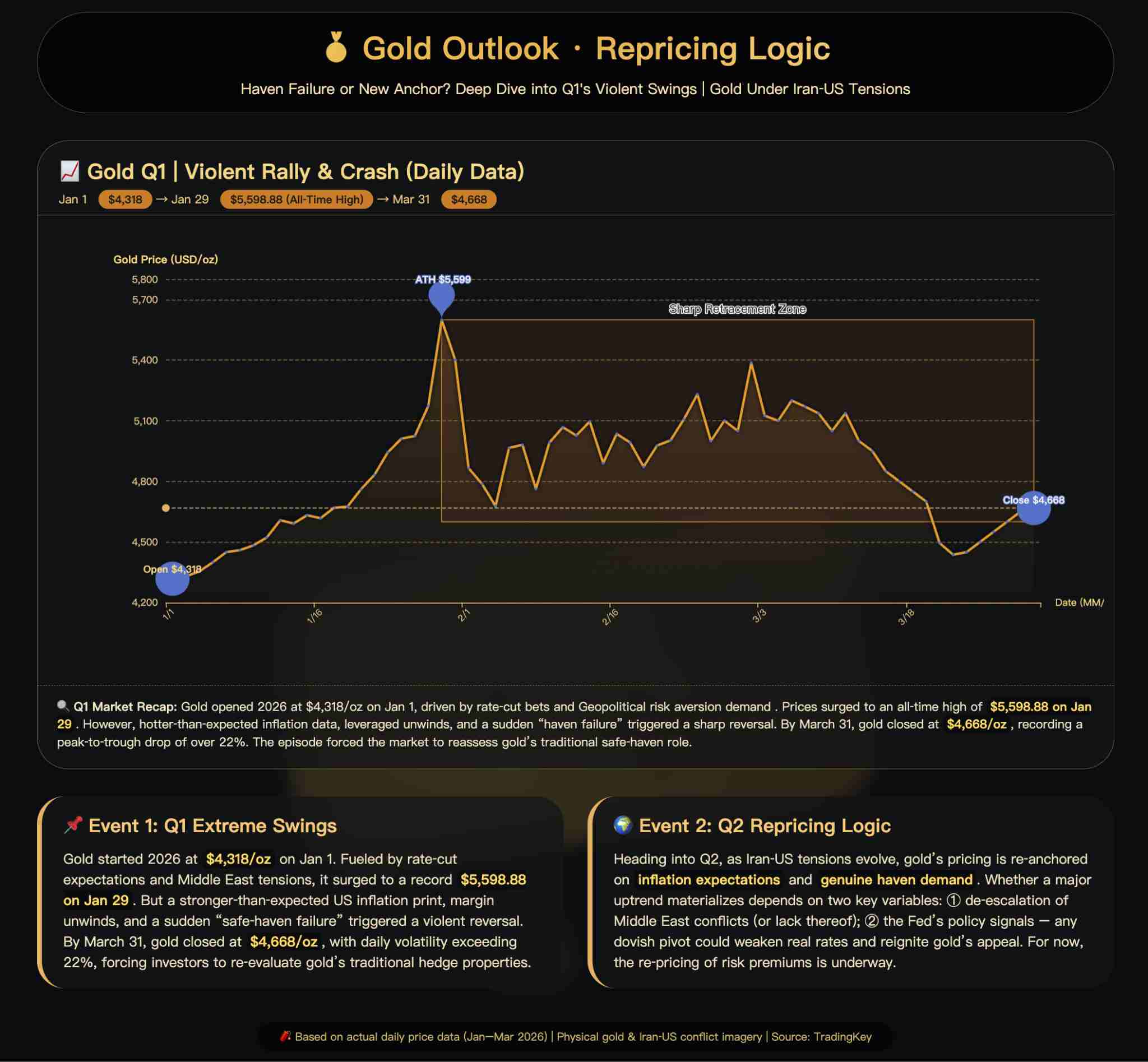
The surge in gold prices during this phase was inherently fragile, as trading decoupled from fundamentals left the market extremely sensitive to marginal variables.
US-Iran conflict marks a turning point for gold prices.
As the US-Iran conflict erupted, surging oil prices prompted the Federal Reserve to issue hawkish signals, leading markets to swiftly revise down rate cut expectations, while real interest rates and the US Dollar Index strengthened in tandem. For non-yielding gold, rising real interest rates signify a significant increase in holding costs, causing capital to migrate from gold to USD-denominated assets.
Simultaneously, geopolitical conflicts pushed up energy prices and reinforced inflation stickiness, further constraining the scope for monetary easing and creating a combined shock of "high inflation and surging liquidity demand."
During this phase, gold's pricing logic underwent a key shift, moving from being "driven by safe-haven premiums" to "driven by liquidity and real interest rates." In other words, the safe-haven attribute did not disappear; rather, it was suppressed or became temporarily ineffective during the liquidity tightening cycle.
When market risk appetite declines and liquidity tightens, investors tend to favor holding cash or USD assets over allocating to gold, which is the core reason why the recent geopolitical conflict failed to provide a sustained boost to gold prices.
Entering late March, as panic selling gradually subsided and dip-buying emerged, gold prices began to stabilize and rebound, though they remained within a wide volatile range. Data shows that while gold recorded a cumulative gain of approximately 8% in the first quarter, a maximum drawdown of nearly 27% highlighted a significant increase in its volatility, with "risk-asset-like" characteristics surfacing periodically.
Will gold prices see a major rally in the second quarter?
The gold market may enter a "re-pricing phase" in the second quarter.
Key variables will revolve around three main themes: whether geopolitical tensions escalate further, which will determine if the risk premium can be re-priced; the trajectory of inflation and energy prices, which will directly affect market expectations for monetary policy; and the Federal Reserve's policy stance, particularly changes in real interest rates, which will continue to dictate gold's medium-to-long-term direction.
The market is currently showing signs of transitioning from "inflation trades" to "stagflation trades." If high oil prices persist alongside slowing economic momentum, gold's defensive characteristics are expected to re-emerge. Under this framework, gold prices may maintain a volatile bottoming-out pattern in the short term, while a significant trend shift awaits signals of a policy pivot; once expectations for interest rate cuts are reinforced, gold is poised to embark on a new upward cycle.
From a long-term perspective, the core logic supporting gold has not undergone a fundamental change.
The elevation of global geopolitical risk, intensifying debates over U.S. fiscal sustainability, and the continuation of the "de-dollarization" trend have prompted central banks to continuously increase their gold reserves. Supported by this structural demand, gold retains its medium-to-long-term allocation value, with further upside potential for prices.
For investors, it is currently more crucial to distinguish between short-term volatility and long-term trends. In a high-volatility environment, the risks of one-sided bets rise significantly; a more rational strategy involves building positions in stages, controlling position sizes, and utilizing multi-asset hedging to smooth out volatility.
Looking ahead to the second quarter, geopolitical conflicts may draw to a close. An easing of the U.S.-Iran conflict is expected to help temper inflation expectations, thereby restoring anticipation for a more accommodative Fed interest rate policy, and gold prices will continue to benefit directly from its status as a safe-haven asset and the easing of liquidity demands.
Read more
* The content presented above, whether from a third party or not, is considered as general advice only. This article should not be construed as containing investment advice, investment recommendations, an offer of or solicitation for any transactions in financial instruments.


