

Novo Nordisk Shares Plunge, Eli Lilly Zepbound Multi-Dose Approved, Weight-Loss Drug Throne Changing Hands?

Source Tradingkey

TradingKey - As the global weight-loss drug market continues to heat up, Eli Lilly (LLY) announced that its Zepbound four-dose KwikPen device received U.S. FDA approval for market launch. Following the announcement, the company's stock rose 4.86% in a single day, further strengthening market expectations of its leadership position in the GLP-1 weight-loss space.
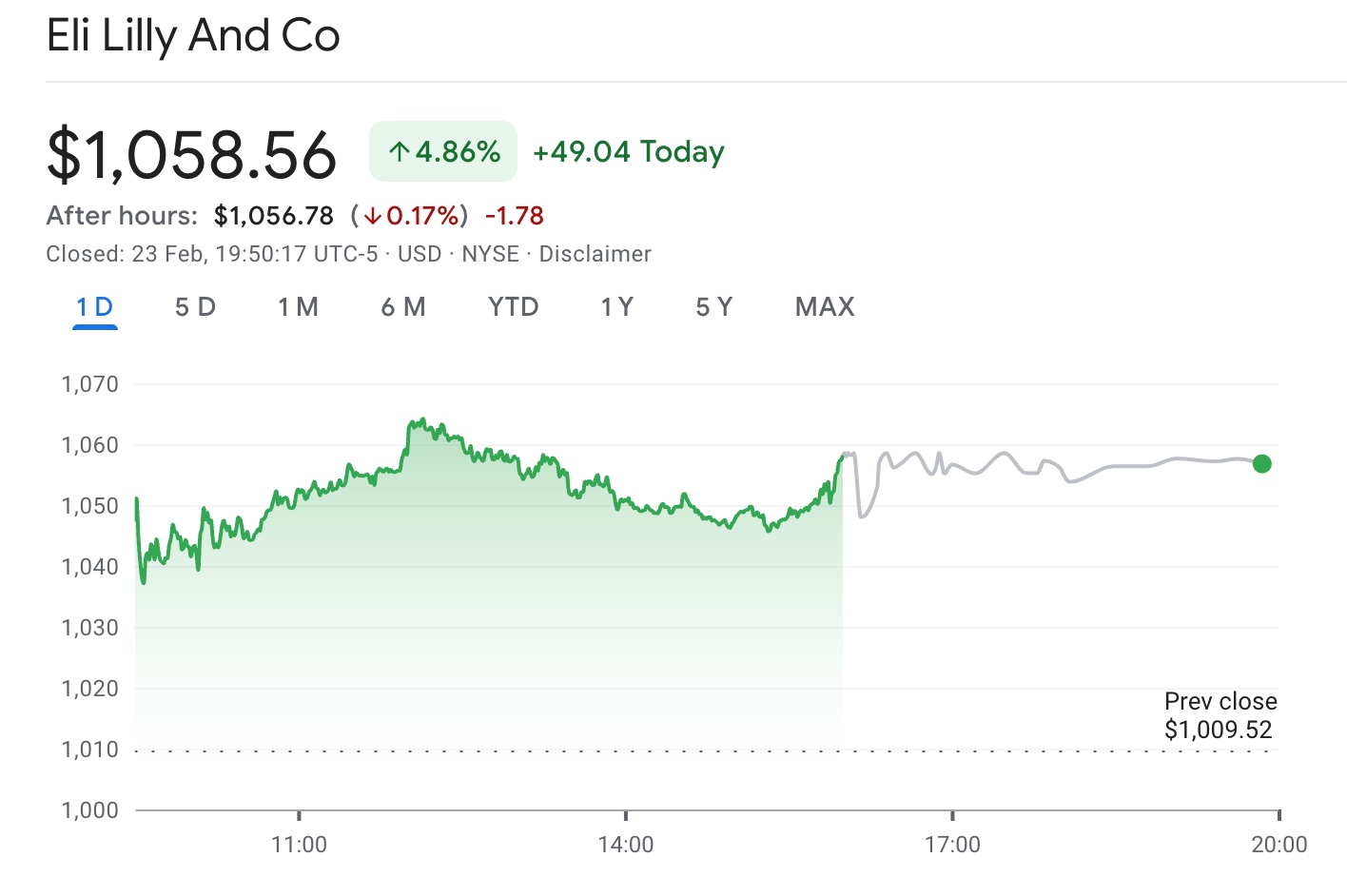
LLY-stock-35f53618c2e8430d9f22ae346cd7fc26

[Stock price trend of Eli Lilly following the announcement; Source: Google Finance]
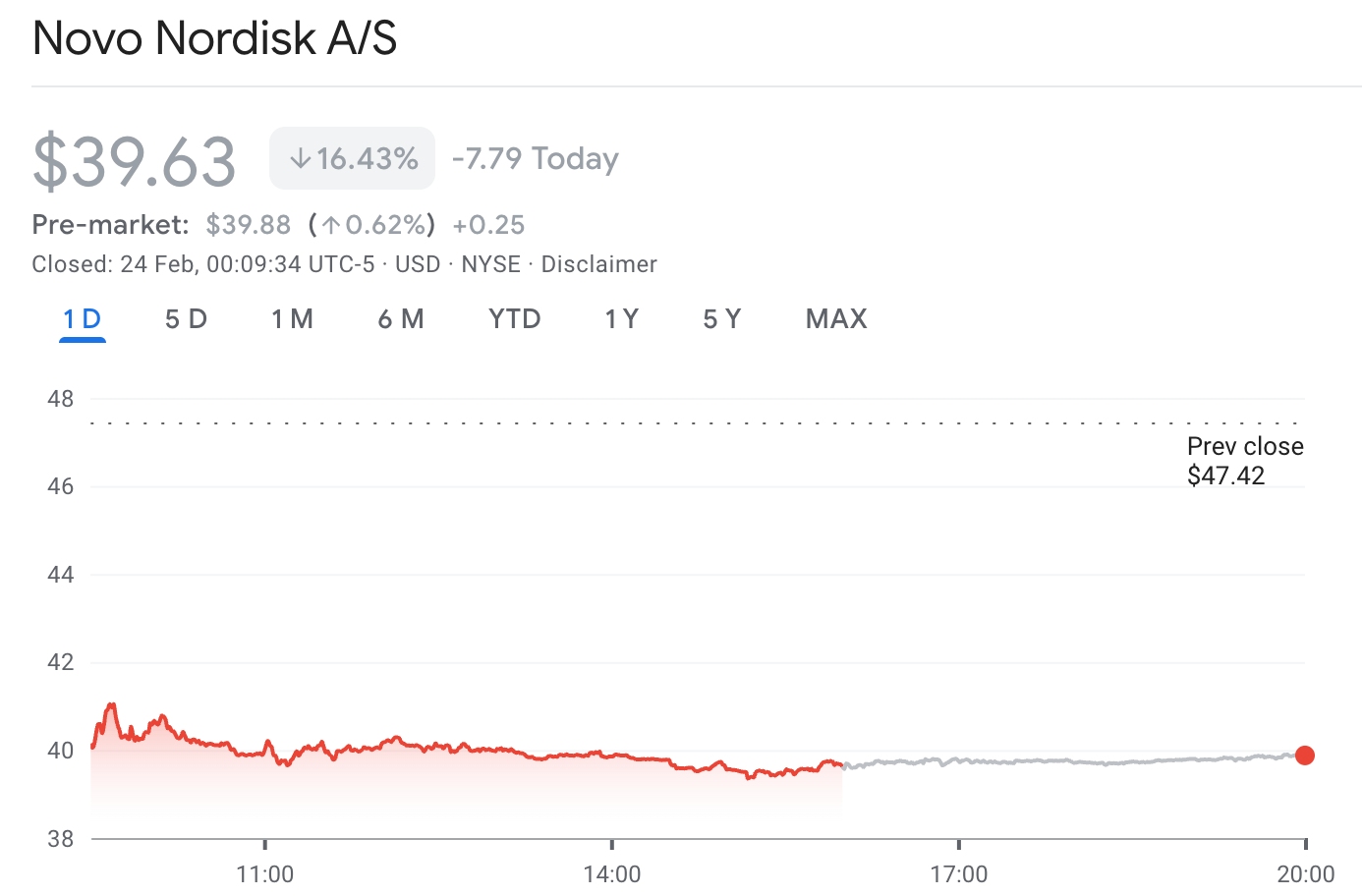
NVO-stock-f172be122c1e4dddbc7830ca1dbc9312

[Stock price trend of Novo Nordisk following the announcement; Source: Google Finance]

Meanwhile, competitor Novo Nordisk (NVO) saw its share price plunge by more than 16%, as the market paid close attention to the maneuvering between the two giants regarding production capacity, pricing, and distribution channels.

The Competitive Logic Behind Multi-Dose Devices

The core significance of the Zepbound KwikPen lies in the fact that multi-dose devices improve patient convenience and may reduce unit packaging and logistics costs, thereby improving profit structures. Bloomberg previously noted that the true core of competition for GLP-1 drugs has gradually shifted from "efficacy differences" to "supply capacity and commercial efficiency."

Eli Lilly has acted quickly in expanding weight-loss indications, establishing physician channels, and developing out-of-pocket market strategies. Currently, at a stage where the proportion of out-of-pocket payers in the U.S. remains high, pricing flexibility and payment negotiation capabilities will determine short-term market share trends. The launch of the Zepbound multi-dose device will help further expand the user base and increase the repurchase rate.

Based on stock performance, Eli Lilly has become one of the most trend-setting heavyweight stocks in the U.S. healthcare sector. Its rise is not driven by sentiment but is the result of continuous upward revisions to its earnings models.

Novo Nordisk: Temporary Pressure or Structural Challenge?

In contrast, although Novo Nordisk's core products Wegovy and Ozempic continue to maintain strong sales, its stock price has experienced several significant pullbacks, even halving at points. Market concerns are primarily concentrated in three areas: the pace of capacity expansion, price competition risks, and the level of marginal surprise from the subsequent innovation pipeline.

The weight-loss drug market is transitioning from "supply shortage" to "competitive pricing." Once supply bottlenecks ease, the market focus will shift to price elasticity and insurance coverage. If Eli Lilly achieves higher commercial efficiency through formulation innovation and scale advantages, Novo Nordisk may face sustained valuation compression pressure.

Industry Trends: Moving from "Explosive Growth" to "Structural Expansion"

The long-term logic of the weight-loss drug market remains unchanged. Rising obesity rates, increasing demand for chronic disease management, and the healthcare system's heightened focus on metabolic diseases form a stable demand foundation.

Bloomberg predicts that the market size for GLP-1 related drugs could reach the hundreds of billions of dollars over the next decade.

Key variables at this stage include three points: the progress of insurance coverage expansion, the pace of global capacity expansion, and the development speed of next-generation oral or long-acting formulations. Both Eli Lilly and Novo Nordisk are accelerating their presence across these dimensions.

From a capital markets perspective, the divergence in stock prices between the two companies does not mean that the industry's prosperity has peaked; rather, it likely reflects the market's dynamic pricing of the competitive landscape. Changes in market share between leaders often lead to valuation fluctuations but do not necessarily change the overall growth trajectory of the sector.

Disclaimer: For information purposes only. Past performance is not indicative of future results.
placeholder
Bitcoin CME gaps at $35,000, $27,000 and $21,000, which one gets filled first?Prioritize filling the $27,000 gap and even try higher.
Author  FXStreet
Aug 22, 2023
Prioritize filling the $27,000 gap and even try higher.
placeholder
Pinduoduo Earnings Incoming: Morgan Stanley Sees Long-Term Profit Potential​Insights – On November 21, Chinese e-commerce giant Pinduoduo (PDD) will release its Q3 2024 earnings.
Author  Mitrade
Nov 20, 2024
​Insights – On November 21, Chinese e-commerce giant Pinduoduo (PDD) will release its Q3 2024 earnings.
placeholder
Elon Musk’s xAI and Neuralink Launch New Funding Rounds​Billionaire Elon Musk recently raised funds for his two high-profile tech companies, xAI and Neuralink.
Author  Insights
Jun 03, 2025
​Billionaire Elon Musk recently raised funds for his two high-profile tech companies, xAI and Neuralink.
placeholder
Bitcoin briefly loses 2025 gains as crypto plunges over the weekend.Bitcoin experienced a sharp decline this weekend, briefly erasing its 2025 gains and dipping below its year-opening value of $93,507. The cryptocurrency fell to a low of $93,029 on Sunday, representing a 25% drop from its all-time high in October. Although it has rebounded slightly to around $94,209, the pressures on the market remain significant. The downturn occurred despite the reopening of the U.S. government on Thursday, which many had hoped would provide essential support for crypto markets. This year initially appeared promising for cryptocurrencies, particularly after the inauguration of President Donald Trump, who has established the most pro-crypto administration thus far. However, ongoing political tensions—including Trump's tariff strategies and the recent government shutdown, lasting a historic 43 days—have contributed to several rapid price pullbacks for Bitcoin throughout the year. Market dynamics are also being influenced by Bitcoin whales—investors holding large amounts of Bitcoin—who have been offloading portions of their assets, consequently stalling price rallies even as positive regulatory developments emerge. Despite these sell-offs, analysts from Glassnode argue that this behavior aligns with typical patterns seen among long-term investors during the concluding stages of bull markets, suggesting it is not indicative of a mass exodus. Notably, Bitcoin is not alone in its struggles, as Ethereum and Solana have also recorded declines of 7.95% and 28.3%, respectively, since the start of the year, while numerous altcoins have faced even steeper losses. Looking ahead, questions linger regarding the viability of the four-year cycle thesis, particularly given the increasing institutional support and regulatory frameworks now in place in the crypto landscape. Matt Hougan, chief investment officer at Bitwise, remains optimistic, suggesting a potential Bitcoin resurgence in 2026 driven by the “debasement trade” thesis and a broader trend toward increased adoption of stablecoins, tokenization, and decentralized finance. Hougan emphasized the soundness of the underlying fundamentals, pointing to a positive outlook for the sector in the longer term.
Author  Mitrade
Nov 17, 2025
Bitcoin experienced a sharp decline this weekend, briefly erasing its 2025 gains and dipping below its year-opening value of $93,507. The cryptocurrency fell to a low of $93,029 on Sunday, representing a 25% drop from its all-time high in October. Although it has rebounded slightly to around $94,209, the pressures on the market remain significant. The downturn occurred despite the reopening of the U.S. government on Thursday, which many had hoped would provide essential support for crypto markets. This year initially appeared promising for cryptocurrencies, particularly after the inauguration of President Donald Trump, who has established the most pro-crypto administration thus far. However, ongoing political tensions—including Trump's tariff strategies and the recent government shutdown, lasting a historic 43 days—have contributed to several rapid price pullbacks for Bitcoin throughout the year. Market dynamics are also being influenced by Bitcoin whales—investors holding large amounts of Bitcoin—who have been offloading portions of their assets, consequently stalling price rallies even as positive regulatory developments emerge. Despite these sell-offs, analysts from Glassnode argue that this behavior aligns with typical patterns seen among long-term investors during the concluding stages of bull markets, suggesting it is not indicative of a mass exodus. Notably, Bitcoin is not alone in its struggles, as Ethereum and Solana have also recorded declines of 7.95% and 28.3%, respectively, since the start of the year, while numerous altcoins have faced even steeper losses. Looking ahead, questions linger regarding the viability of the four-year cycle thesis, particularly given the increasing institutional support and regulatory frameworks now in place in the crypto landscape. Matt Hougan, chief investment officer at Bitwise, remains optimistic, suggesting a potential Bitcoin resurgence in 2026 driven by the “debasement trade” thesis and a broader trend toward increased adoption of stablecoins, tokenization, and decentralized finance. Hougan emphasized the soundness of the underlying fundamentals, pointing to a positive outlook for the sector in the longer term.
placeholder
Silver Price Forecast: XAG/USD falls to near $72.00 amid fading safe-haven demandSilver price (XAG/USD) continues to lose ground after registering tiny losses in the previous day, trading around $72.90 during the Asian hours on Thursday. The safe-haven demand for the precious metal fades amid rising optimism over Middle East peace.
Author  FXStreet
Apr 02, Thu
Silver price (XAG/USD) continues to lose ground after registering tiny losses in the previous day, trading around $72.90 during the Asian hours on Thursday. The safe-haven demand for the precious metal fades amid rising optimism over Middle East peace.
goTop
quote