


Nasdaq Lifts Bitcoin ETF Restrictions; Why BTC Price Falls Instead of Rising
TradingKey - Nasdaq's lifting of restrictions fails to offset Middle East tensions as capital continues to pour into the crude oil market; Bitcoin prices lack key support.
On March 9 (GMT+8), Bitcoin prices extended their decline, briefly dipping below $66,000 during early trading before rebounding to above $67,000. Over the past four days, Bitcoin has trended downward continuously, with a cumulative drop of approximately 10%, stifling the nascent bullish momentum once again.
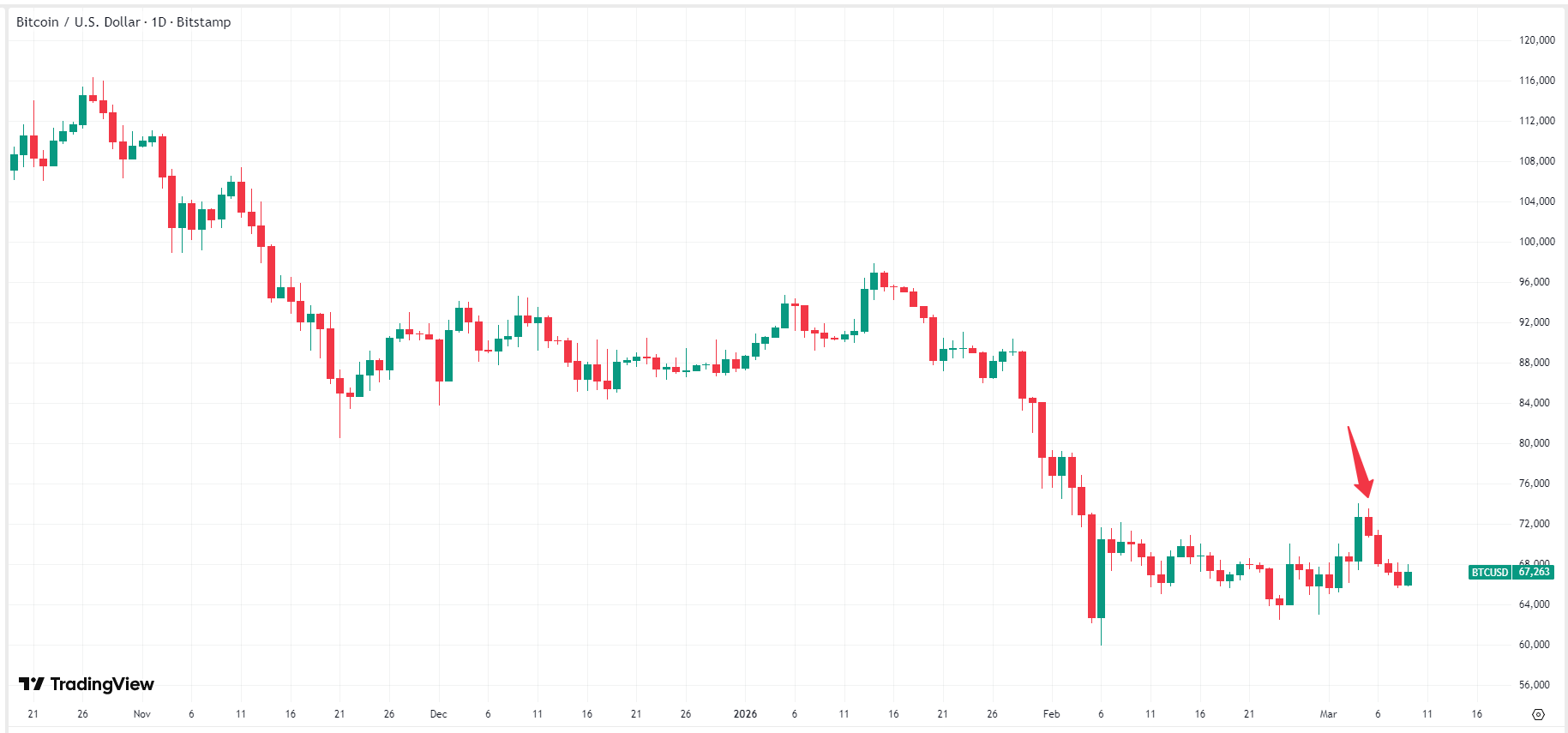 Bitcoin price chart, Source: CoinMarketCap
Recently, Nasdaq, the world's second-largest exchange, announced the removal of various restrictions on Bitcoin ETFs, eliminating the 25,000-contract limit on options and removing entry barriers for both institutional and retail traders, allowing any investor to trade Bitcoin ETFs on its platform. Despite Nasdaq receiving regulatory approval, why has the market's response been so lackluster, effectively ignoring this positive news?
Since October 2025, Bitcoin prices have retreated from their highs with a maximum drawdown of over 50%. This extreme volatility has severely dented investor confidence, leaving the market in the doldrums. Against this backdrop, Nasdaq's removal of Bitcoin ETF restrictions does not constitute a substantial positive catalyst and struggles to attract capital inflows.
Furthermore, the deteriorating situation in the Middle East has spurred a massive influx of capital into the crude oil market. This morning, international oil prices surged by over 30%, with WTI crude oil ( USOIL ) prices briefly touching $112 per barrel, hitting a new high since the 2022 Russia-Ukraine war. Since the outbreak of the U.S.-Iran conflict on February 28, crude oil prices have continued to soar, skyrocketing over 60% in less than six trading days.
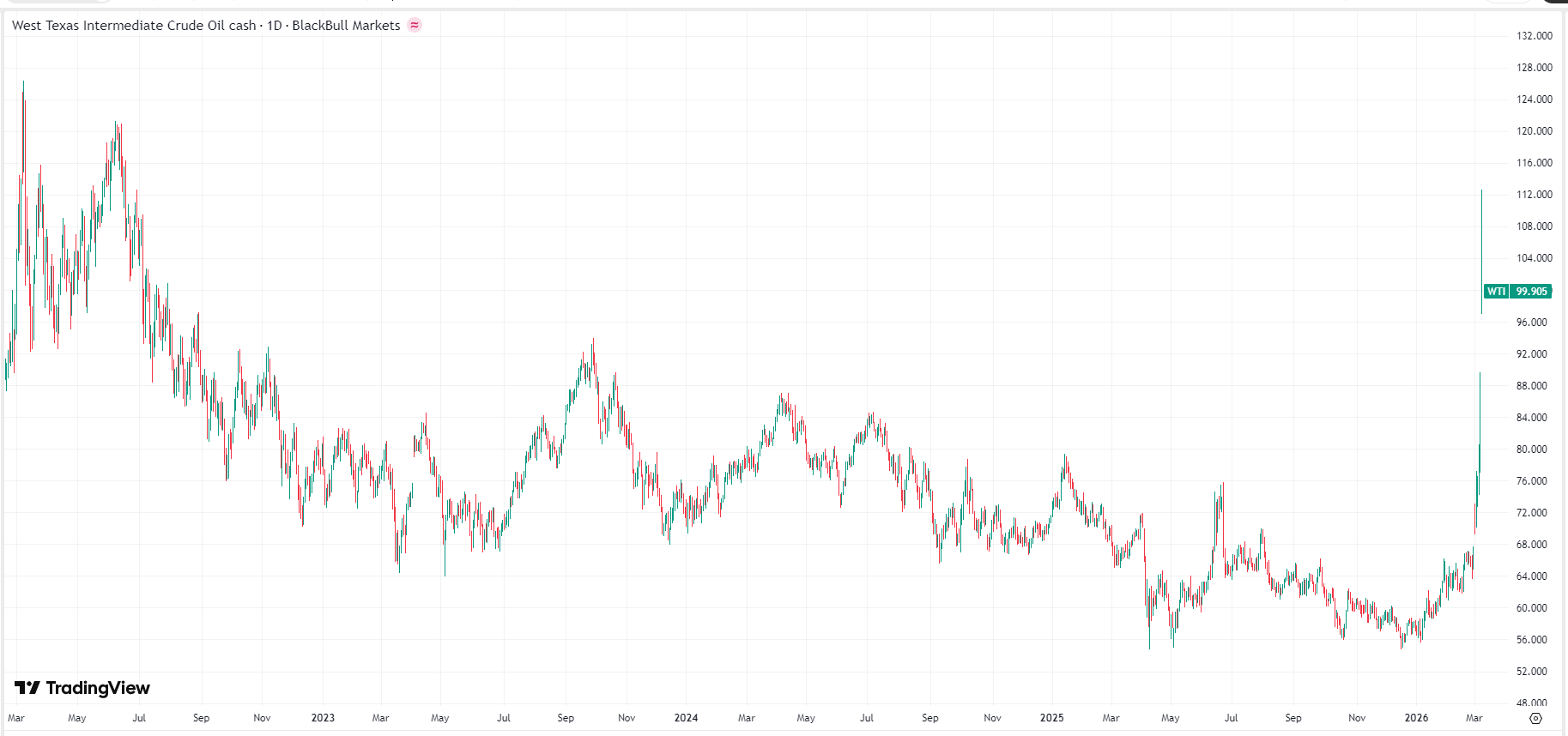 WTI crude oil price chart, Source: TradingView
Currently, the Middle East situation shows no signs of easing, leaving crude oil as the world's most sought-after asset while risk assets like stocks and cryptocurrencies remain under pressure. Today, Asia-Pacific markets faced a "Black Monday," with Japanese and South Korean stocks closing down more than 5%; gold ( XAUUSD) and silver ( XAGUSD) both fell more than 1% today.
Due to regional instability, several Middle Eastern countries, including Iraq and Kuwait, have announced production cuts or suspensions. To soothe the market and suppress oil prices, the U.S. claimed it would not target Iranian energy infrastructure; however, Iran has not been swayed, threatening to attack neighboring oil facilities—potentially another tactic for Iran to strike back at the U.S.
Last Sunday, a spokesperson for the Islamic Revolutionary Guard Corps (IRGC) stated, "If you can withstand oil prices above $200 per barrel, then continue this game." Moving forward, as long as this conflict persists, capital will continue to flow into the crude oil market, potentially leading to further outflows from the crypto market and keeping Bitcoin prices suppressed.
Recommended Articles


