




Gold Beat Bitcoin, Oil Crashed, But Smart Money Kept Buying Crypto
Gold surged, oil slumped, and Bitcoin stalled in 2025. At the same time, corporate treasuries quietly bought tens of billions of dollars’ worth of crypto. Together, these moves explain how tariffs, liquidity, and institutional behavior reshaped markets entering 2026.
Data from CoinGecko shows a year of sharp contrasts. Gold rose 62.6%, oil fell 21.5%, and Bitcoin ended down 6.4%. Yet Digital Asset Treasury Companies (DATs) deployed nearly $50 billion into Bitcoin and Ethereum, taking control of more than 5% of the total supply.
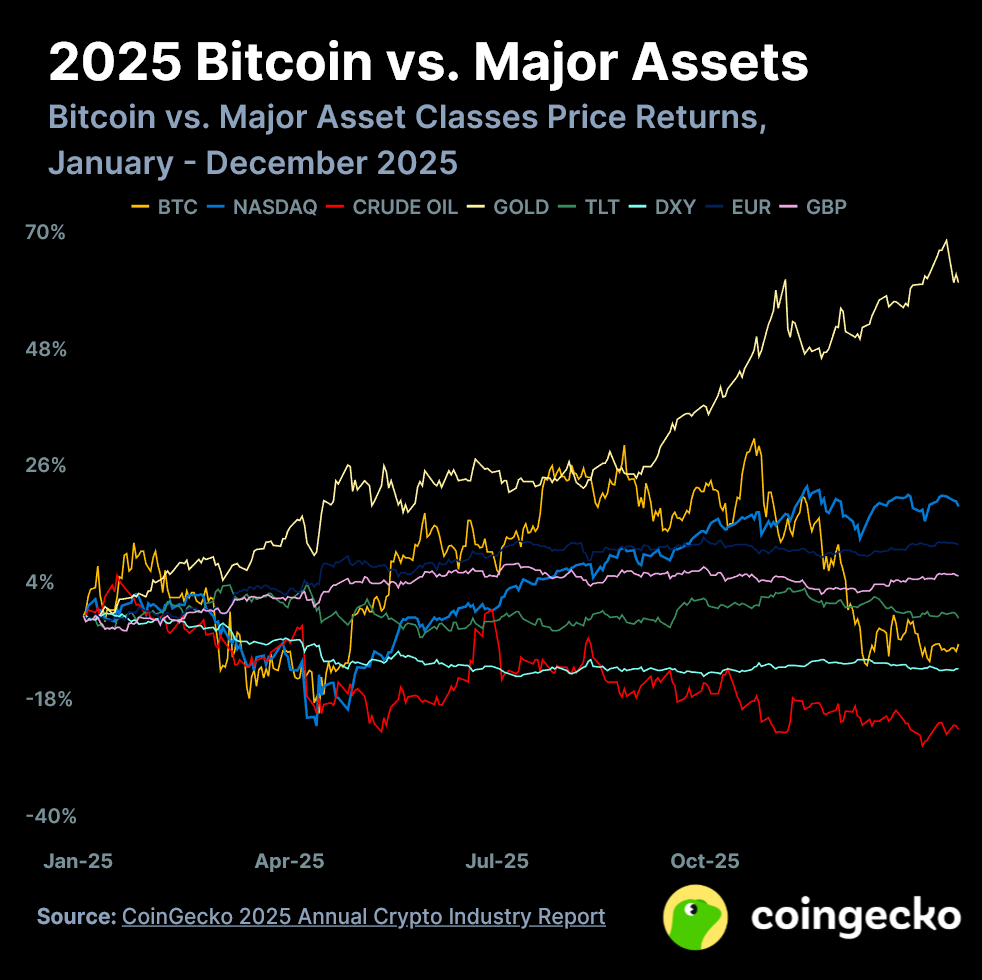 Bitcoin Vs Major Assets’ Price Performance in 2025. Source: CoinGecko
Gold Thrived as Tariffs Amplified Uncertainty
Gold’s outperformance aligned with a tariff-heavy environment. Trade barriers increase uncertainty, weaken confidence in long-term currency stability, and encourage defensive positioning. Gold benefits immediately from that mix.
Unlike growth assets, gold does not require expanding liquidity to rally. It responds to policy risk and geopolitical stress. With tariffs escalating and global trade friction rising, gold became the default hedge.
Oil Absorbed the Growth Shock As Bitcoin Stalled
Oil told the opposite story. Tariffs slow trade, compress manufacturing activity, and reduce shipping volumes. That directly hits energy demand.
Crude prices fell 21.5% in 2025 as supply stayed ample and non-OPEC production climbed. In tariff regimes, oil behaves like a growth proxy—and growth cooled.
Bitcoin’s -6.4% year reflects a tug-of-war. Tariffs created uncertainty that should favor hedges, but they also drained discretionary liquidity. At the same time, U.S. inflation stayed moderate but sticky, keeping financial conditions tight.
The result was a long consolidation after October’s liquidation shock. Bitcoin did not collapse like oil, nor did it rally like gold. It waited for liquidity pressure to stop intensifying.
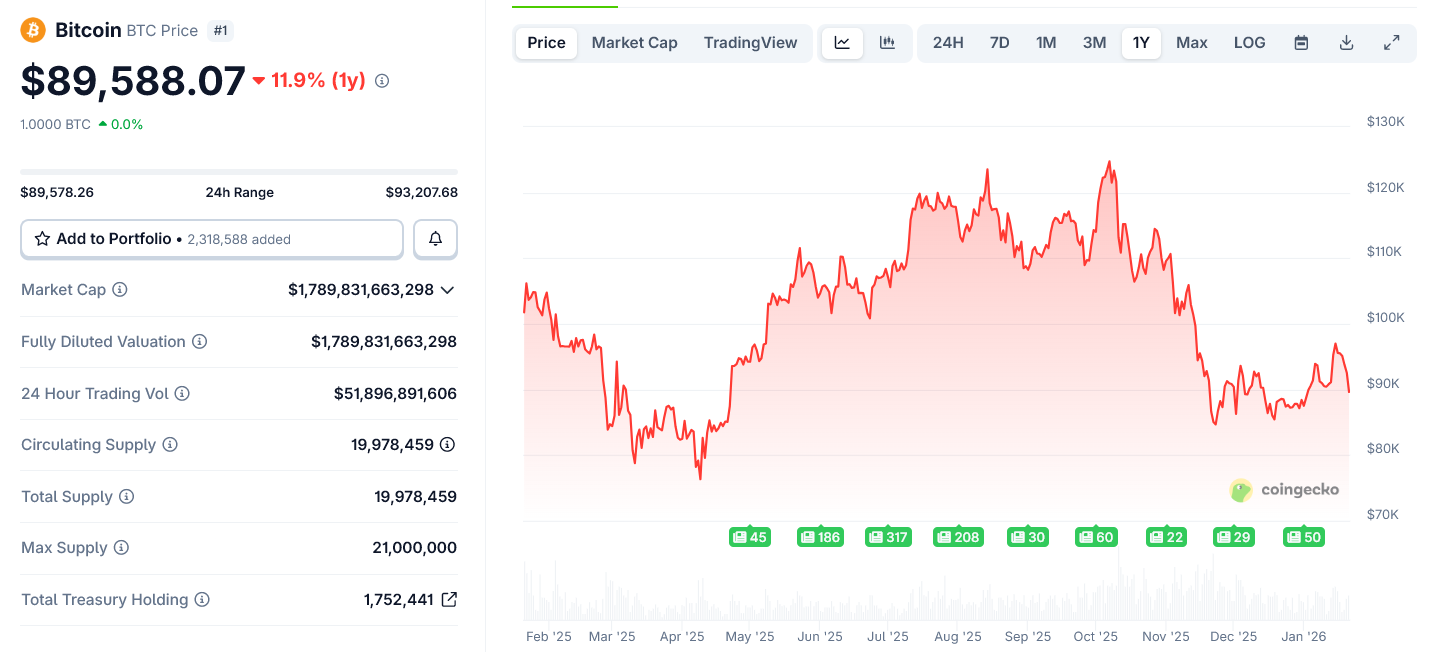 Bitcoin 1-Year Price Chart. Source: CoinGecko
Fiat Pressure Stayed Contained, For Now
Despite tariffs acting as a slow domestic tax, inflation remained controlled. Costs were absorbed gradually by importers and retailers, delaying pass-through to consumers. That kept fiat stress muted in headline data, even as purchasing power eroded quietly.
This “slow burn” capped risk appetite without triggering panic—another reason crypto range-bound rather than broke down.
Treasury Buyers Accumulated Through the Reset
While prices struggled, DATs bought aggressively. They spent $49.7 billion in 2025, with roughly half deployed in the second half of the year. Their holdings rose to $134 billion by year-end, up 137% year over year.
This behavior signals long-term conviction. Treasury buyers accept volatility to secure supply. Their accumulation during a down year concentrated Bitcoin and Ethereum in strong hands and tightened available float.
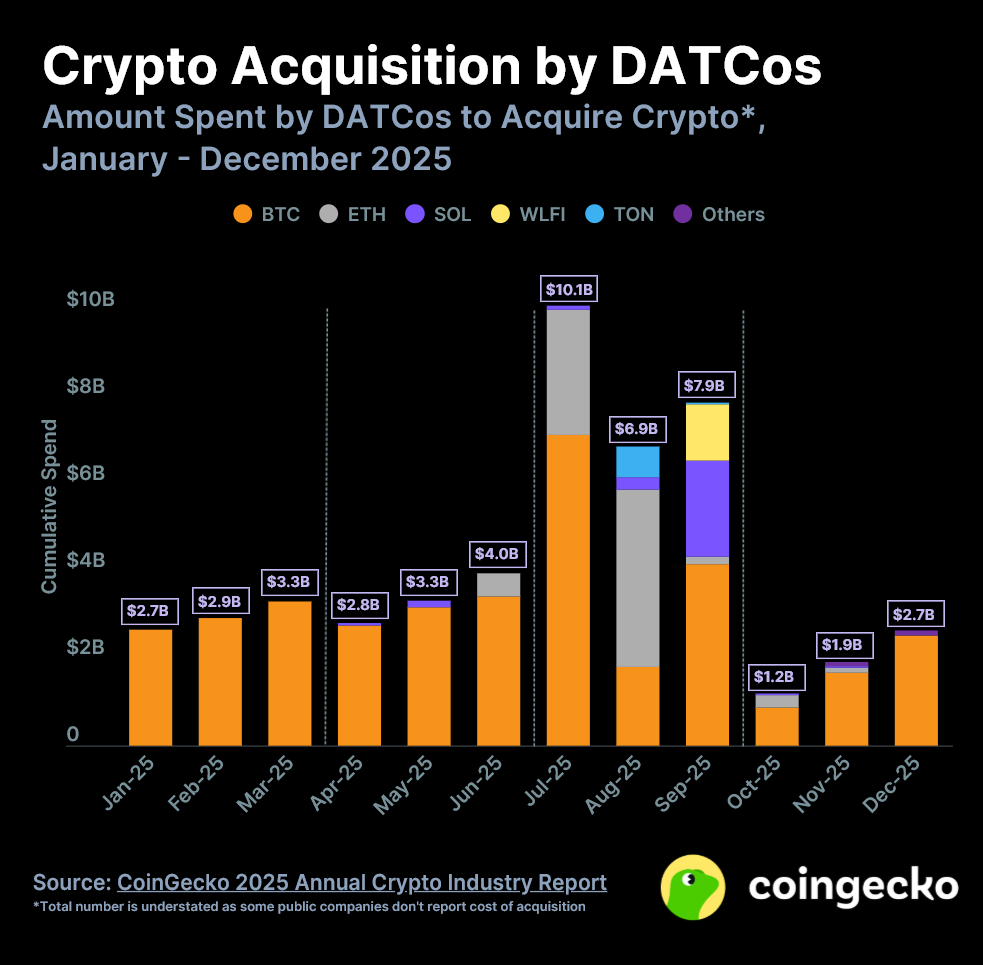 Crypto Purchases by Digital Asset Treasuries in 2025. Source: CoinGecko
Overall, 2025 was a year of compression for crypto markets. Tariffs favored gold, hurt oil, and delayed Bitcoin’s cycle by draining liquidity. Meanwhile, institutions built positions quietly.
As tariff pressure stopped worsening and selling pressure faded, Bitcoin began to move again. The market enters 2026 with tighter supply, stronger holders, and a clearer path for expansion once liquidity improves.
Recommended Articles


