


Verizon Communications Inc Stock (VZ) Moved Down by 5.61% on Jun 29: A Full Analysis
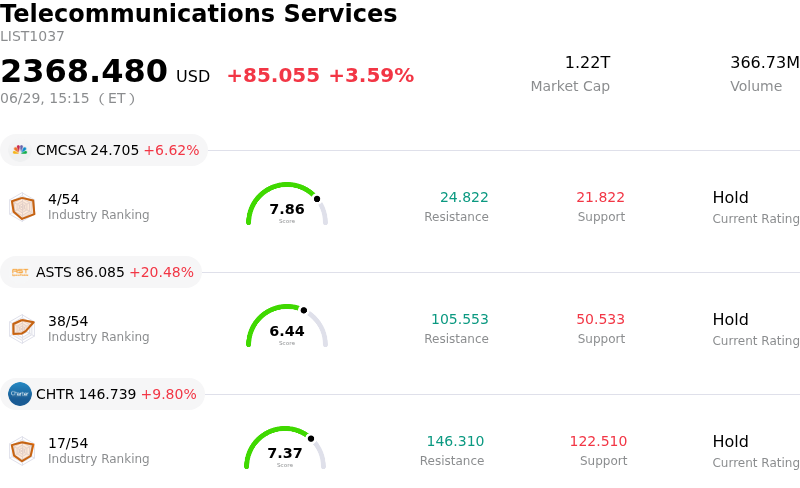
Verizon Communications Inc (VZ) moved down by 5.61%. The Telecommunications Services sector is up by 3.59%. The company underperformed the industry. Top 3 stocks by turnover in the sector: Comcast Corp (CMCSA) up 6.62%; AST SpaceMobile Inc (ASTS) up 20.48%; Charter Communications Inc (CHTR) up 9.80%.
What is driving Verizon Communications Inc (VZ)’s stock price down today?
The significant decline in Verizon's stock price stems from a combination of index rebalancing pressure, substantial upcoming financial charges, and intensifying competitive threats from satellite technology. A key technical driver of the downward movement is Verizon's removal from the Dow Jones Industrial Average, effective before the market open. S&P Dow Jones Indices replaced Verizon with Alphabet, triggering automated and mechanical selling from passive, index-linked funds and exchange-traded products, creating immediate technical selling pressure unrelated to the company's daily operational health.
Simultaneously, Verizon faces heavy near-term financial headwinds. The company announced a 50:50 joint venture with BT Group to combine their international enterprise operations into a new entity. In connection with this transaction, which includes a $625 million equalization payment to BT Group, Verizon disclosed that it expects to record an estimated second-quarter loss of $700 million to $800 million as contributed assets are classified as held for sale. Furthermore, under the leadership of Chief Executive Officer Dan Schulman, the telecom giant revealed significant upcoming restructuring charges for the second quarter, including workforce reduction costs estimated between $350 million and $450 million, and asset rationalization charges of $200 million to $300 million.
Compounding these balance sheet pressures, Verizon emerged as the heaviest bidder in the Federal Communications Commission's recent Auction 113. The company committed $3.2 billion to acquire 82 spectrum licenses, vastly outspending its legacy peers AT&T and T-Mobile. This large capital outlay was exacerbated by intense bidding competition from EchoStar, which artificially inflated license prices before Verizon secured its bids. This significant financial commitment places a further burden on Verizon's capital allocation and debt-heavy balance sheet at a time when interest rates and operational costs remain elevated.
Finally, broader industry dynamics rattled investor confidence in the legacy telecommunications sector. Reports surfaced that SpaceX plans to launch a retail Starlink mobile service for United States consumers, positioning Elon Musk's satellite company as a direct threat to the traditional carriers. SpaceX also secured licensed spectrum alongside the legacy players and is reportedly exploring a partnership with Charter Communications to combine satellite capabilities with cable infrastructure. This potential disruption threatens to erode the market share and pricing power of established wireless providers, adding severe fundamental pressure to Verizon's stock.
Technical Analysis of Verizon Communications Inc (VZ)
Technically, Verizon Communications Inc (VZ) shows a MACD (12,26,9) value of 0.007, indicating a neutral signal. The RSI at 49.386 suggests neutral condition and the Williams %R at 48.889 suggests neutral condition. Please monitor closely.
Media Coverage of Verizon Communications Inc (VZ)
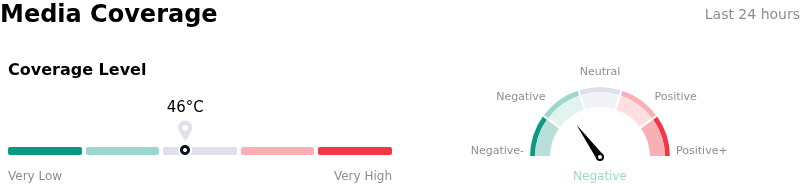
In terms of media coverage, Verizon Communications Inc (VZ) shows a coverage score of 46, indicating a moderate level of media attention. The overall market sentiment index is currently in bearish zone.
Fundamental Analysis of Verizon Communications Inc (VZ)
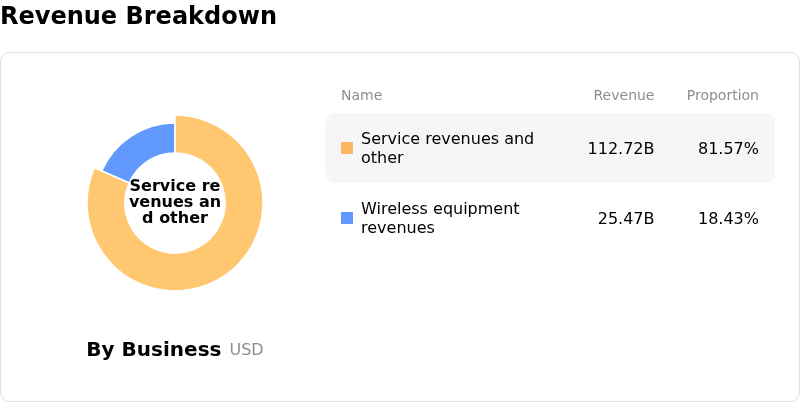
Verizon Communications Inc (VZ) is in the Telecommunications Services industry. Its latest annual revenue is $138.19B, ranking 1 in the industry. The net profit is $17.17B, ranking 3 in the industry. Company Profile
Over the past month, multiple analysts have rated the company as Buy, with an average price target of $51.98, a high of $71.00, and a low of $46.00.
More details about Verizon Communications Inc (VZ)
Company Specific Risks:
- Severe Multi-Billion Dollar Q2 2026 Restructuring Charges: According to its June 29, 2026 SEC 8-K filing, Verizon expects to record up to $1.55 billion in total charges for the second quarter of 2026. This includes an estimated $700 million to $800 million loss from classifying its contributed international assets as held-for-sale under its new joint venture with BT Group (combined with a $625 million cash equalization payment to BT), $350 million to $450 million in severance costs from ongoing headcount reductions, and $200 million to $300 million in real estate and network asset rationalization charges.
- Disruptive Entry of Satellite and Cable Competitors: Reports over the weekend of June 26–28, 2026, revealed that SpaceX plans to launch a retail Starlink mobile service for U.S. consumers, utilizing newly acquired AWS-3 spectrum licensed in a recent FCC auction. This direct entry into the retail wireless market—alongside executive-level talks between SpaceX and Charter Communications for a combined consumer mobile offering—threatens to heavily dilute Verizon's core market share and disrupt its pricing power, especially in rural and underserved areas.
- Forced Institutional Outflows from Dow Jones Removal: Effective before the market open on June 29, 2026, Verizon was officially removed from both the Dow Jones Industrial Average (replaced by Alphabet) and the Russell Top 50 Index. This structural deletion has triggered immediate, mechanical selling pressure from passive mutual funds, ETFs, and institutional trackers, exacerbating intraday stock volatility.
- Elevated Debt Burden and Dividend Coverage Strain: Verizon is carrying a massive net debt load of approximately $192 billion, aggravated by the integration of its $20 billion acquisition of Frontier Communications. With interest expenses climbing 19% year-over-year, prolonged high interest rates restrict Verizon's free cash flow growth and significantly constrain the financial cushion needed to support its high-yield dividend payout.
Recommended Articles


