


Wall Street’s winning sessions are rubbing off on Asian stock markets

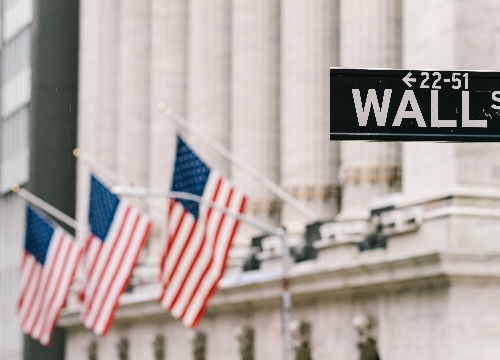
Wall Street closed higher on Tuesday, and that gain flowed straight into Asia by Wednesday morning. The S&P 500 went up by 0.16% to end at 5,776.65, extending Monday’s rally.
The Nasdaq Composite surged by 0.46% to finish at 18,271.86, and the Dow Jones Industrial Average rose just 4.18 points, closing at 42,587.50. The boost came as investors bet that Donald Trump’s new tariffs will be less aggressive than feared.
According to CNBC, traders mostly ignored the latest consumer data from March, which showed a steep drop in how Americans view their financial futures. The Conference Board reported that its confidence index fell to 92.9, below the expected 93.5.
The expectations component, which looks ahead six months, dropped to 65.2, the lowest since 2013. That number is also far under 80, the level many analysts use to flag possible recessions.
Only one sector is still green this month—energy, up 3.2%. On Tuesday, it added another 0.3%. Two companies have led that rise. EQT jumped around 13% in March. Expand Energy is close behind, up nearly 11%. Wall Street doesn’t seem to care much about shaky confidence levels, especially with energy stocks helping balance the board.
Asian markets jump on the Wall Street train
That same momentum carried into Asia-Pacific markets on Wednesday. Regional benchmarks rose across the board after following Wall Street’s performance. Asian traders also reacted to signs that Trump’s trade penalties might be more narrow than initially expected.
In Australia, the S&P/ASX 200 index rose 0.71% and ended the session at 7,999. Japan’s Nikkei 225 moved up 0.65%, closing at 38,027.29. The Topix index climbed 0.55% to finish at 2,812.89. In South Korea, the Kospi increased by 1.08% and ended at 2,643.94, while the small-cap Kosdaq index rose 0.73%, finishing at 716.48.
Thailand’s SET Index rose 0.62% after Prime Minister Paetongtarn Shinawatra survived a no-confidence vote in parliament earlier in the day. The vote gave investors confidence that her administration won’t face disruption in the near term.
In Hong Kong, the Hang Seng Index moved up 0.65%. Its Tech Index, which tracks the 30 biggest tech companies listed in Hong Kong, also rose 0.61%. That index is now hovering close to correction territory. But not every market followed the trend. Mainland China’s CSI 300 dropped 0.33%, closing at 3,919.36.
Morgan Stanley made moves on Tuesday as well. The bank raised its year-end forecasts for Chinese indexes for the second time in 2025. Citing strong fourth-quarter earnings from 2024 and a more stable economic outlook, it pushed the Hang Seng Index target up 9% to 25,800.
The MSCI China Index forecast was also increased by 9% to 83 points, and the CSI 300 estimate was bumped up by 8% to 4,220. Morgan Stanley said these upgrades follow signs of strength from Chinese corporate earnings in Q4 and improving macro conditions.
U.S. continues aggressive stance on China
Elsewhere on Tuesday, the United States government took new trade action against China, which could rattle things up in coming sessions. The Department of Commerce’s Bureau of Industry and Security added 80 organizations to its export entity list.
More than 50 of them are Chinese companies, now blocked from receiving goods from U.S. suppliers unless those suppliers get government permission.
The agency said these companies were blacklisted for “acting contrary to U.S. national security and foreign policy interests.” The move is part of the Trump administration’s plan to limit China’s access to certain advanced technologies.
The new restrictions are aimed at stopping Beijing from getting hands on tools used in exascale computing and quantum technologies, both of which are used in artificial intelligence and high-performance computing.
This is Trump’s first blacklist expansion since returning to office in January. It shows that the White House is taking a harder line on tech exports—especially anything connected to China’s defense or surveillance programs. These banned firms will now need special licenses if U.S. businesses want to deal with them at all.
Markets didn’t seem too bothered by the blacklist—at least not yet. The focus stayed on Wall Street’s gains and the belief that Trump’s tariff rollout could be narrower.
Still, traders are watching carefully. “There’s a lot of uncertainty, but for now, the market’s reacting to what looks like a softer trade position,” said Alex Hill, a portfolio manager at Redwood Capital.
For now, the numbers are pointing up. Whether that holds depends on how hard the next set of tariffs hit and how China answers back.
Meanwhile, U.S. executives are piling back into their own stocks. The number of companies where insiders bought shares instead of selling jumped in March, hitting a 0.5 buy-sell ratio, the highest it’s been since June 2024.
That stat comes from Washington Service, and it means the ratio’s now back near its long-term average. It’s a big move up from 0.2 in January, which was the lowest level ever recorded since tracking started in 1988.
Some are reading the buying as a vote of confidence in both the economy and their own companies. But even with this shift, the overall level of insider buying is still nowhere close to the surges seen in late 2018, at the pandemic lows in 2020, or during the 2022 bear market.
Still, the change is making traders wonder: are insiders signaling that this sell-off has gone too far?
Read more
* The content presented above, whether from a third party or not, is considered as general advice only. This article should not be construed as containing investment advice, investment recommendations, an offer of or solicitation for any transactions in financial instruments.


