


Trump orders 100% tariff on imported films to save Hollywood

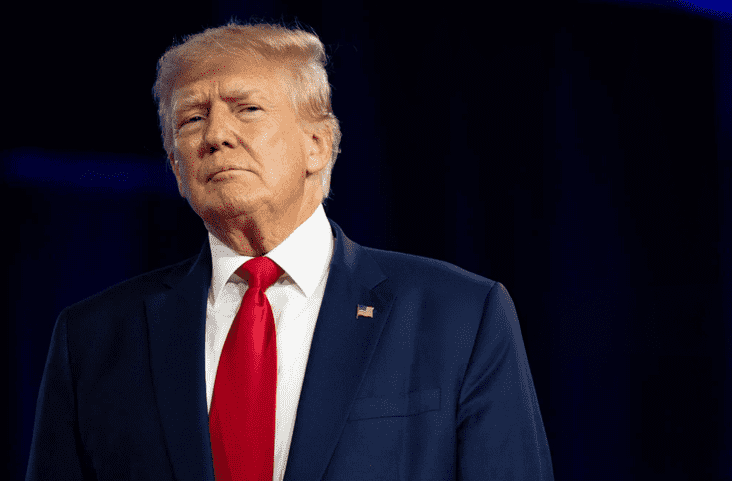
U.S. President Donald Trump declared a 100% tariff on films produced outside the United States on Sunday. He revealed the change on his social media site, Truth Social.
Trump argued that the President’s job was to defend the United States against foreign and domestic threats and that the issue involved messaging and propaganda, among other concerns.
Trump said the tariff would take effect immediately and that the U.S. Department of Commerce and the U.S. Trade Representative would soon start taking all necessary and appropriate action under Section 301, a trade sense law, to halt what he said were unfair trade practices. Yet he did not detail when or how the policy would take effect.
The post was one in a series Trump has touched on tariffs since he began the tariff wars, indicating that no industry may remain untouched. He cast the move in patriotic terms to preserve American jobs and values.
China plans to cut American movie quota
China had already begun to act just weeks before Trump’s announcement. On April 10, China’s Film Administration announced it would cut the number of American movies permitted into the market. The action is believed to be in retaliation to previous U.S. talks of increasing tariffs on imported entertainment.
The administration said in a public statement that the U.S. government’s abuse of tariffs to interfere with and suppress legitimate industries had reshaped domestic audiences’ attitudes toward American films. It added that China would follow market rules and respect audience preferences by reducing the number of U.S. films allowed into the country.
China is the world’s second-largest film market, and Hollywood increasingly depends on it. But it has become more protective of its homegrown entertainment industry. For the last few years, Chinese films have been kicking the backsides of Hollywood imports at the local box office.
In 2024, U.S. movies accounted for about 14% of China’s box office. This is a significant decrease from 36% in 2018. That partly has to do with the fact that Chinese audiences are increasingly weary of sequels and reboots and what they view as formulaic storytelling from Hollywood, experts say.
The Chinese government is now backing more local productions and encouraging audiences to watch homegrown content. The most recent attempt to reduce the United States imports of films threatens to hit Hollywood where it hurts.
Hollywood studios struggle under trade tensions
Hollywood studios are looking at these developments with increasing alarm. The President’s new 100% tariff, though, would increase the cost for foreign films to play in the largest movie market in the world, the United States. This could wane competition for American films and escalate tensions among the nation’s major trade partners: China, France, South Korea, and India.
Meanwhile, China’s reduction of U.S. film imports is already having an impact. For studios like Disney, Warner Bros., and Paramount, which use international markets to help cover production costs, the dependence is even greater for costly blockbusters.
Companies that have long wielded great power are now on the brink of ruin because of the pandemic. Dwindling ticket sales in China — once a top early revenue market for Hollywood — has left major studios scrambling for new sources of revenue.
Film critics also caution that moviegoers could be denied various stories worldwide. If the move entails increased tariffs worldwide, international films could become a thing of the past in American theaters.
Read more
* The content presented above, whether from a third party or not, is considered as general advice only. This article should not be construed as containing investment advice, investment recommendations, an offer of or solicitation for any transactions in financial instruments.


