


Bitcoin Beats The Euro — France Chooses Crypto Over CBDC


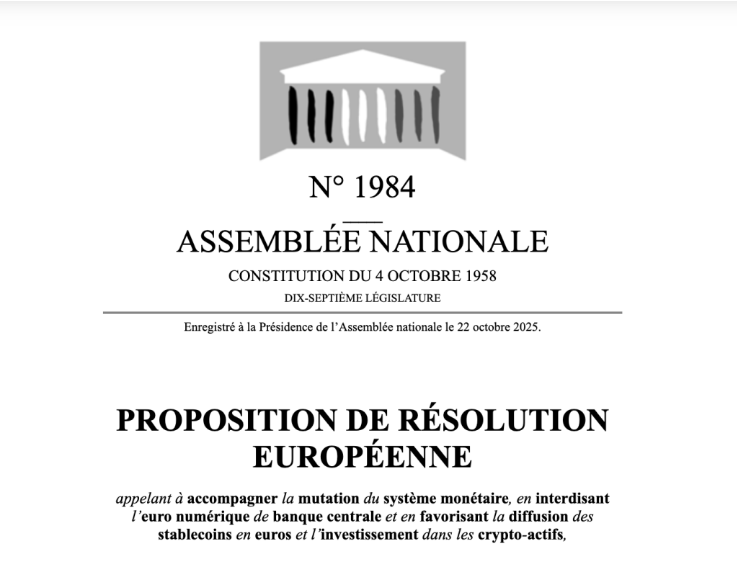
France’s National Assembly moved to block European Central Bank’s planned digital euro and to favor Bitcoin and euro stablecoins. Based on reports, the resolution was filed on October 22, 2025 by Éric Ciotti and UDR members.
Call For A National Bitcoin Reserve
The motion asks for a public body to build a strategic Bitcoin holding equal to 2% of the total supply — about 420,000 BTC — over seven to eight years.
Funding ideas include using surplus energy to mine, retaining seized Bitcoin, and sending a slice of Livret A and LDDS savings to daily BTC purchases. The plan would allow tax payments in Bitcoin if constitutional checks approve it.
Supporters say a centrally run digital currency could let authorities track and freeze people’s money, and they compared the plan to China’s digital yuan.
They warned a digital euro might let users move deposits straight to the ECB and weaken banks, raising the risk of shifts that could destabilize lenders.
The ECB began a preparation phase in November 2023 and expects that phase to end by the end of 2025; officials say circulation could start around 2029, according to Piero Cipollone.
Euro Stablecoins And Market Size
The motion presses for stronger euro-denominated stablecoins to cut dependence on dollar tokens. According to IMF data cited in the proposal, 91% of stablecoin market capitalization — roughly $210 billion of $230 billion — is dollar-based, while the largest euro stablecoin is about $259 million.
Lawmakers want MiCA rules adjusted so European banks and companies can issue euro tokens more easily.
Calls To Adjust Banking Rules
As part of the package, the resolution seeks a lighter touch on Basel prudential rules that now treat some crypto-backed loans as highly risky and impose capital buffers up to 1,250%.
Backers say those rules discourage crypto-collateral lending and want a “targeted deviation” to encourage bank participation.
France has opened doors to more regulated crypto work. The AMF approved BPCE’s Hexarq for custody and trading, and Lise, a tokenized equity platform, got a DLT Pilot Regime green light.
Based on Chainalysis, France processed about $180 billion in crypto flows from July 2024 to June 2025, placing it among Europe’s busiest markets.
The proposal faces legal and political tests, but it makes clear France aims to shape how digital money works in Europe. The debate is expected to draw intense public attention.
Featured image from Unsplash, chart from TradingView
Read more
* The content presented above, whether from a third party or not, is considered as general advice only. This article should not be construed as containing investment advice, investment recommendations, an offer of or solicitation for any transactions in financial instruments.


