




Gold Price Today Australia (16 October 2026): Can XAU/USD Break Above $4,200?

Gold prices are recovering after a volatile week, with XAU/USD trading around US$4,170 per troy ounce on Friday, 16 October 2026. The rebound comes as US Treasury yields retreat, the US dollar weakens and investors reassess inflation risks alongside concerns about debt-funded artificial intelligence (AI) infrastructure investment.
Gold rose sharply on Thursday, 15 October, reaching approximately US$4,177 after falling earlier in the week. The recovery has brought the psychologically important US$4,200 level back into focus.
For Australian investors, the key question is whether falling bond yields can support a sustained gold price recovery despite persistent US inflation.
Gold Price Today: Key Market Highlights
Gold price (XAU/USD)
Immediate resistance: US$4,180–US$4,200, followed by US$4,220.
Key support: US$4,150, followed by US$4,100.
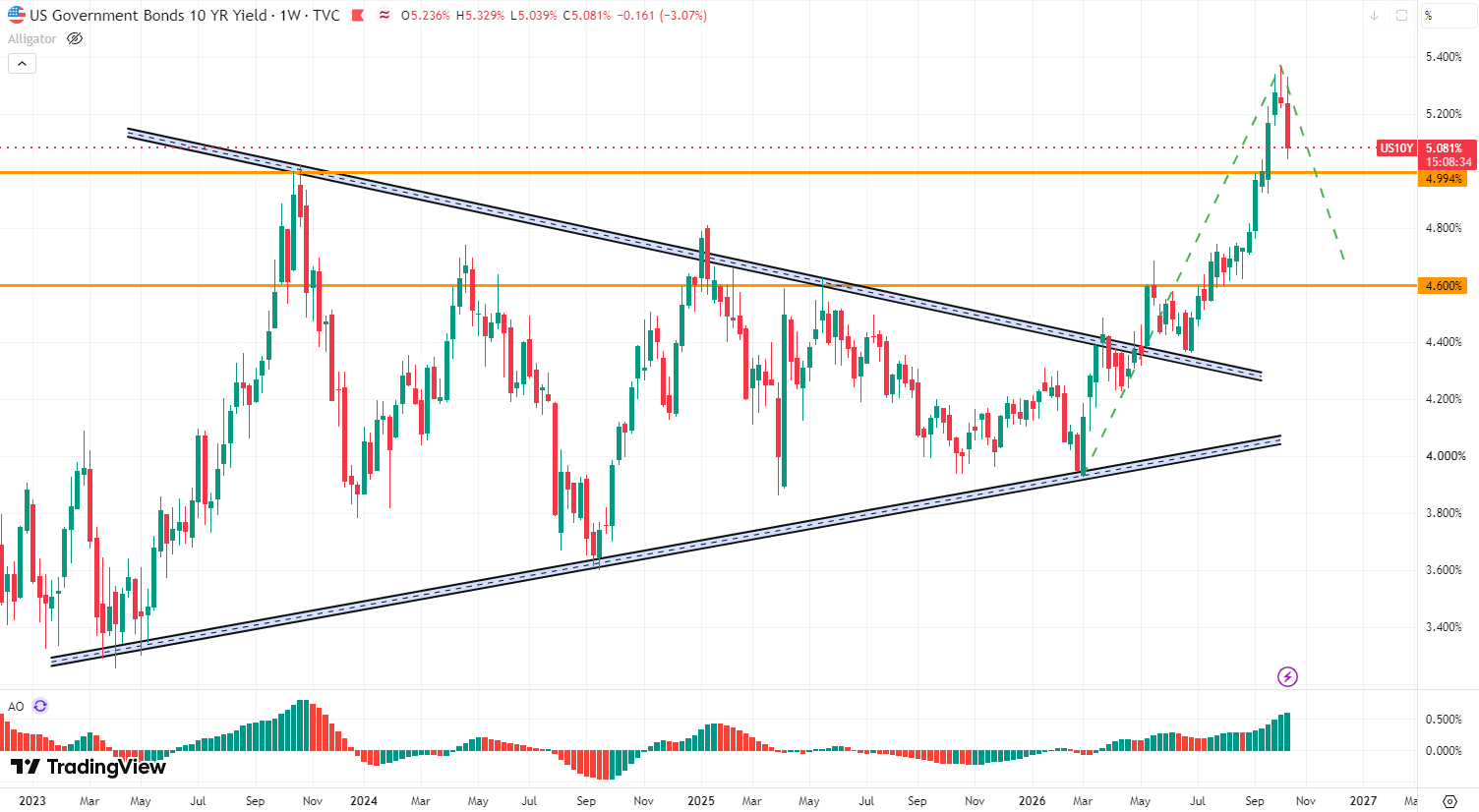
US Treasury yields: The benchmark 10-year yield retreated towards 5%, reducing pressure on non-yielding assets.
US inflation: September producer prices increased 1.3% month-on-month, reinforcing concerns about persistent price pressures.
Market sentiment: AI-related financing risks and equity market volatility have increased demand for defensive assets.
Why Is Gold Going Up Today?
Gold's latest rebound reflects a combination of declining Treasury yields, a softer US dollar and renewed concerns about financial market risk.
Interestingly, the rally has occurred despite stronger-than-expected US inflation data, creating an unusual environment in which gold and US government bonds have both attracted investor interest.
1. US Treasury Yields Retreat Towards 5%
Source:Tradingview
The US 10-year Treasury yield fell sharply on Thursday, approaching the 5% level after previously rising in response to inflation concerns.
This matters because gold does not generate interest income. When bond yields rise, interest-bearing assets generally become more attractive relative to gold. When yields fall, the opportunity cost of holding gold decreases.
The latest decline in Treasury yields has therefore helped support gold prices.
However, the relationship is not always straightforward. Gold can also respond to real interest rates, changes in the US dollar, inflation expectations and demand for safe-haven assets.
For traders watching XAU/USD, the direction of US Treasury yields remains a critical indicator.
2. Hot US CPI and PPI Data Complicate the Federal Reserve Outlook
US inflation remains one of the most important drivers of the gold market.
Data released on 14 October showed that US consumer prices increased 3.7% year-on-year in September, compared with 3.4% in August.
The following day, the US Bureau of Labor Statistics reported that the Producer Price Index (PPI) for final demand rose 1.3% month-on-month in September, accelerating from a 0.5% increase in August.
These figures suggest that inflationary pressures remain elevated, complicating the Federal Reserve's monetary policy outlook.
Higher inflation can influence gold prices in two competing ways.
On one hand, persistent inflation may encourage investors to seek assets traditionally associated with preserving purchasing power, including gold.
On the other hand, stronger inflation can increase expectations of further Federal Reserve interest rate hikes. Higher interest rates and a stronger US dollar may weigh on gold.
The key issue for gold traders is which force dominates.
AI Debt Concerns and Market Volatility Support Safe-Haven Demand
Another factor supporting gold is growing concern about the financing behind the artificial intelligence investment boom.
Large-scale AI infrastructure development requires substantial spending on data centres, computing capacity and electricity supply.
As investment expands, some companies have increasingly relied on borrowing and other financing arrangements to fund their growth.
Investors are now questioning whether future AI-related revenues will be sufficient to justify the scale of capital expenditure and debt commitments.
Concerns about financing conditions and credit risk have contributed to pressure on technology-related assets, encouraging some investors to seek defensive exposure through gold and US government bonds.
This helps explain why gold and Treasury bonds have strengthened even as oil prices and inflation remain elevated.
Nevertheless, gold is not guaranteed to rise during periods of market stress. Investors may also sell gold to raise liquidity, particularly during sharp market corrections.
“Trade gold CFDs with an ASIC-regulated broker. Fast AUD funding via PayID. ”
Gold Price Forecast: Can XAU/USD Break Above US$4,200?
Source: Tradingview
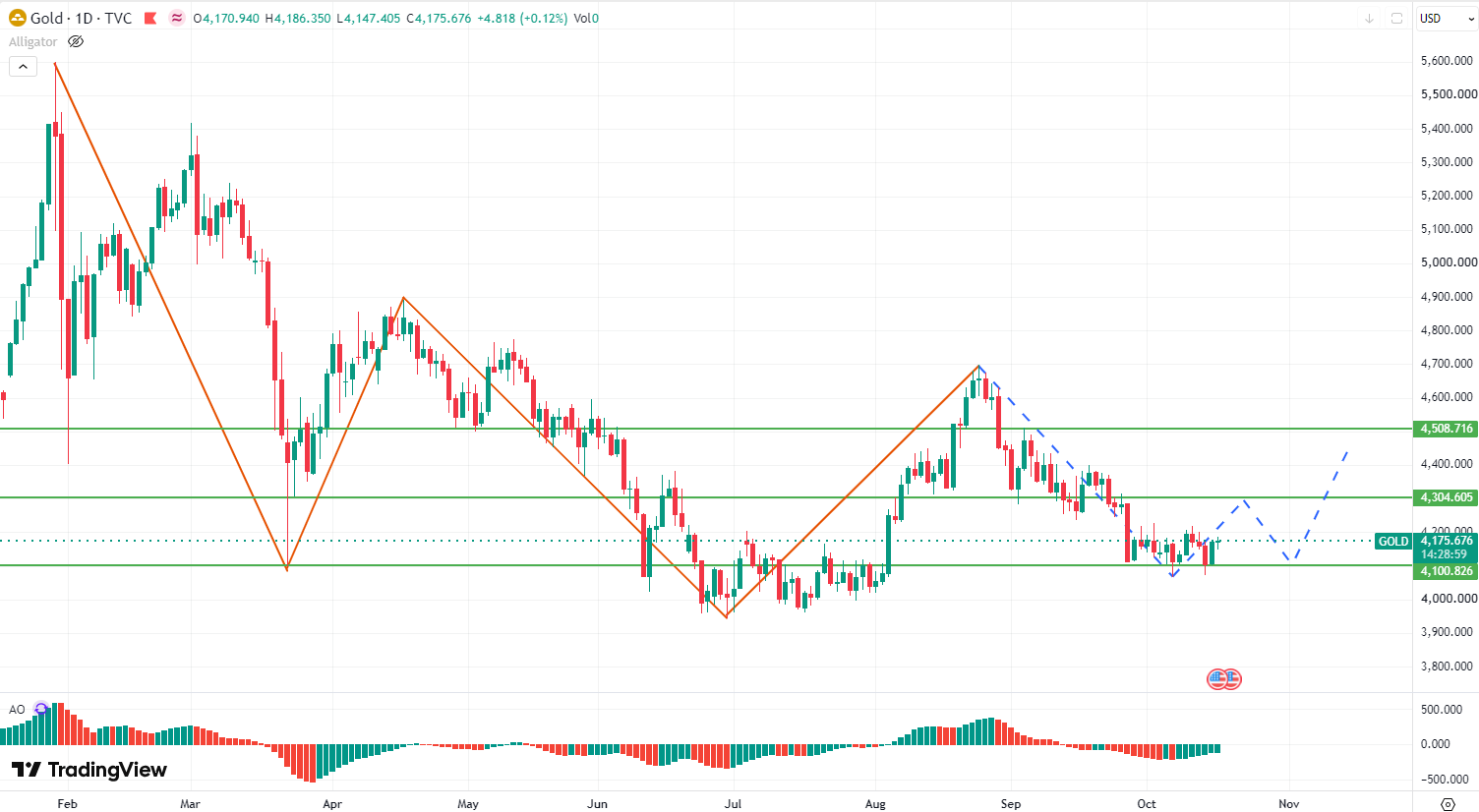
From a technical perspective, gold has recovered after testing the US$4,100 region.
The rebound suggests that buyers remain active at lower price levels, but XAU/USD has not yet established a confirmed breakout above its recent trading range.
The US$4,200–US$4,220 resistance area is therefore particularly important.
Bullish Scenario: Gold Breaks Above US$4,220
If gold can establish a sustained move above US$4,200 and subsequently break through US$4,220, bullish momentum could strengthen.
In this scenario, the next potential upside objective would be the US$4,300 region.
A more extended rally towards US$4,500 would likely require additional catalysts, such as falling real yields, a weaker US dollar or a further deterioration in global risk sentiment.
Traders should watch whether a breakout is supported by sustained buying rather than a brief intraday spike.
Bearish Scenario: Gold Falls Below US$4,100
If gold fails to overcome resistance near US$4,200, the market could remain range-bound.
A move below US$4,150 may expose the US$4,100 support area.
A sustained breakdown beneath US$4,100 would weaken the near-term recovery outlook and bring the US$4,075 region into focus.
Stronger US economic data, rising Treasury yields or a renewed rally in the US dollar could contribute to downside pressure.
Neutral Scenario: Gold Consolidates Between US$4,100 and US$4,200
Gold may also continue trading sideways as investors await further economic data and the next Federal Reserve decision.
In this environment, short-term price movements may be driven by changes in bond yields, inflation expectations and market sentiment rather than a sustained directional trend.
How Could Australian Traders Approach Gold Market Volatility?
With gold trading near important technical levels, traders may consider several factors before making a decision.
Monitor US Treasury yields and the US dollar. A sustained decline in yields could support gold, while a rebound may create selling pressure.
Watch the US$4,200–US$4,220 resistance zone. A confirmed breakout could signal stronger buying momentum, but false breakouts remain possible.
Follow upcoming Federal Reserve developments. Changes in interest rate expectations could trigger sharp movements in XAU/USD.
Manage position sizes carefully. Gold prices can react quickly to inflation data, central bank announcements and geopolitical developments.
Trading Gold CFDs with Mitrade
For Australian traders interested in speculating on gold price movements without owning physical bullion, gold contracts for difference (CFDs) are one possible instrument.
Gold CFDs allow traders to take positions on both rising and falling prices.
Mitrade provides access to CFD trading markets, including gold, through its trading platform.
Traders can use charting tools to follow XAU/USD price movements, assess technical levels and explore trading opportunities.

Trade XAU/USD with Tight Spreads
You might be interested in…
Disclaimer: The content presented above, whether from a third party or not, is considered as general advice only. CFD trading involves significant risk of loss. Past performance does not guarantee future results. This article serves informational purposes only and does not constitute financial advice. Consider your risk tolerance before trading.


