




Gold Price Forecast: US CPI in Focus as XAU/USD Eyes a Rebound Towards US$4,300

How to Start Trading Gold CFDs in Australia
Gold prices remained under pressure on Wednesday, 14 October 2026, as traders awaited the latest US Consumer Price Index (CPI) report for clues about the Federal Reserve's next interest-rate decision.
Spot gold fell 0.3% to approximately US$4,142.85 per ounce, marking a third consecutive session of declines. The market is balancing a softer US dollar against persistent inflation concerns, elevated Treasury yields and renewed risks to Middle Eastern energy supplies.
The latest pullback leaves gold trading within a closely watched US$4,100–US$4,200 range. A sustained break above US$4,220 could open the way towards US$4,300, while a failure to hold support may expose the US$4,000 area.
For Australian traders following the gold price forecast, the key question is whether the upcoming US inflation data will ease expectations for further monetary tightening or reinforce the case for higher interest rates.
Why Is Gold Under Pressure Ahead of US CPI?
Gold Price Today
1. US inflation data could determine gold's next move
The US September CPI report is the main near-term catalyst for gold.
Economists surveyed by Reuters expected headline inflation to increase by 0.6% month on month, compared with 0.4% in August, while annual inflation was forecast to rise from 3.4% to 3.6%. Rising energy prices were expected to contribute to the acceleration.
However, headline inflation is only part of the picture. Core CPI, which excludes food and energy, will also matter because it provides insight into underlying price pressures.
The implications for gold depend on how the figures compare with expectations.
If inflation is softer than expected: Markets may reduce their expectations for further Fed tightening. Lower Treasury yields and a weaker US dollar could support gold.
If inflation is hotter than expected: Traders may price in a greater likelihood of higher interest rates. A stronger dollar and rising yields could weigh on XAU/USD.
If headline inflation rises but core inflation cools: Gold's reaction may be mixed as markets assess whether energy-driven price increases will spread to the wider economy.
For Australian readers searching for the gold price today, the important point is that the market reacts to the difference between actual data and expectations, rather than simply whether inflation rises or falls.
2. Fed officials send mixed signals on interest rates
Recent comments from Federal Reserve officials have complicated the gold outlook.
New York Fed President John Williams indicated that one further rate increase could be appropriate this year, while suggesting he did not currently expect additional increases in 2027. Meanwhile, Fed Governor Christopher Waller said inflation expectations remained well anchored and argued that stronger economic growth, artificial intelligence investment and broader concerns about government debt had contributed to rising bond yields.
These comments have created competing forces for gold.
On one hand, expectations that the Fed may eventually stop raising rates could help reduce upward pressure on yields. On the other, the prospect of another increase later this year may limit gold's recovery.
According to Reuters' reporting on 14 October, traders assigned approximately a 78% probability to the Fed holding rates steady at its 27–28 October meeting.
That expectation could change materially after the CPI release.
For traders, the distinction between short-term relief and a lasting shift in monetary policy is important. Even if the Fed holds rates steady in October, a stronger inflation reading could keep the possibility of future tightening alive.
3. A weaker US dollar offers support, but rising oil prices complicate the outlook
The US dollar retreated as investors reassessed the interest-rate outlook and awaited the latest inflation data. Reuters reported that the dollar index fell 0.35% on Tuesday before edging lower again on Wednesday.
A weaker dollar can support gold because the metal is priced internationally in US dollars. It can also make gold relatively less expensive for buyers using other currencies.
However, the relationship is not automatic.
Oil prices have remained elevated amid risks to shipping through the Strait of Hormuz. Higher energy costs can increase inflationary pressure and make it harder for the Fed to ease monetary policy. Reuters reported that two ships had been struck in the strait, adding to concerns about energy supply disruptions.
This creates a potential conflict for gold:
A weaker dollar and falling bond yields could support bullion.
Higher oil prices and renewed inflation fears could keep interest rates elevated, limiting its upside.
The next move in gold may therefore depend on whether the market focuses more heavily on the prospect of a softer Fed outlook or the risk of persistent inflation
Gold Price Forecast: Can XAU/USD Reach US$4,300?
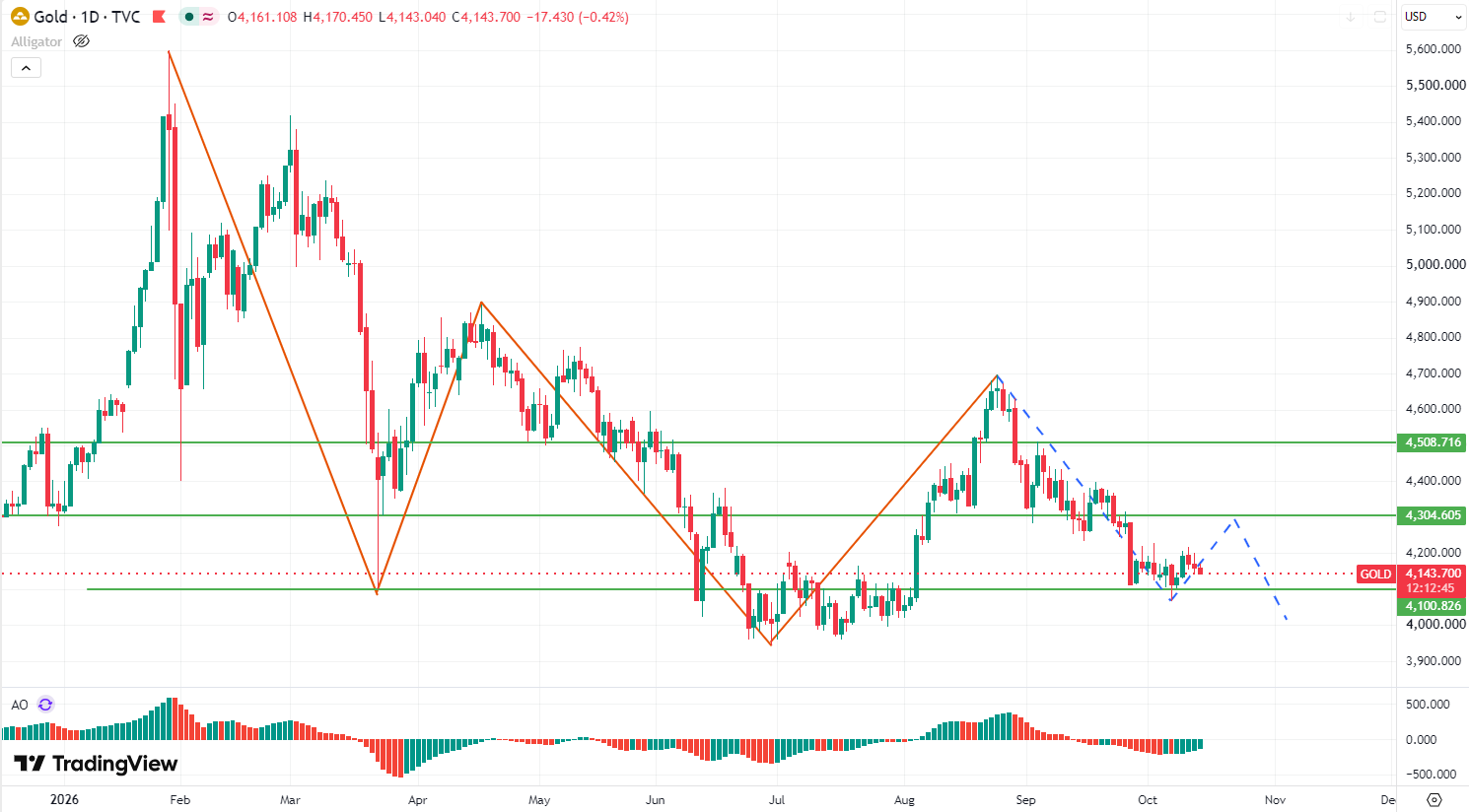
Gold has been consolidating around the US$4,100-US$4,200 area following its recent decline. Although the market has not established a clear bullish trend, the recovery from the early-October low suggests that another attempt to move higher remains possible.
The immediate technical question is whether buyers can push XAU/USD above US$4,220.
Source: tradingview
Gold technical analysis: Key support and resistance
Bullish scenario: A break above US$4,220 opens the way to US$4,300
If US CPI comes in below expectations and the US dollar and Treasury yields weaken further, gold could attempt to break above US$4,220.
A sustained move above that level would strengthen the case for a recovery towards US$4,300. The outlook would become more constructive if the breakout were accompanied by improving momentum and a successful retest of former resistance as support.
However, a brief spike following the CPI announcement would not necessarily confirm a durable breakout. Traders may wish to assess the subsequent price action rather than reacting to the initial volatility.
Bearish scenario: Gold falls below US$4,100
If inflation exceeds expectations, markets could increase their pricing of further Fed tightening. That could lift the US dollar and bond yields, putting additional pressure on gold.
In this scenario, a break below US$4,100 could expose the US$4,000 area.
Even if inflation is broadly in line with expectations, gold may remain vulnerable if energy prices continue to fuel concerns about persistent inflation and interest rates stay elevated.
Medium-term outlook: Is the gold correction over?
It is too early to conclude that gold's broader decline has reversed.
The metal's ability to stabilise around US$4,100 may indicate that selling pressure is moderating, but confirmation would require a more sustained recovery above nearby resistance.
Longer-term factors, including central-bank demand, investment flows, fiscal sustainability concerns and geopolitical uncertainty, may continue to influence gold. Nevertheless, these supportive factors do not prevent further corrections when interest-rate expectations and the US dollar move against the metal.
For Australian traders, the more practical approach is to distinguish between a short-term trading rebound and a confirmed medium-term trend change.
How to Trade Gold CFDs in Australia with Mitrade
For Australians who want to speculate on gold-price movements without purchasing or storing physical bullion, gold CFDs provide an alternative way to access the market.
With a gold CFD, eligible traders can take a long position if they expect gold to rise or a short position if they expect it to fall. This may suit traders who are monitoring the US CPI announcement and the US$4,100-US$4,220 trading range.

Trade XAU/USD with Tight Spreads
What the US CPI Report Means for Australian Gold Traders
US inflation data can trigger substantial price movements in global gold markets, including during the Australian evening and overnight trading sessions.
Australian traders should consider three additional factors.
The AUD/USD exchange rate. International gold is quoted in US dollars, so movements in the Australian dollar can influence the local-currency value of gold. A weaker Australian dollar can increase the AUD value of a given US-dollar gold price, all else being equal.
Market timing and volatility. The first reaction to US CPI can reverse quickly as traders reassess the headline and core figures, Treasury yields and Fed commentary. Spreads and execution conditions may also change during volatile periods.
Risk management. A breakout above US$4,220 or a fall below US$4,100 may attract attention, but neither guarantees a continuation of the move. Traders should consider position sizing, stop-loss placement and the potential for slippage.
You might be interested in…
Disclaimer: The content presented above, whether from a third party or not, is considered as general advice only. CFD trading involves significant risk of loss. Past performance does not guarantee future results. This article serves informational purposes only and does not constitute financial advice. Consider your risk tolerance before trading.


