




Which Forex Broker Is Good for Beginners? 7 Best Australia Brokers 2026

Choosing a forex broker as a beginner in Australia starts with more than finding the lowest spread. A suitable broker should offer a clear fee structure, an easy-to-use trading platform, access to a demo account and appropriate regulatory protections.
The right choice depends on your trading experience, budget, preferred currency pairs and risk tolerance. This guide compares forex brokers available to Australian traders, covering regulation, trading costs, platforms and beginner-friendly features.
Key takeaway: There is no single forex broker that suits every beginner. Focus on the features you understand, verify the provider’s regulatory status and practise with a demo account before considering live CFD trading.
Quick Take
| Broker | Main Comparison Focus | Platform / Service Angle |
|---|---|---|
| Mitrade | Mobile-oriented CFD trading | Proprietary web and app |
| Pepperstone | Platform choice | MT4, MT5, cTrader, TradingView |
| IG | Multi-asset trading | IG proprietary platform |
| FP Markets | Forex and account pricing | Multi-platform access |
| Eightcap | Forex and CFD products | Multi-platform access |
| CMC Markets | Charting and market analysis | Proprietary platform |
| OANDA | Forex platform and research tools | OANDA platform, MT4 and TradingView |
7 Best Forex Brokers for Beginners
1. Mitrade — Proprietary Platform and CFD Trading
Platform Features & Fees
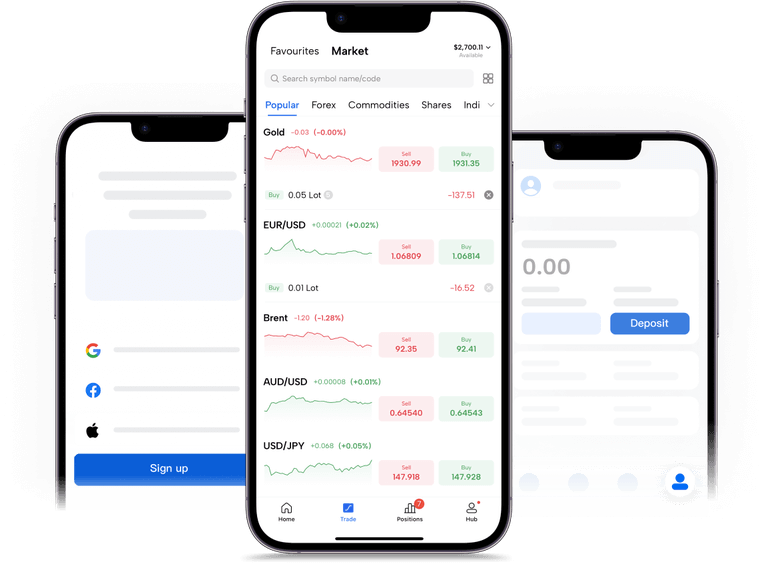
Mitrade is a CFD trading platform offering web, desktop and mobile trading access. Its official website highlights platform tools, including charting, economic calendar features and risk management functionality.
For Australian beginners, the key areas to review are the relevant Australian entity, account requirements, current spreads, demo account conditions and funding options.
Key features
Proprietary web, desktop and mobile trading platforms.
Forex and other CFD markets.
Standard and Pro account options, subject to current terms.
Demo account with virtual funds, subject to account conditions.
Risk management tools, including stop-loss and trailing stop functionality.
Who may consider it? Beginners who want to explore a proprietary trading interface and compare platform features before making a trading decision.
“Trade Forex with an ASIC-regulated broker. Fast AUD funding via PayID. ”
2. Pepperstone — Multiple Trading Platform Options
Trading Costs & Charges
Pepperstone provides access to several trading platforms, including MetaTrader 4, MetaTrader 5 and TradingView, according to its Australian website.
This makes platform comparison a useful starting point for beginners who are deciding whether to learn a proprietary platform or third-party trading software.
Key features
Multiple platform options.
Forex and CFD trading services.
Standard and commission-based pricing options, subject to current account terms.
Demo account availability to be checked.
Australian account and regulatory disclosures.
Who may consider it? Beginners who want to compare several trading platforms and understand how account pricing models differ.
3. IG — Multi-Asset Trading and Educational Resources
Platform Features & Fees
IG offers forex and CFD-related trading services and publishes educational material for traders. Its official resources can be used to research product features, trading tools and relevant account conditions.
Key features
Forex and other CFD markets.
Platform and market analysis tools.
Educational resources.
Demo account conditions to verify.
Australian regulatory and product disclosures.
Who may consider it? Beginners comparing a multi-asset platform with different educational and market analysis resources.
4. FP Markets — Account Options and Forex Pricing
Platform Features & Fees
FP Markets provides forex and CFD services and lists MT4, MT5, cTrader and WebTrader among its trading platform options. Its published information also describes account types and trading costs.
Key features
Multiple trading platform options.
Forex, commodities, indices and other CFDs.
Standard and raw pricing structures, subject to current terms.
Demo account access.
Published risk warning and account information.
Who may consider it? Beginners comparing different account types and trading platform choices.
5. Eightcap — Standard and Raw Account Pricing
Standard vs Raw Specifications
Eightcap provides Standard and Raw account options. Its published account comparison includes pricing information for the two structures.
Key features
Standard and Raw account types.
Forex and CFD products.
Trading platform options.
Account-specific pricing and margin conditions.
Demo access and current terms to verify.
Who may consider it? Beginners comparing spread-only and commission-based account structures. The total cost of a trade depends on the spread, commission and other applicable fees.
6. CMC Markets — Platform and Charting Features
Platform Features & Fees
CMC Markets offers different account structures, including Standard and FX Active options. Its Australian account page publishes information about spreads, commissions and minimum deposit conditions.
Key features
Proprietary trading platform.
MT4 availability.
Forex and CFD products.
Charting and market analysis tools.
Different account pricing options.
Who may consider it? Beginners who want to compare a proprietary platform with other trading software and review different account pricing structures.
7. OANDA — Forex-Focused Platform and Pricing Options
Platform Features & Fees
OANDA publishes information about its trading platforms and account pricing models. Its Australian documentation lists spread-only and raw-spread-plus-commission structures.
Key features
OANDA web and mobile trading platforms.
MT4 and TradingView access, subject to account and regional conditions.
Forex trading services.
Spread-only and commission-based pricing options.
Account-specific funding and product terms.
Who may consider it? Beginners comparing forex-oriented platforms and different spread / commission structures.
The comparison is intended to help Australian beginners research the relevant differences between brokers. It is not a universal ranking of suitability, and the final publication should include a dated verification of the current Australian entity, fees and account terms for every provider.
Risk warning: Forex and CFD trading involves leverage and the risk of loss. Review the relevant product disclosures, understand the costs and consider whether leveraged trading is appropriate for your circumstances.
How We Compared Beginner-Friendly Forex Brokers
The purpose of this comparison is to help readers understand the practical differences between brokers rather than assume that one platform suits everyone.
We consider the following factors:
Forex Trading Costs for Beginners in Australia
Understanding fees is a central part of choosing a broker. Advertised minimum spreads alone do not show the full cost of a trading account.
Spread
The spread is the difference between a market's bid and ask prices. It can vary according to liquidity, volatility, time of day and the broker's pricing conditions.
When comparing spreads, look at:
Typical spreads where published.
Whether the spread is variable.
Which currency pairs and trading sessions are covered.
Whether commissions apply separately.
Commission
Some account types charge a commission in addition to the spread. Others may incorporate trading costs into the spread.
Check whether the commission is quoted per side or for a complete round trip, and whether the fee depends on the account type or trading volume.
Overnight Financing
Holding a leveraged CFD position overnight may incur financing charges or adjustments. The applicable amount depends on the instrument, direction, holding period and provider's terms.
Read the relevant financing schedule before trading.
Other Fees
Other possible charges include:
Currency conversion.
Deposit or withdrawal charges.
Inactivity-related charges, where applicable.
Other account-specific fees.
Always use current Australian account documentation when comparing actual costs.
How to Start Forex Trading in Australia as a Beginner
Step 1: Learn the basics
Before opening a live account, understand currency pairs, spreads, margin, leverage and the mechanics of opening and closing a position.
Step 2: Verify the broker
Check the legal entity, Australian regulatory information and the products available to retail clients.
Step 3: Compare account conditions
Review the minimum deposit, trading costs, demo access, platform features and funding methods.
Step 4: Practise with a demo account
Use simulated trading to understand the platform and test whether you can follow a defined process.
Step 5: Understand the risks before live trading
Read the relevant product disclosures and consider whether you can afford the potential losses. CFD trading may not be suitable for everyone.
Step 6: Review your trading costs
Understand how spread, commission, financing and other charges affect your trading account.
“Trade Forex with an ASIC-regulated broker. Fast AUD funding via PayID. ”
Forex Trading in Australia: What Beginners Should Know
Retail CFD Leverage Limits
Australia's retail CFD framework includes leverage limits and other product intervention measures. ASIC's published framework includes different limits according to the underlying asset category.
For the commonly referenced retail CFD limits:
These limits should be checked against the current applicable ASIC rules and product classification. They are not a statement that all products or account types necessarily have the same margin terms.
Why leverage matters
Leverage allows a trader to control a position with a smaller amount of initial margin. It also increases the sensitivity of the account to price movements.
For example, a position with 10:1 leverage has a notional exposure that is ten times the initial margin, before considering the provider's specific calculation and fees. This is an illustration of leverage mechanics, not a suggested position size.
Negative Balance Protection and Margin Close-Out
Australian retail CFD protections include rules relating to negative balance protection and margin close-out. The exact application should be confirmed in the relevant product documentation.
These mechanisms do not prevent ordinary trading losses, and they should not be presented as a guarantee that an account will avoid all costs or losses.
AUD Funding
Australian traders may wish to compare whether the broker supports Australian dollar deposits and what payment methods are available.
Check:
Supported deposit currencies.
Whether currency conversion is required.
Processing times and withdrawal requirements.
Any fees associated with payment methods.
Account verification requirements.
The actual availability of PayID or other Australian payment methods must be confirmed with the individual broker.
Forex CFD Trading with Mitrade
If you're comparing forex brokers for beginners in Australia, Mitrade can be included in your research into proprietary trading platforms and CFD products.
* CFDs are leveraged derivatives and carry a high risk of loss. Consider whether you understand how CFDs work and whether you can afford to take the risk of losing your money.


You might be interested in…
1. Is forex trading legal in Australia?
Forex and forex CFD services are subject to applicable Australian financial services laws and regulatory requirements. Check the provider's Australian entity and authorisation before opening an account.
2. Can beginners trade forex with a demo account?
Yes, where the broker offers a demo account. It can help users practise platform functions and order placement without using live trading funds. Demo results do not guarantee live trading performance.
3. Is low spread always better for beginners?
Not necessarily. Total trading costs can include spreads, commissions, financing and other charges. Compare the applicable cost structure rather than focusing only on the minimum advertised spread.
4. What are the risks of forex CFD trading?
CFDs use leverage and can result in losses. Beginners should understand margin requirements, price movements, financing costs and the relevant risk disclosures before trading.
5. Do Australian forex brokers offer negative balance protection?
Relevant Australian retail CFD protections include negative balance protection. The exact rules and conditions should be confirmed through the current regulatory framework and the broker's documentation.
Disclaimer: The content presented above, whether from a third party or not, is considered as general advice only. CFD trading involves significant risk of loss. Past performance does not guarantee future results. This article serves informational purposes only and does not constitute financial advice. Consider your risk tolerance before trading.


