



For beginner traders and investors, relying only on theory is not enough. Building practical experience and skills is important in financial markets, but you should not start with a live account and risk real money just to learn.
Instead, you can use demo accounts to practice trading for free, build your strategy, and gain experience in a simulated market environment. They are incredibly practical tools for practicing order placement, testing strategies, and getting familiar with trading platforms.
🎯In this article, we’ll recommend some of the best demo accounts to help you take your first steps into the world of trading and investing.
Key Takeaways
Traders should use demo accounts to refine their strategies and practice before moving to live trading.
The best demo trading accounts should support charting tools, order types, risk management features, strategy testing, and clear pricing data similar to live accounts.
Best Demo Trading Accounts in UAE Compared

Demo accounts can differ based on the features, tools, and platform experience they offer. Some are built mainly for practicing trading and analysing markets, while others focus more on education, advanced tools, or social trading features.
Choosing the right demo account depends on your needs. If you want to practice trading, test your strategy, analyse markets, calculate risk, and execute trades easily, choose a platform that provides these tools in one place without making the process too complicated.
✅If you are a beginner, a simple demo account may be easier to use, like Mitrade demo account.
✅If you already have more experience, an advanced platform such as Saxo or Interactive Brokers may be useful for testing broader markets, order types, and professional trading tools.
1 Mitrade Demo Account: A Top Choice for UAE CFD Traders
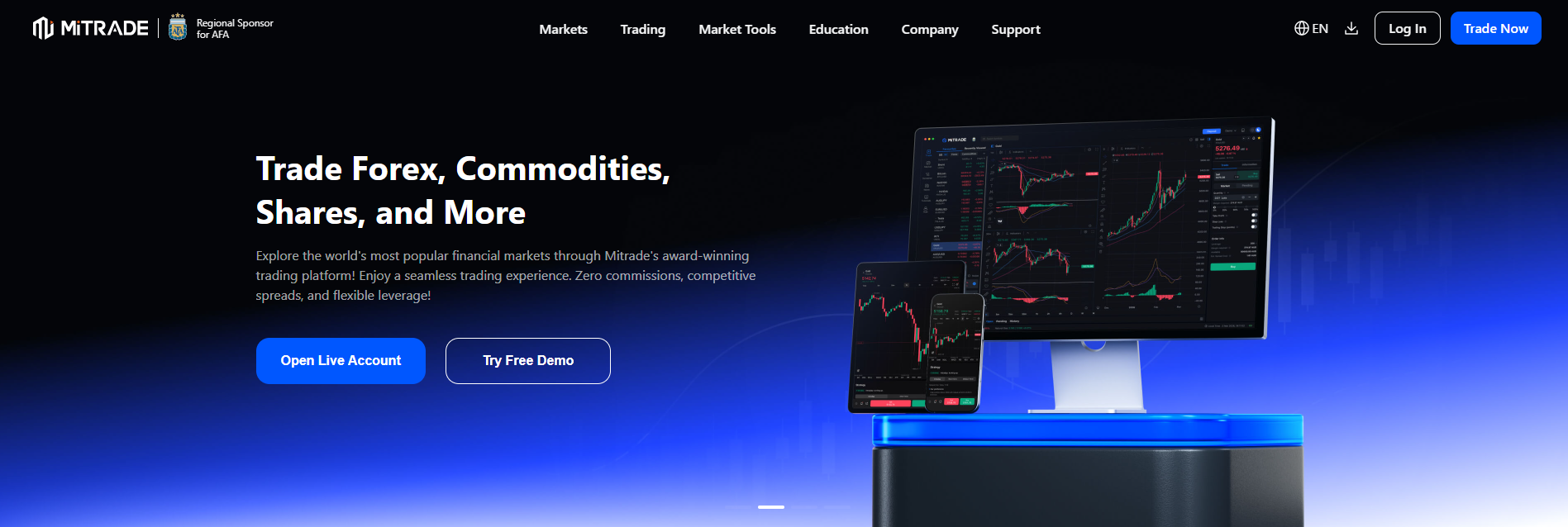
【Image source: Mitrade Official Website 】
Mitrade is a global investment and trading platform founded in 2011. For UAE traders, Mitrade Financial Services LLC is authorised and regulated by the UAE Capital Markets Authority, or CMA, under licence number 20200000397 (Click here to verify). It accepts account openings from regions including the Middle East, Taiwan, Australia, Vietnam, and Thailand. The platform offers trading across a wide range of assets such as US stocks, indices, forex, commodities, and cryptocurrencies.
Mitrade is available via web, mobile app, and desktop, offering a user-friendly experience with zero commission fees and the ability to trade both long and short positions. It supports leverage of up to 200x and allows deposits and withdrawals directly in local currencies.
Click here to visit the website.
* Get $50,000 in virtual funds upon registration to practice for free!
🎁 Welcome Pack Trade live to claim a cash bonus of up to $100!
2 IG Demo Account — Strong for Education and Market Practice
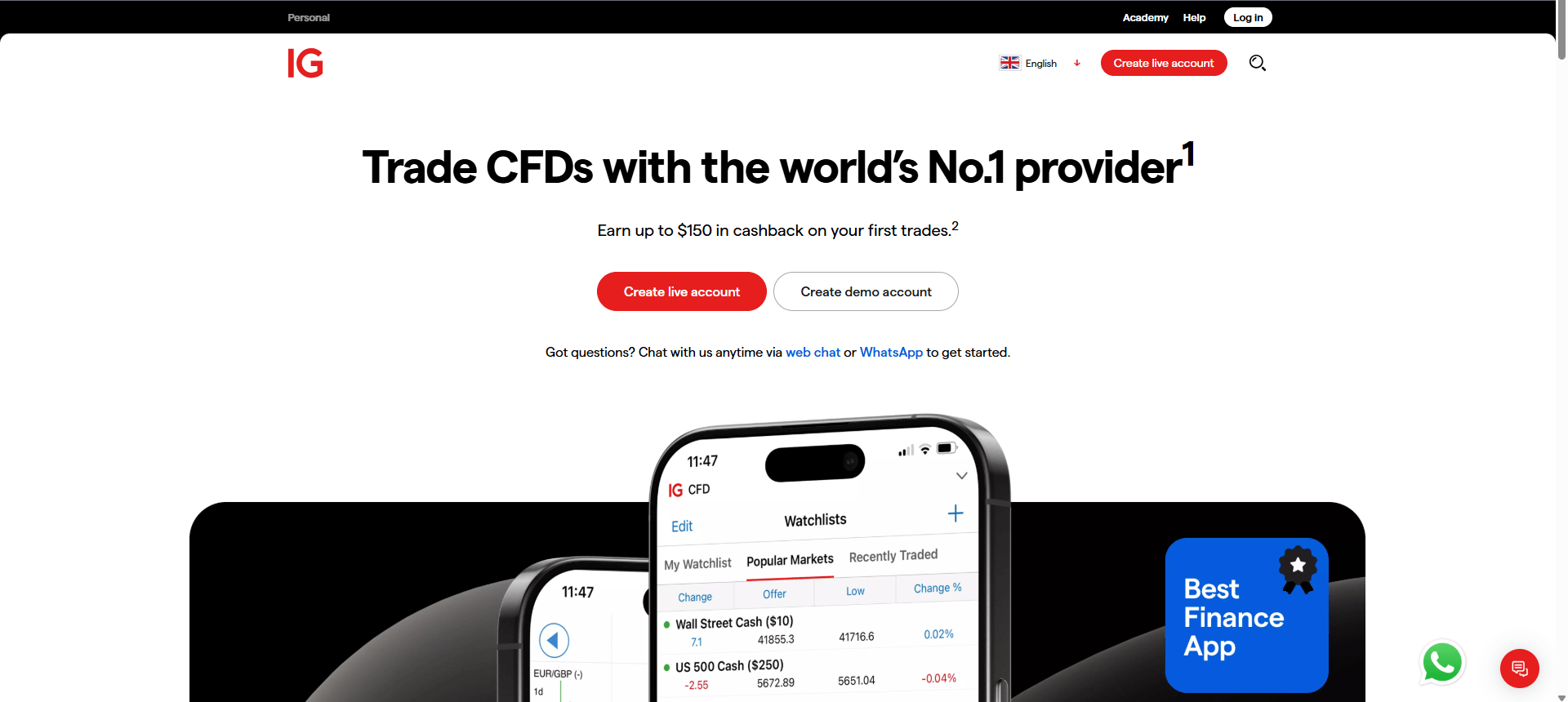
【Image source: IG Official Website 】
IG offers a demo account with USD 20,000 in virtual funds. It gives users access to IG’s online platform, where they can practice trading, explore markets, and test strategies before using real money.
Click here to visit the website.
❌But please note that IG’s demo account may not fully reflect live trading conditions. Prices, spreads, and execution can differ from a live account, especially during volatile markets.
3 Saxo Demo Account — Strong for Advanced Multi-Asset Practice
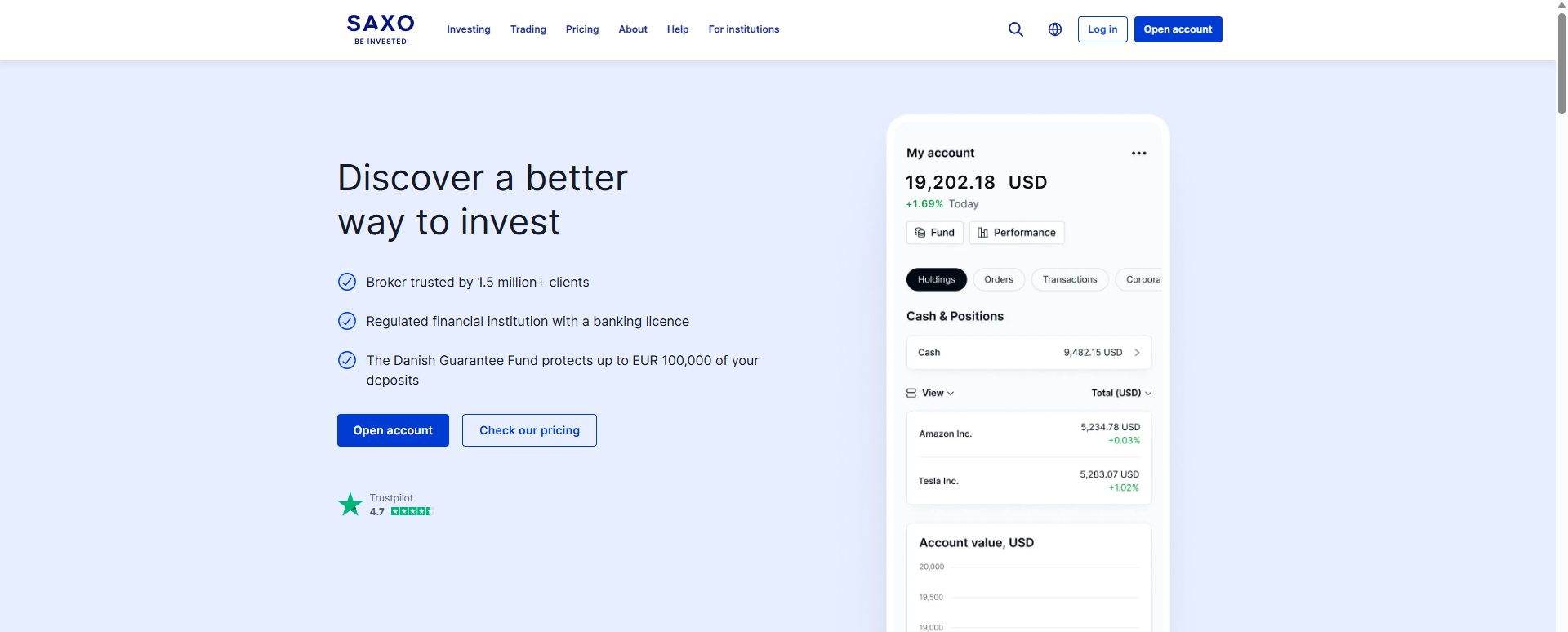
【Image source: Saxo Official Website 】
Saxo’s demo account may suit users who want to test a more advanced trading platform. It provides USD 100,000 in virtual funds for a 20-day demo period, with access to SaxoTrader on web, mobile, and desktop.
Click here to visit the website.
❌The main limitation is the short 20-day demo period, which may not be enough for proper strategy testing. Some advanced features may also require a subscription, such as level 2 market data.
4 Interactive Brokers Paper Trading Account — Useful for Advanced Traders
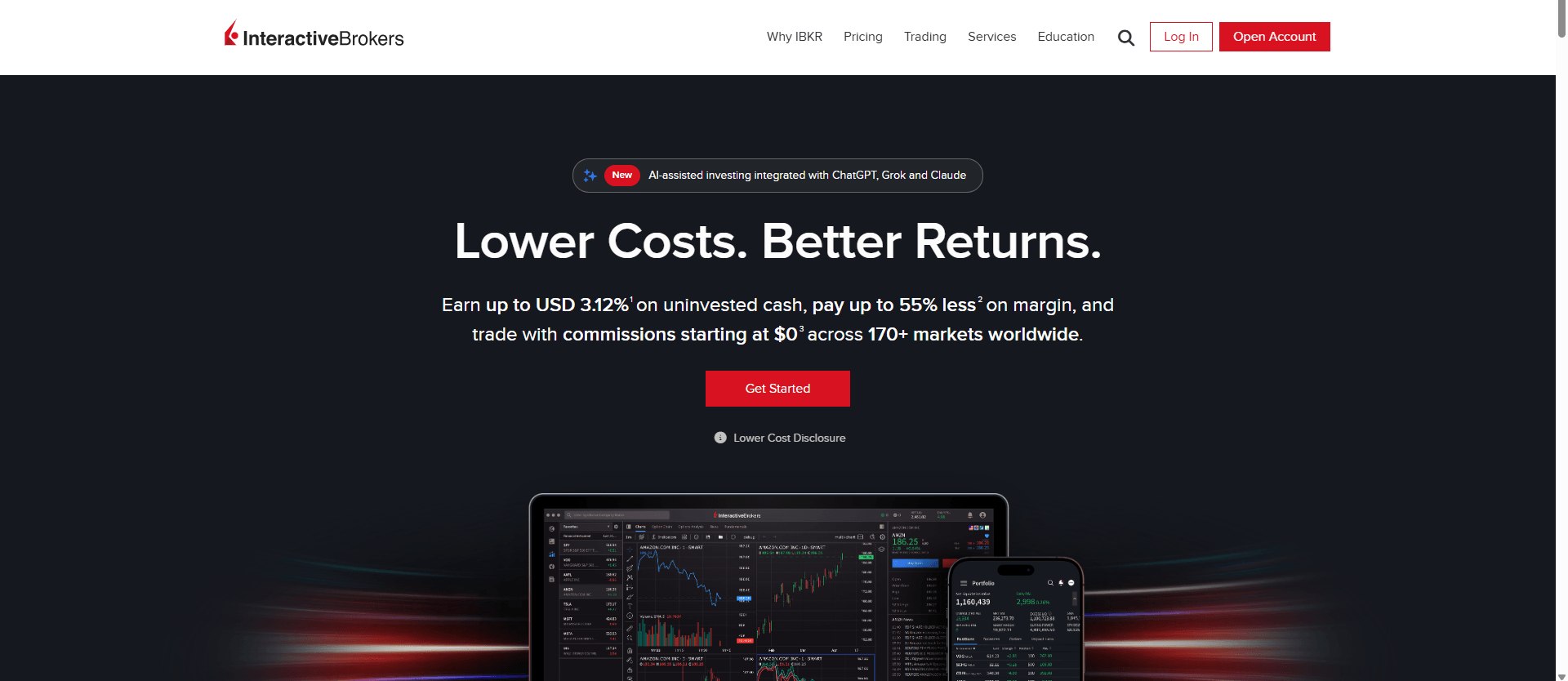
【Image source: InteractiveBrokers Official Website 】
Interactive Brokers offers a paper trading account for users who want to practice on a professional global trading platform. It is more suitable for traders who want to test advanced tools, order types, and multi-asset strategies.
Click here to visit the website.
❌But the onboarding process is quite tedious, and the user interface lacks intuitive design. Additionally, real-time market data is subject to extra fees, and inactive demo accounts face automatic reclamation.
How to Use Mitrade Demo Account?
Mitrade’s demo account is available on web, desktop, and mobile. Users can open the demo environment, practice with USD 50,000 in virtual funds, explore market charts, and test demo trades without risking real money.
Step 1: Visit Mitrade’s website or download the app
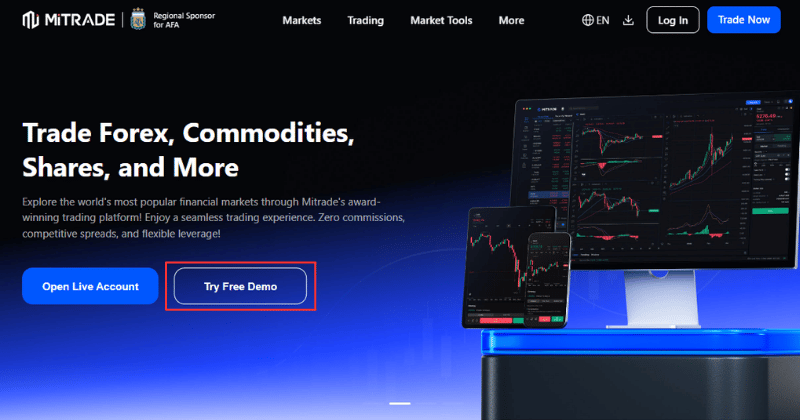
Go to Mitrade’s official website and click Try Free Demo. You can also download the Mitrade app and access the demo account from mobile.
Step 2: Sign up for the demo account
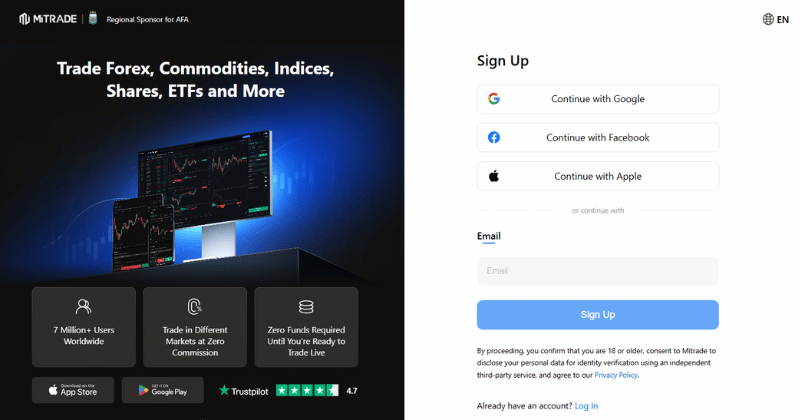
Create an account using your email or continue with Google, Facebook, or Apple. After signing up, you can access the demo environment.
Step 3: Explore the demo trading interface
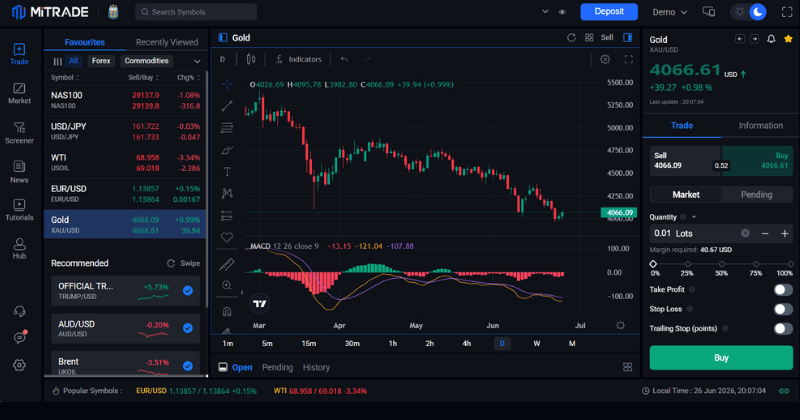
Inside the demo account, you can choose markets, analyse charts, use indicators and drawing tools, check prices, and place trades using virtual funds.
Want to practice trading and test your strategy?
Sign up for Mitrade’s free demo account to discover advanced analysis and charting tools, covering fundamental, technical, and sentiment analysis, while testing your strategy with USD 50,000 in virtual funds in a market environment similar to live trading.
Risk-Free Demo Account
CMA-regulated | 24х5 | T+0 | low spreads. Enjoy limit and stop loss for every trade!
Demo Account vs Live Account: What Actually Changes?
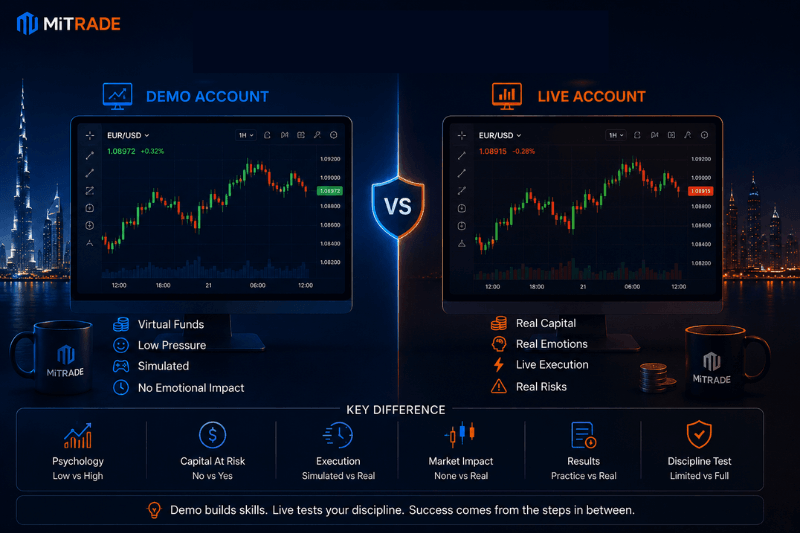
A demo account can be realistic, but it is not identical to a live trading account.
The biggest difference is psychology. In a demo account, a losing trade does not hurt your wallet. In live trading, even a small loss can create fear, hesitation, or revenge trading.
This is why traders should treat demo capital seriously. If you use unrealistic position sizes or ignore your rules, your demo results may not mean much.
To get real value from a demo account, follow your trading plan and treat the demo account like a real one. This can help you build discipline, apply a strict risk management plan, and get used to following your strategy rules before trading with real money.
A Must-Read for Beginners: How to Use a Demo Account to Practice Trading Effectively?
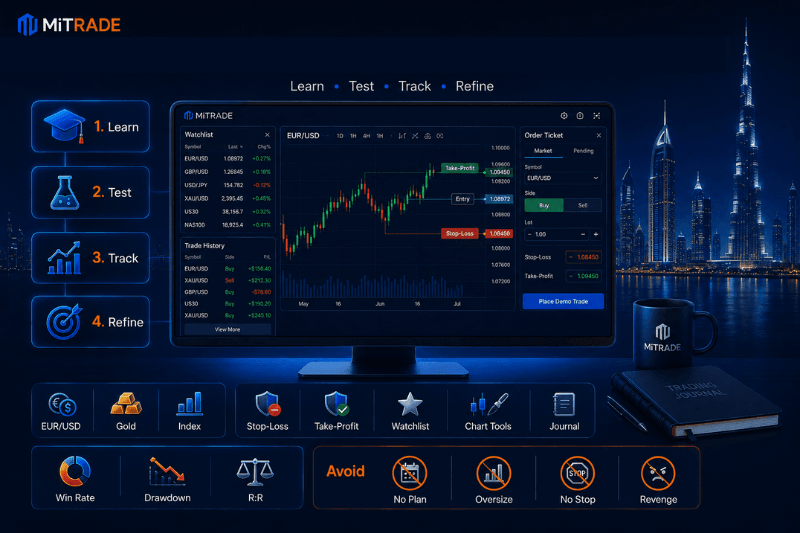
A demo account becomes useful when you treat it as a testing environment, not a place for random trades. The goal is to build your strategy, test it under different conditions, refine weak points, and collect enough data before moving to a live account.
Here are practical tips to use it properly:
Use a realistic account size. Choose a demo balance close to your planned live capital, so profit, loss, position size, and risk feel realistic.
Create a clear trading plan. Define your market, timeframe, entry rules, exit rules, stop-loss, take-profit, and maximum risk before trading.
Maintain strict risk management. Use stop-loss orders, reduce risk per trade, and avoid oversized positions, even when using virtual funds.
Test different market conditions. Try your strategy across markets, timeframes, trends, ranges, and volatile periods to see where it works or fails.
Use platform tools wisely. Use indicators, drawing tools, only when they support your strategy.
Journal every trade. Record your entry reason, stop-loss, take-profit, result, risk taken, and whether you followed your plan.
Maintain a realistic mindset. Do not go all in, revenge trade, or take random trades just because the money is virtual.
Your journal should help you review your win rate, risk-reward ratio, drawdown, best markets, and repeated mistakes. Use this data to improve your trading decisions, develop as a trader, and move to live trading only when you can follow your rules, manage risk, and stay consistent.
Final Thoughts
A demo account helps traders build their process before real money is involved. It can be used to test the platform, test a strategy, understand risk, and see how your trading plan performs in different market conditions.
Before moving to live trading, use the demo account to:
test your strategy with realistic capital and strict risk management;
practice using charts, indicators, stop-loss, take-profit, and order tools;
journal your trades, review your results, and find your repeated mistakes.
Trading is a learning journey. Keep improving your strategy, follow your journal, and only move to a live account when you are prepared.
Want to test your strategy and see if it is profitable?
Mitrade provides a demo account with USD 50,000 to practice and test strategies in a market environment similar to live trading, with charting tools, drawing tools, indicators, news, sentiment analysis, order tools, and more in one platform.


How can beginners choose a demo trading account that suits them?
Beginners should compare the demo balance, markets, platform difficulty, tools, education, and risk features. A good demo account should be easy to use, offer enough tools to practice, and give enough time to test properly.
What US stock market simulation software do you recommend for beginners?
Mitrade Demo, Investopedia Simulator, TradingView Paper Trading, and Webull Paper Trading can be useful for beginners. They let users practice with virtual money, test orders, follow charts, and learn basic market skills without risking real funds, depending on regional availability.
Is there a significant difference between simulated trading and actual trading?
Yes. Simulated trading helps users learn platforms, test strategies, and practice risk management, but live trading can differ in prices, spreads, execution, and emotions. Treat the demo account like a real account.
Can demo trading help with emotional control?
It can help traders build discipline, but it cannot fully copy the pressure of trading real money. Traders should still follow their plan and avoid random trades.
Should I use leverage in a demo account?
Traders can practice using leverage in demo mode, but they should use it carefully. Leverage increases market exposure and can magnify losses, so proper risk management is important.
* The content presented above, whether from a third party or not, is considered as general advice only. This article should not be construed as containing investment advice, investment recommendations, an offer of or solicitation for any transactions in financial instruments.


