


Why Kevin Warsh Might Raise Interest Rates at the Next FOMC Meeting, Despite a Weak Jobs Report
Key Points
Last week's job numbers were far worse than expected.
Inflation came down last month but remains far above the 2% goal.
The S&P 500 has continued to generate above-average gains this year, and it may be overdue for a pullback.
- 10 stocks we like better than S&P 500 Index ›
July's job numbers came out last week, and they were well short of expectations. There were 23,000 jobs lost during the month, while economists had expected there to have been 80,000 jobs added. It's a huge miss, suggesting that the economy isn't in as strong a shape as many experts may believe. If the economy isn't doing well, the Federal Reserve may be more inclined to leave interest rates low, as they're often raised in order to slow inflation and to cool a hot economy down.
But while the latest job numbers may be concerning, that doesn't mean Fed chair Kevin Warsh won't announce an increase at the next Federal Open Market Committee (FOMC) meeting next month. Here's why there's still the possibility for rates to rise, and why that could be bad news for the S&P 500 (SNPINDEX: ^GSPC).
Missed Nvidia in 2009? This Rare Signal Is Flashing Again. In 2009, a "Double Down" signal flashed for a little-known chipmaker called Nvidia. For the first time in years, that same "Total Conviction" signal is flashing for a company 1/100th the size of Nvidia. Continue »

Image source: Getty Images.
Warsh has indicated he isn't going to be swayed by a single data point
There are many factors for the Fed chair to consider beyond just jobs numbers, concerning as they might be. Last month, when the latest inflation report came out, indicating a sign of progress -- the annual inflation rate cooled from 4.2% to 3.5% -- Warsh didn't see that as proof that the job was done, referring to it as just "one data point." He has also been committed to getting inflation down to 2% and has said there is no "soft target." And raising interest rates is arguably the best way to get it under control.
According to CME FedWatch, it's about a 50-50 split right now as to the probability of a rate increase next month, suggesting plenty of uncertainty in the market about what may happen.
The market may be overdue for a pullback, either way
The S&P 500 has risen by 13% so far this year, and if that holds up, it would mark another above-average performance for the index relative to its long-run average of about 10%. The index has hit record highs this year as valuations continue to rise. Since 2023, it has doubled in value.
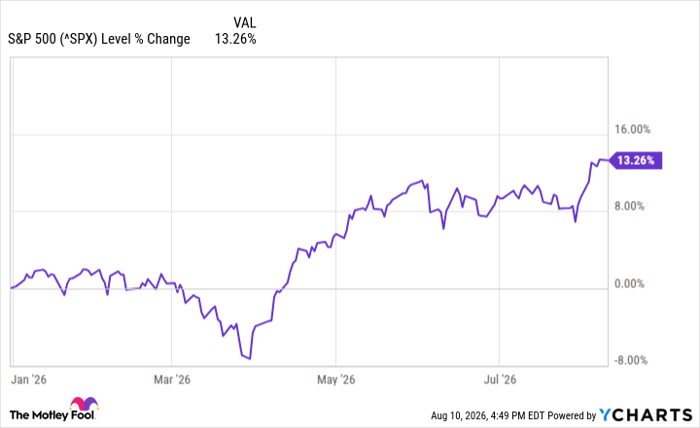
^SPX data by YCharts
If interest rates do end up rising this year, as they might, with Warsh looking intent on keeping inflation down, that could derail the S&P 500's performance. Higher interest rates increase costs for businesses and can negatively impact share prices.
However, the stock market may still be overdue for a correction or at least some pullback, regardless of what happens with interest rates, given how hot it's been in recent years. And that's why investors may want to consider diversifying into value-oriented assets to reduce market risk. Whether or not rates go up next month, there's reason to exercise caution these days.
Should you buy stock in S&P 500 Index right now?
Before you buy stock in S&P 500 Index, consider this:
The Motley Fool Stock Advisor analyst team just identified what they believe are the 10 best stocks for investors to buy now… and S&P 500 Index wasn’t one of them. The 10 stocks that made the cut could produce monster returns in the coming years.
Consider when Netflix made this list on December 17, 2004... if you invested $1,000 at the time of our recommendation, you’d have $399,832!* Or when Nvidia made this list on April 15, 2005... if you invested $1,000 at the time of our recommendation, you’d have $1,374,595!*
Now, it’s worth noting Stock Advisor’s total average return is 968% — a market-crushing outperformance compared to 215% for the S&P 500. Don't miss the latest top 10 list, available with Stock Advisor, and join an investing community built by individual investors for individual investors.
See the 10 stocks »
*Stock Advisor returns as of August 10, 2026.
David Jagielski, CPA has no position in any of the stocks mentioned. The Motley Fool has no position in any of the stocks mentioned. The Motley Fool has a disclosure policy.
Recommended Articles


