


If a Recession Is Coming, Here's How I'm Preparing My Portfolio
Key Points
Recessions and the bear markets that likely come with them are inevitable.
Preparing yourself before a recession occurs will help minimize damage to your portfolio and financial situation.
Here are my top three ideas to help you prepare your portfolio for market and economic volatility.
- These 10 stocks could mint the next wave of millionaires ›
Most of the current U.S. economic signals are still good. Overall unemployment is low, GDP growth is positive, and corporate earnings growth has been strong.
But there are also warning signs. The inflation rate is currently at 3.5%. The ongoing Iran war continues to put pressure on oil prices. The Fed is likely going to hike interest rates at least once before the end of the year.
Missed Nvidia in 2009? This Rare Signal Is Flashing Again. In 2009, a "Double Down" signal flashed for a little-known chipmaker called Nvidia. For the first time in years, that same "Total Conviction" signal is flashing for a company 1/100th the size of Nvidia. Continue »
While a recession doesn't look imminent, it's not something that can be dismissed outright. High inflation and higher interest rates are headwinds to economic growth and can push the economy toward recession if they persist long enough.
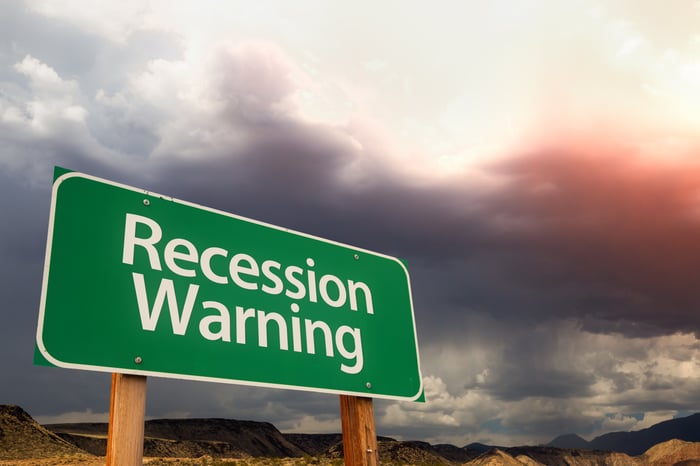
Image source: Getty Images.
It's the type of environment that can cause investors to let emotions take over.
The best way to handle a recession is to maintain discipline and have a plan in place before it happens. If you're a long-term investor with decades to go and no change to your financial goals, you probably don't need to do anything at all. But there are a few timeless ideas for all investors that are worth revisiting now, before it is too late.
Build a cash buffer before you need it
One of the worst spots people can find themselves in is being forced to sell stocks or bonds in order to cover living or emergency expenses. Not only is the financial hit damaging enough, but it also fundamentally changes your long-term savings plans in the process.
Try to keep three to six months' worth of essential expenses locked away in a high-yield savings account or in Treasury bills (even in the form of an exchange-traded fund, or ETF). Anything that's safe, liquid, and accessible whenever you need it. If the recession impacts your job stability, aim to target the higher end of that range. One ETF to consider: iShares 0-3 Month Treasury Bond ETF (NYSE: SGOV).
Stay diversified throughout the cycle
This is another way of saying that if you're a long-term investor with decades yet to go and your financial goals haven't changed, you may not need to do anything at all. Especially make a radical portfolio asset allocation change because stocks have gone down, or you think they're going down.
Consumer staples and healthcare tend to hold up better in recessionary environments. If you're overloaded in tech, it might make sense to make a minor shift in that direction. But a core that consists of something like the Vanguard S&P 500 ETF (NYSEMKT: VOO) or the Vanguard Total Stock Market ETF (NYSEMKT: VTI) probably doesn't need to be touched. They're designed for long-term buy-and-hold investing and should be left to do their job.
If you also own bonds, gold, or crypto, make sure they still fit with your overall objective, but resist the urge to make sweeping portfolio changes. These asset classes all work well together from a diversification perspective. That's the case regardless of the economic environment.
Continue automatic investment plans
People who invest regularly into 401(k) plans, individual retirement accounts (IRAs), or brokerage accounts sometimes like to suspend those investments when stock prices are falling due to recession or any other reason. If a recession is near, be prepared to see stock prices fall by 20% or more. But that's not a reason to stop investing altogether.
Continuing to invest, even in rough markets, embodies the idea of buying low. By buying shares at a discount, you can lower your overall cost basis and position yourself to benefit when the subsequent rebound occurs.
Either way, recessions are part of investing. Be prepared to continue investing throughout to keep your long-term plans on track.
Experiencing a recession and the higher market volatility that comes with it is never enjoyable. But if you can prepare now and set your expectations accordingly, you have a much better chance of protecting your financial health.
Where to invest $1,000 right now
When our analyst team has a stock tip, it can pay to listen. After all, Stock Advisor’s total average return is 895%* — a market-crushing outperformance compared to 206% for the S&P 500.
They just revealed what they believe are the 10 best stocks for investors to buy right now, available when you join Stock Advisor.
See the stocks »
*Stock Advisor returns as of August 1, 2026.
David Dierking has positions in Vanguard Total Stock Market ETF. The Motley Fool has positions in and recommends Vanguard S&P 500 ETF and iShares Trust-iShares 0-3 Month Treasury Bond ETF. The Motley Fool has a disclosure policy.
Recommended Articles


