


Crypto Today: Bitcoin, Ethereum, XRP remain sluggish amid mixed ETF flows
- Bitcoin attempts to recover toward the immediate $64,000 resistance amid renewed ETF outflows.
- Ethereum trades between support at the 50-day EMA and resistance at the 100-day EMA as ETFs record mild inflows.
- XRP holds firmly above the key $1.00 support, but recovery momentum remains lethargic.
The cryptocurrency market continues to trade sideways on Thursday, with Bitcoin (BTC) struggling to reclaim the $64,000 level. Ethereum (ETH) is attempting to build momentum near the key $1,900 resistance, while Ripple (XRP) maintains support above $1.00, yet upward movement remains limited.
Mixed ETF flows weigh on crypto market sentiment
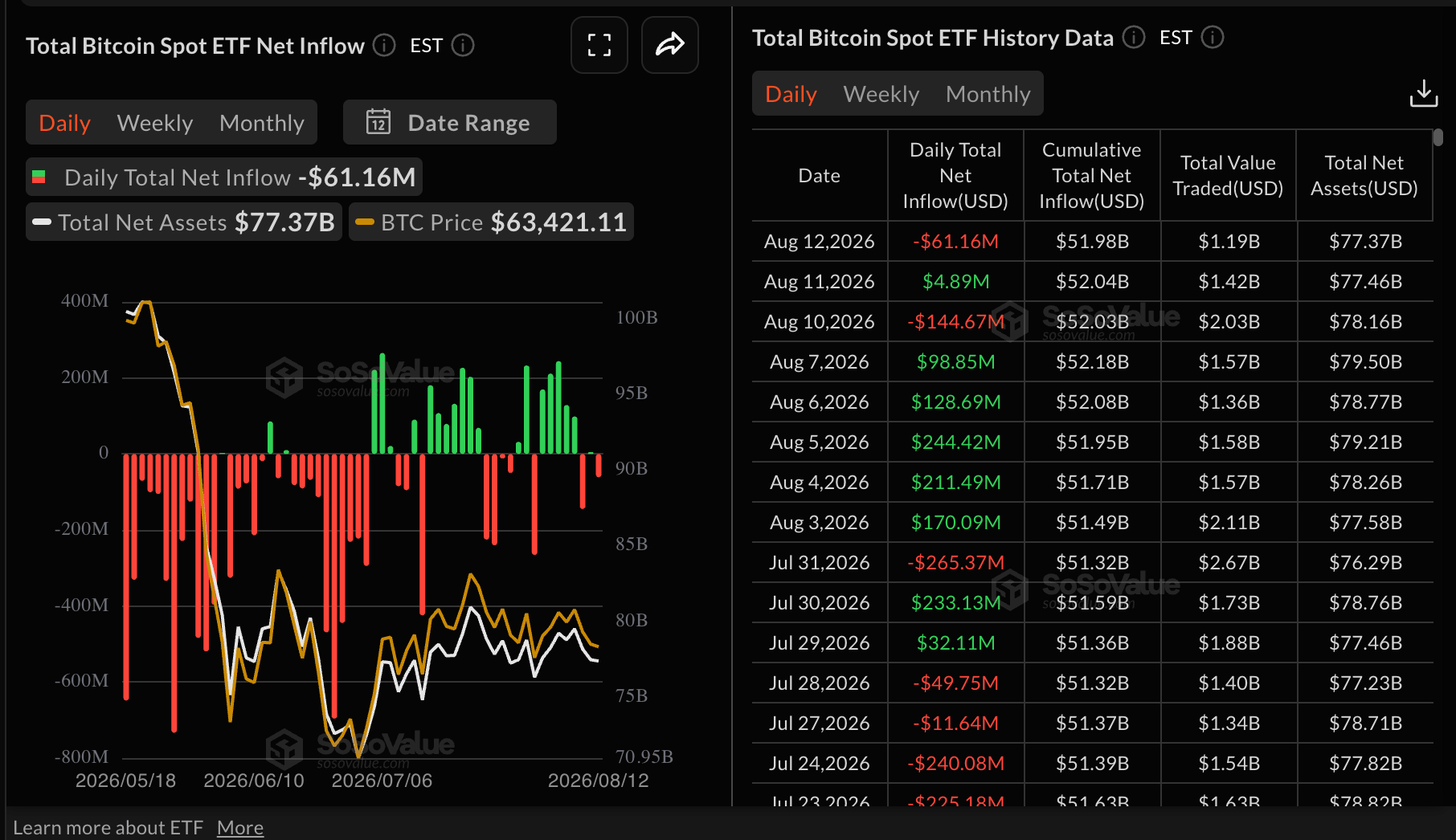
Digital investment products continue to face headwinds amid renewed outflows in Bitcoin spot Exchange-Traded Funds (ETFs). According to SoSoValue, institutional investors withdrew roughly $61 million on Wednesday following very mild $5 million in inflows the previous day. This muted demand for ETFs underscores subdued risk appetite and waning medium to long-term conviction in Bitcoin.
Should the trend persist, prospects for a recovery will remain distant, increasing the likelihood of a prolonged bearish phase.
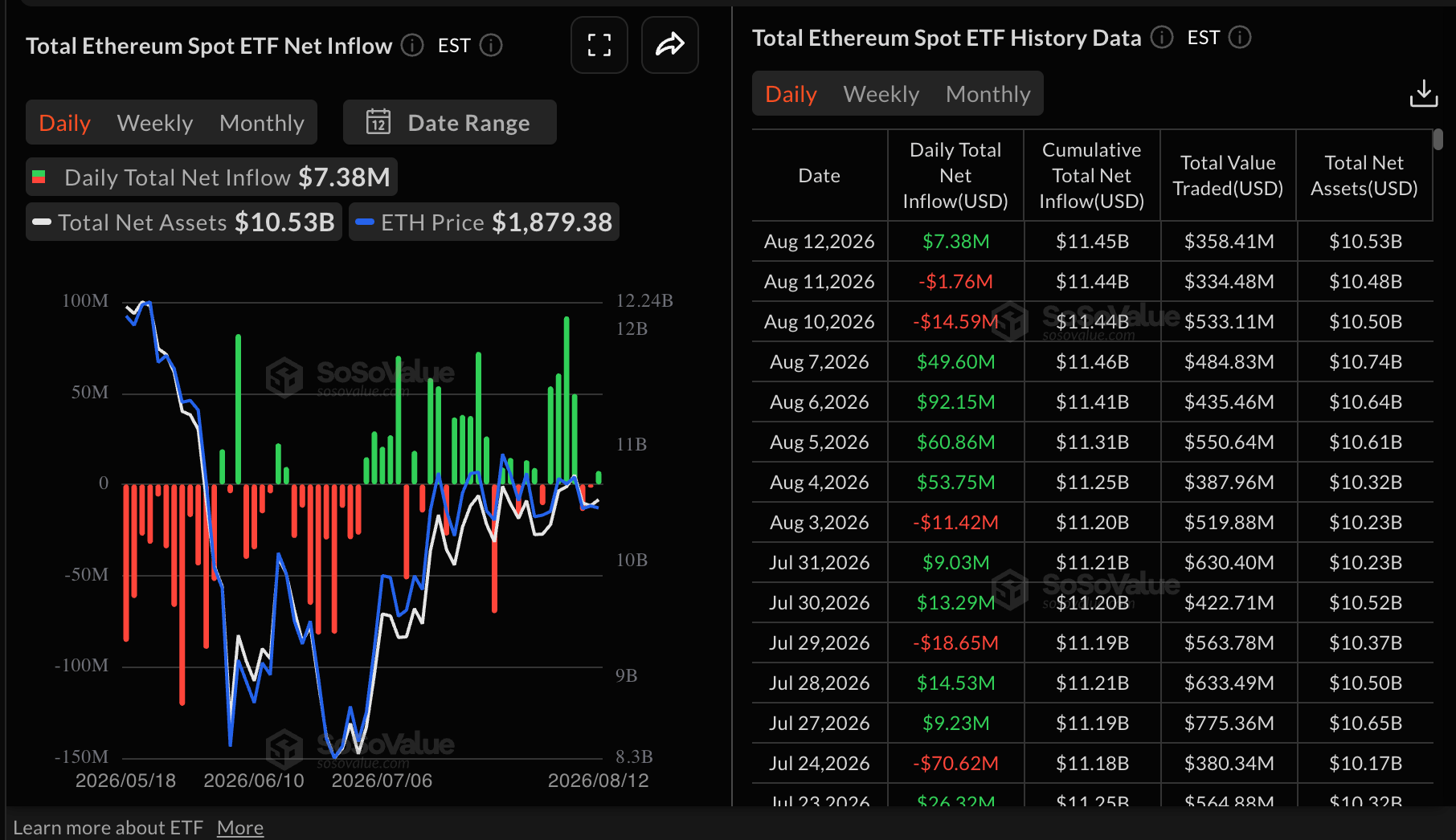
Ethereum spot ETFs outpaced both Bitcoin and XRP, attracting approximately $7 million in inflows on Wednesday, following mild outflows of $1.76 million the day before and nearly $15 million on Monday. Meanwhile, cumulative inflows average $11.45 billion with net assets of $10.53 billion.
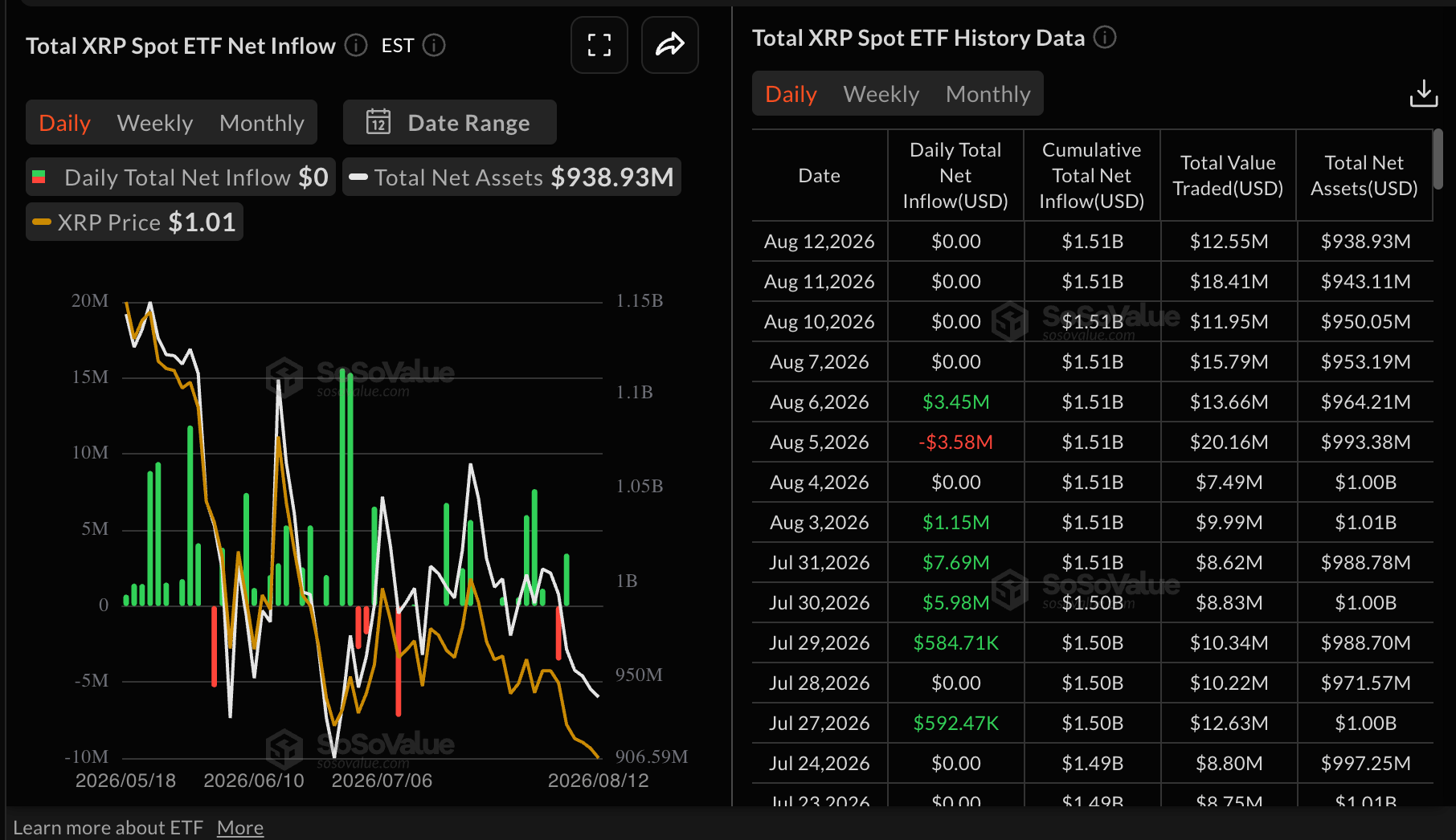
US-listed XRP spot Exchange-Traded Funds (ETFs) continue to underperform, with muted trading activity persisting from last Friday through Wednesday. The absence of institutional participation underscores prevailing bearish sentiment across the crypto sector, diminishing prospects for a sustained recovery.
Nonetheless, cumulative inflows remain stable at $1.51 billion, while assets under management stand at $939 million, underpinning investors’ long-term positive outlook in the underlying asset.
Technical analysis: Bitcoin struggles with recovery
Bitcoin trades at $63,785, keeping a capped tone as it holds below the short and medium-term Exponential Moving Averages (EMAs). Momentum is soft rather than directional, with the Relative Strength Index (RSI) hovering just under the midline on the daily chart and the Moving Average Convergence Divergence (MACD) indicator extending deeper into negative territory, hinting that sellers retain a modest advantage while lacking aggressive follow-through.
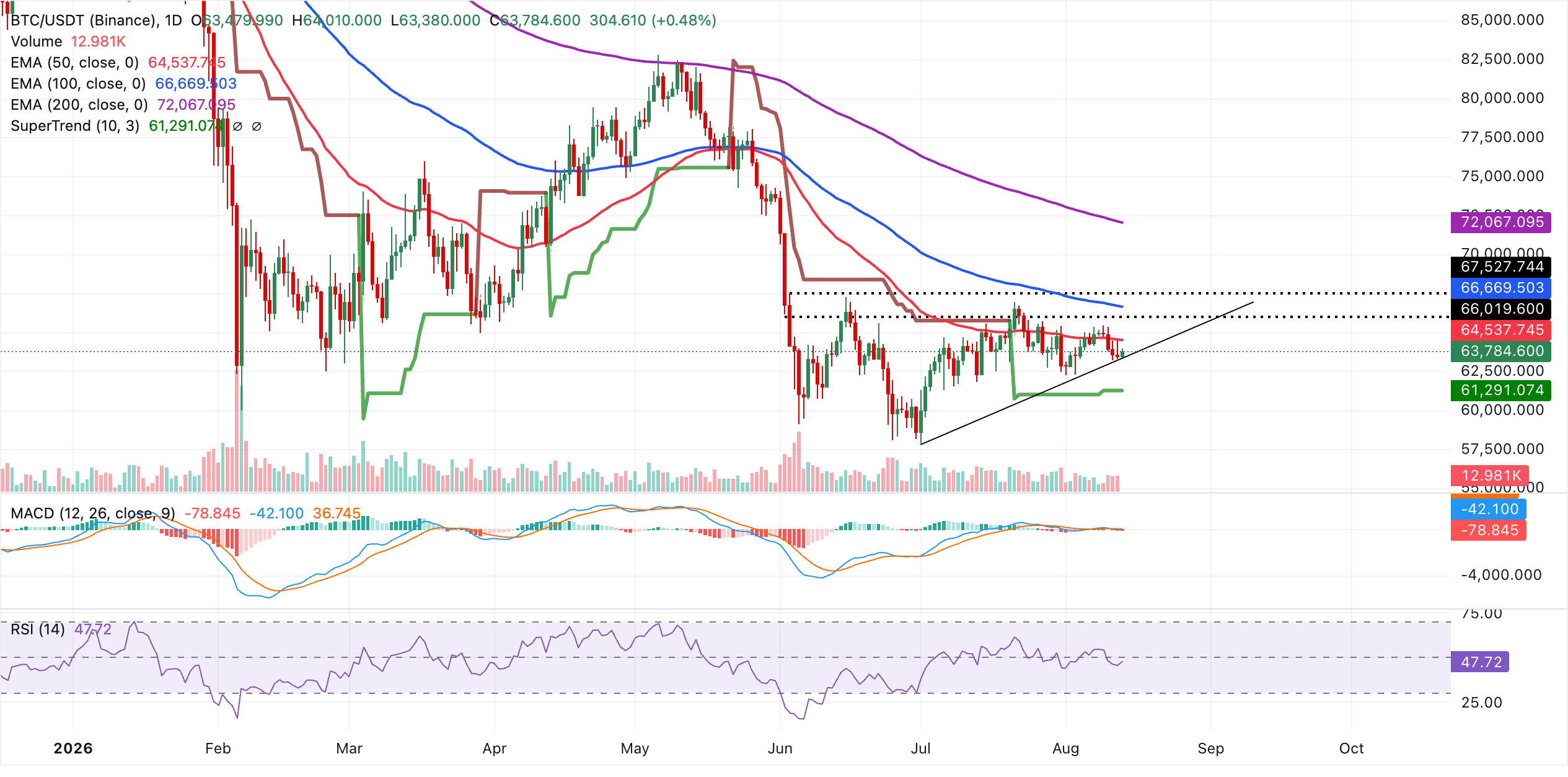
Initial resistance lies at the 50-day EMA at $64,538, and a daily close above this barrier would be needed to ease immediate pressure and open the way toward the 100-day EMA at $66,670, ahead of the more distant 200-day EMA at $72,067. On the downside, first support holds around the rising trendline break area near $63,409, with a sustained loss of this level likely exposing the SuperTrend basis at $61,291, where buyers may attempt to rebuild a more solid floor.
Altcoins technical outlook: Ethereum and XRP upside remains capped
Ethereum holds above the 50-day EMA at $1,865 and the SuperTrend support near $1,769, but remains capped beneath the 100-day EMA at $1,921, leaving the near-term tone broadly neutral. The RSI around 53 on the daily chart suggests balanced momentum, while the negative MACD reading hints that upside attempts could still face headwinds while price trades under the 100-day and 200-day EMAs.
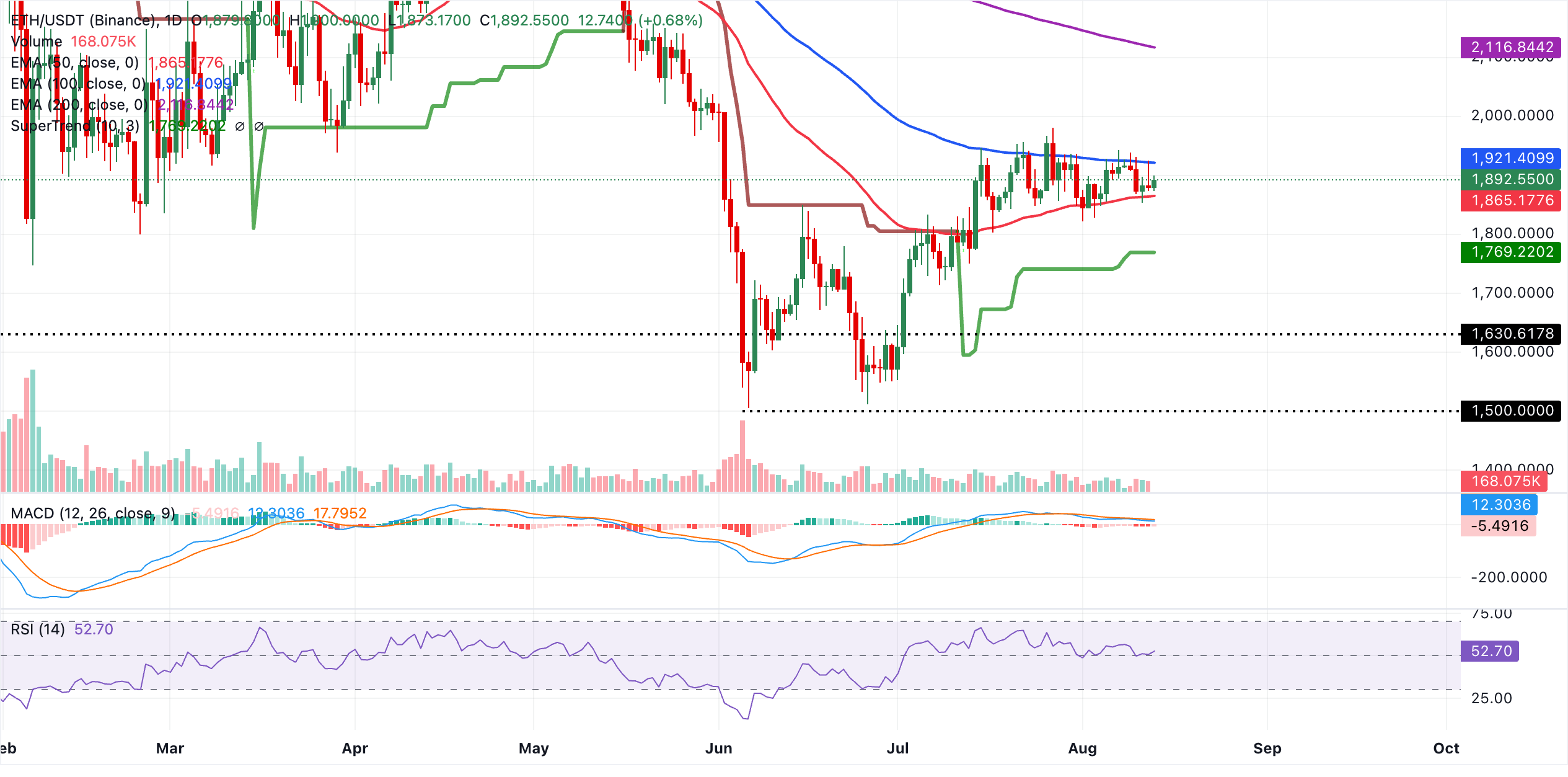
Initial resistance lies at the 100-day EMA at $1,921, with a stronger barrier at the 200-day EMA near $2,117, where sellers may look to reassert control if tested. On the downside, immediate support is seen at the 50-day EMA at $1,865, and a break below this level would expose the SuperTrend line around $1,769 as the next notable demand zone.
XRP, on the other hand, trades at $1.01, keeping a clear bearish near-term bias as price holds below the short, medium and long-term EMAs. Momentum stays soft, with the RSI hovering near 37 on the daily chart and the MACD below zero and its signal line, hinting that sellers remain in control despite the latest consolidation.
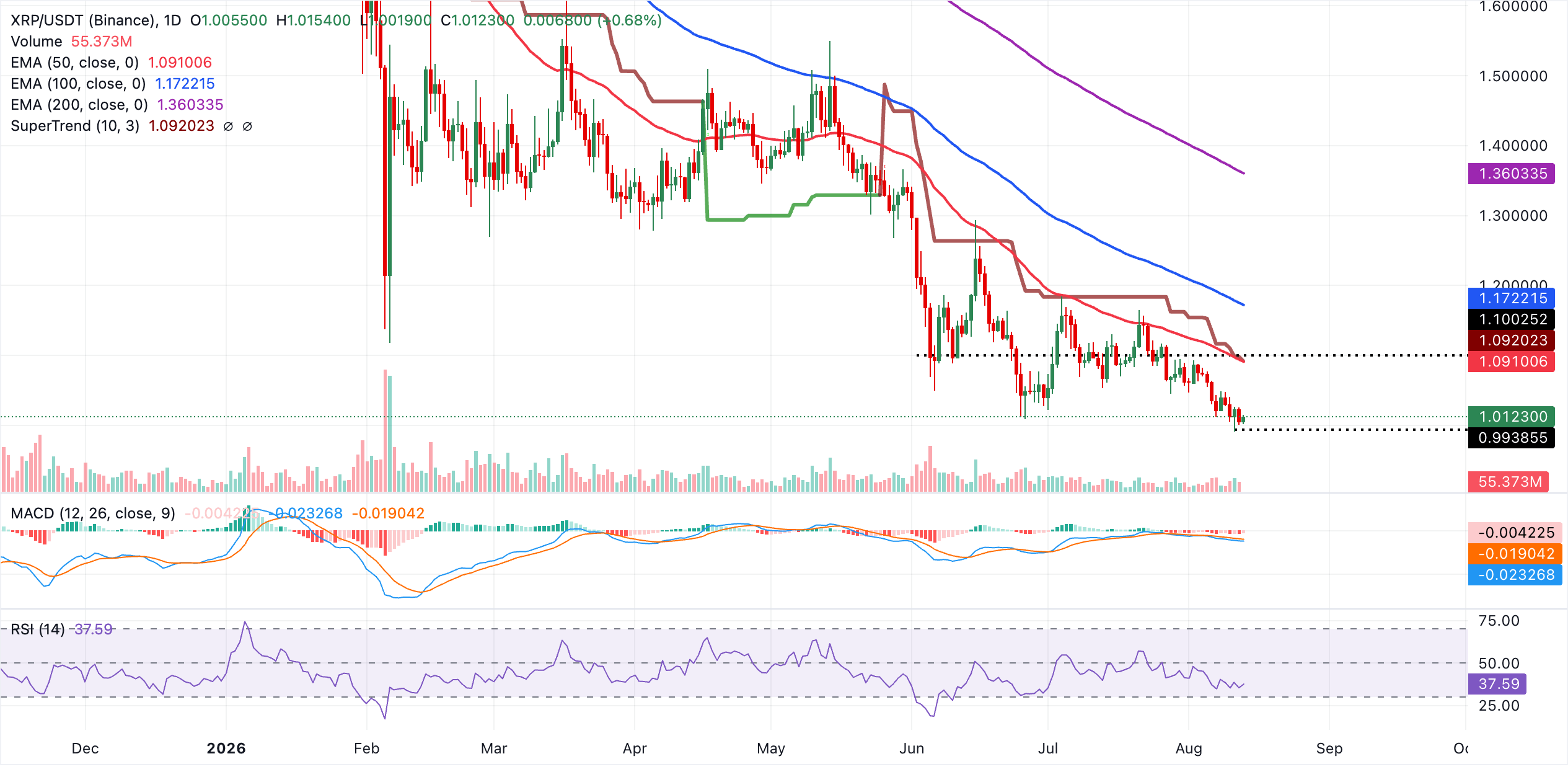
Initial resistance is clustered in the $1.09-$1.09 area, where the 50-day EMA and SuperTrend converge and form the first barrier to any recovery. A sustained break above this zone would expose the next resistance at the 100-day EMA near $1.17, ahead of the more strategic hurdle at the 200-day EMA around $1.36. In the absence of clearly defined structural supports in the current dataset, any pullback from these levels would likely keep XRP vulnerable to renewed selling while momentum gauges remain depressed.
(The technical analysis of this story was written with the help of an AI tool. Know more.)
Bitcoin, altcoins, stablecoins FAQs
Bitcoin is the largest cryptocurrency by market capitalization, a virtual currency designed to serve as money. This form of payment cannot be controlled by any one person, group, or entity, which eliminates the need for third-party participation during financial transactions.
Altcoins are any cryptocurrency apart from Bitcoin, but some also regard Ethereum as a non-altcoin because it is from these two cryptocurrencies that forking happens. If this is true, then Litecoin is the first altcoin, forked from the Bitcoin protocol and, therefore, an “improved” version of it.
Stablecoins are cryptocurrencies designed to have a stable price, with their value backed by a reserve of the asset it represents. To achieve this, the value of any one stablecoin is pegged to a commodity or financial instrument, such as the US Dollar (USD), with its supply regulated by an algorithm or demand. The main goal of stablecoins is to provide an on/off-ramp for investors willing to trade and invest in cryptocurrencies. Stablecoins also allow investors to store value since cryptocurrencies, in general, are subject to volatility.
Bitcoin dominance is the ratio of Bitcoin's market capitalization to the total market capitalization of all cryptocurrencies combined. It provides a clear picture of Bitcoin’s interest among investors. A high BTC dominance typically happens before and during a bull run, in which investors resort to investing in relatively stable and high market capitalization cryptocurrency like Bitcoin. A drop in BTC dominance usually means that investors are moving their capital and/or profits to altcoins in a quest for higher returns, which usually triggers an explosion of altcoin rallies.
Recommended Articles


