


Oil Prices Sink as Much as 7% as Trump Pauses Iran Strikes and Restarts Talks
TradingKey - International oil prices plunged during Asian trading hours on Monday. US President Donald Trump announced a suspension of a new round of military action against Iran and plans to restart negotiations regarding the nuclear issue and the Strait of Hormuz, significantly cooling market concerns over Middle East crude supply disruptions. Meanwhile, OPEC+ decided to continue raising its production targets in September, adding further downward pressure on oil prices.
In early Asian trading, Brent crude ( UKOIL) once fell over 7%, sliding below $83 per barrel, while WTI crude ( USOIL) fell nearly 8%.
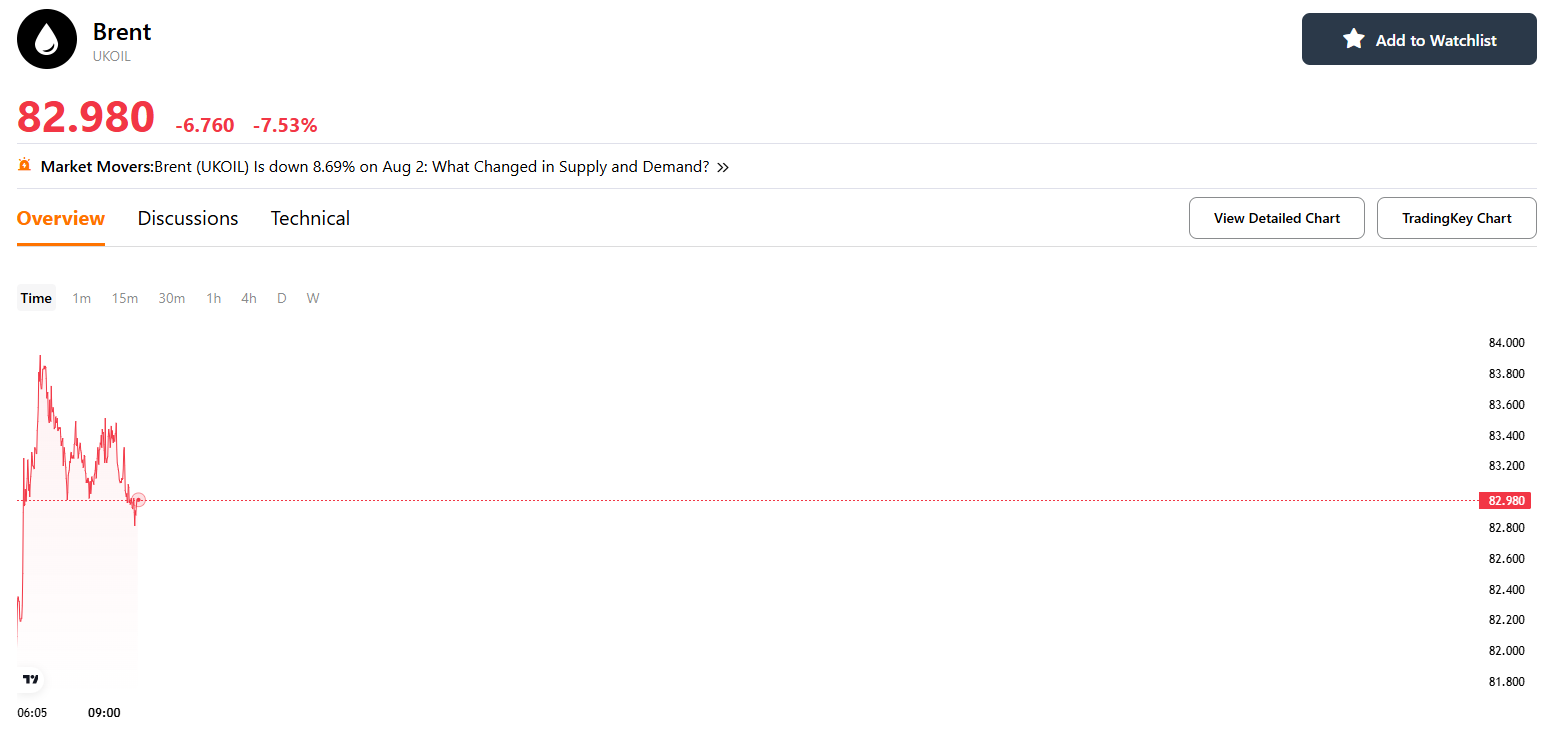
Source: TradingKey
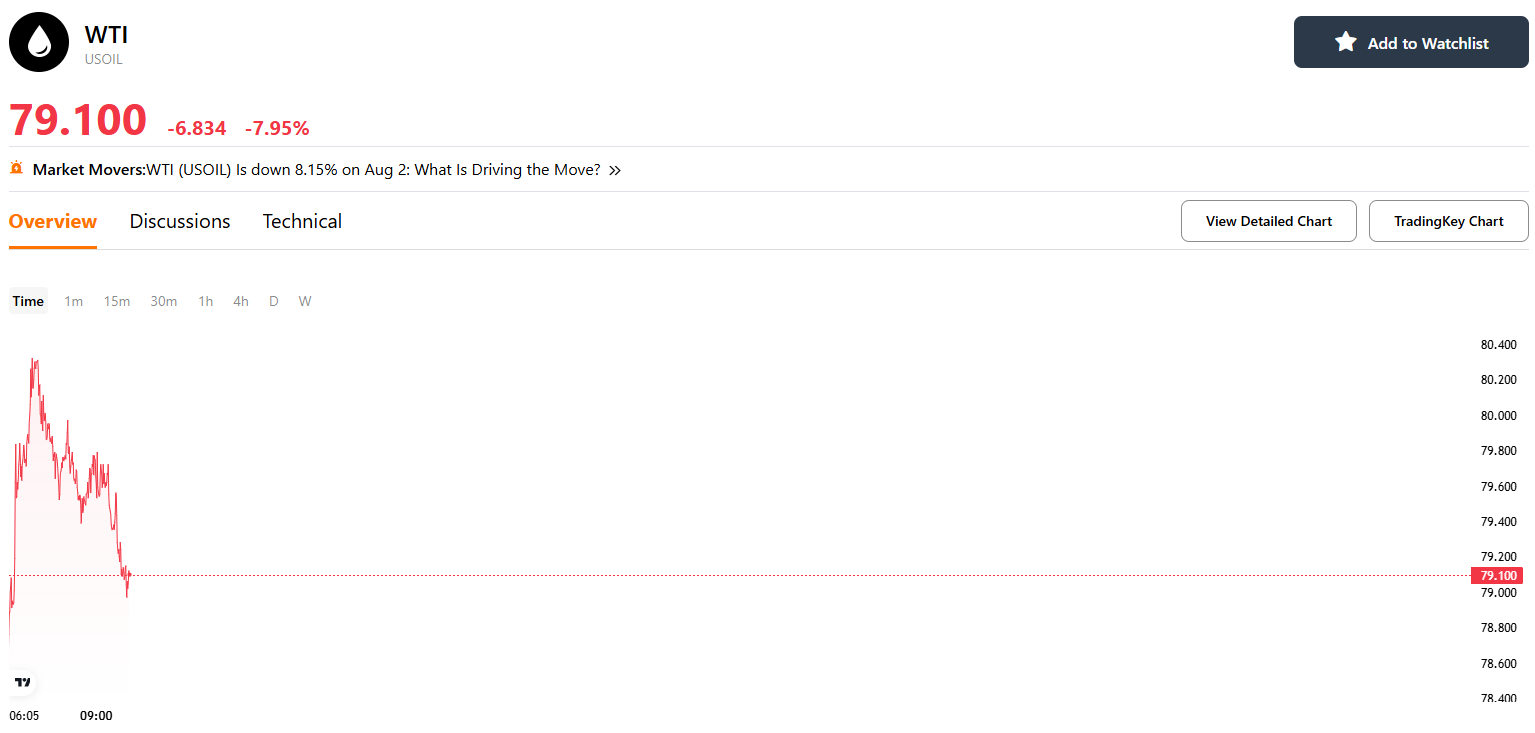
Source: TradingKey
Trump said on Sunday evening that negotiations between the US and Iran will officially begin on Monday afternoon, with the agenda covering navigation arrangements in the Strait of Hormuz and the Iranian nuclear issue. He also stated that an agreement concerning the reopening of the strait could make progress soon.
Previously, the US had planned to launch a large-scale military strike against Iran on Saturday. Trump said he decided to call off the action after Saudi Arabia, the United Arab Emirates, Qatar, and Iran proposed continuing negotiations. However, he also emphasized that if diplomatic efforts fail to yield results, the US still retains the option to take military measures.
Iran's response was relatively cautious. Iranian Foreign Minister Araghchi stated that consultations with Oman regarding the Strait of Hormuz have entered the final stage. Meanwhile, the Iranian Foreign Ministry said the two sides are discussing the establishment of a mutually recognized shipping route, but no agreement has been reached yet on fully restoring navigation through the strait, and Tehran's current policy stance remains unchanged.
Over the past two weeks, the military conflict between the US and Iran continued to escalate, with the market once fearing that hostilities would spread to Persian Gulf energy facilities and major shipping lanes. Iran-backed militant groups attacked Saudi oil facilities, and shipping safety around the Red Sea and the Strait of Hormuz was also threatened, briefly pushing Brent crude above $90 per barrel. As the US canceled its strike plans and shifted toward negotiations, the geopolitical risk premium previously priced into oil fell rapidly.
Meanwhile, changes on the supply side also put pressure on oil prices. OPEC+ decided on Sunday to increase member countries' crude production targets by 188,000 barrels per day starting in September, marking the sixth consecutive month the group has announced production increases. The next output policy meeting is scheduled for September 6.
Due to previous supply disruptions in Iran, Russia, and Kazakhstan, OPEC+'s prior quota increases did not fully translate into actual production growth, meaning the short-term impact of this decision may be relatively limited. However, if tensions in the Middle East continue to ease and normal navigation through the Strait of Hormuz is gradually restored, major oil-producing countries such as Saudi Arabia will have greater room to increase production, and the tightness in global crude supply could ease further.
Recommended Articles


