


WTI (USOIL) Is up 2.08% on Oct 20: What Is Driving the Move?
WTI (USOIL) is up 2.08% at Oct 20 05:00(ET), now at $100.219, with a 7-day up of 6.77%.
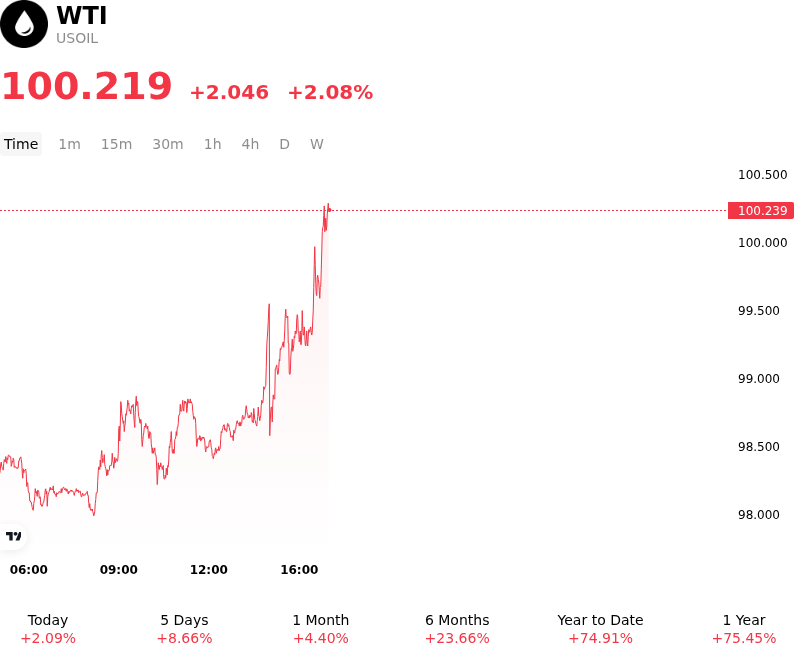
What is driving WTI (USOIL)’s stock price up today?
Crude oil advanced as escalating geopolitical friction across key Middle Eastern transport corridors forced institutional investors to reprice immediate physical supply risks. Intensified security threats near the Strait of Hormuz, coupled with reports of targeted disruptions to regional maritime logistics and energy infrastructure, drove a sharp expansion in the geopolitical risk premium. With major physical export channels facing heightened vulnerability, market participants aggressively added long exposure to hedge potential supply bottlenecks.
Underlying supply and demand fundamentals provided solid reinforcement for the advance. U.S. commercial crude inventories continue to trade significantly below five-year seasonal averages, leaving market balances exceptionally sensitive to any localized disruption or flow delay. This structural tightness is further sustained by disciplined OPEC+ output targets and robust refinery intake, particularly across distillate and middle-distillate markets where global inventories remain constrained. Consequently, market participants are actively pricing in a tighter physical balance sheet through the fourth quarter.
Technical and positioning factors amplified intraday upward momentum, as front-month contract expiration dynamics sparked active short-covering and capital inflows into deferred futures contracts. While macro headwinds and potential policy responses around emergency reserve releases remain under observation, the immediate bias favors tight physical supply and low inventory buffers. Institutional investors continue to monitor headline risk alongside upcoming inventory reports, with upside risks persisting as long as key transit routes and physical flows remain vulnerable.
Technical Analysis of WTI (USOIL)
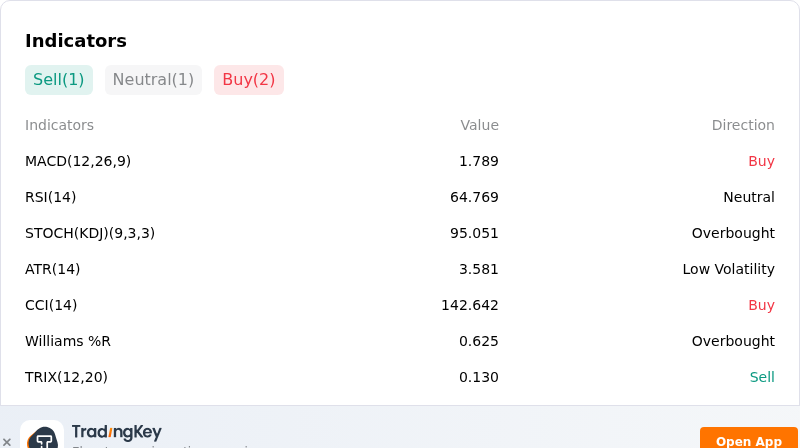
Technically, WTI (USOIL) shows a MACD (12,26,9) value of 1.789, indicating a buy signal. The RSI at 64.769 suggests neutral condition and the Williams %R at 0.625 suggests overbought condition. Please monitor closely.
More details about WTI (USOIL)
Recent Events and Risks:
- Sanctions Relief and Supply Influx Risks: U.S. policy actions granting sanctions waivers on Russian fuel exports under the Graham Act have reduced distillate scarcity expectations, triggering immediate profit-taking and unwinding the accumulated supply-scarcity risk premium in WTI futures.
- Persian Gulf Supply Normalization: Crude exports from key Persian Gulf producers have rebounded to nearly 80% of pre-disruption levels, while physical export terminals remain operational despite regional conflict headlines, leaving prompt prices vulnerable as physical supply tightness relaxes.
- Cushing Inventory Accumulation and Fuel Build: Recent localized inventory data points to unexpected crude stock builds at the Cushing delivery hub alongside rising domestic finished gasoline inventories, signaling near-term refinery throughput bottlenecks and underlying fuel demand softness.
- Technical Overbought Stress and Macro Demand Downgrades: Global demand growth downgrades for the fourth quarter by major energy agencies, paired with daily momentum indicators reaching overbought levels, leave WTI futures exposed to sharp intraday profit-taking and long liquidation.
Recommended Articles


