



After a negative 2025 for crude, oil turned positive for the start of 2026. Brent fell into the low $60s at the end of 2025 due to a weakening global economy and rising OPEC+ production. The Iran war and the disruption of shipping through the Strait of Hormuz from late February caused Brent to spike above $100 in mid-March for the first time since 2022 and it has swung widely since then.
I expect the volatility to persist into the second half of 2026, before averaging lower in 2027. There are two factors that will control the trajectory of the balance of 2026. First, how quickly normalcy returns to GCC shipping and supply. Second, how much the high crude prices slow/restrict the global economy and energy demand.
In this article, I will cover how oil prices moved over the past year, the key macro drivers I am watching through 2027, what major institutions expect, my Brent and WTI price targets, and my bullish, base and bearish scenarios. I will also look at whether oil can reach $150, and how you can trade oil.
*Start oil trading with zero commission and low oil spread starting from 0.05 pips
Overview of Oil Prices in the Past Year
If you want to see where oil is headed, take a look at where it began. Below are the key price milestones from 2025 to mid-October 2026, and what moved prices each time.
Source: EIA Short-Term Energy Outlook, October 2026. Q3 2026 includes estimates.
Key price milestones
🔹2025, an oversupplied market: In 2025, the market was oversupplied. OPEC+ was in the process of removing their voluntary cuts. Non-OPEC producers were also increasing their production. The EIA said Brent averaged about $69 in 2025, and WTI averaged about $65.
🔹Late 2025, glut expected: Inventories built up in the second half of the year and Brent averaged $63.63 in the fourth quarter. A Reuters poll published in late November 2025 expected Brent to average $62.23 in 2026. The expectation was for a glut to continue, not for the market to be balanced or in a deficit.
🔹February to March, the shock: Brent rose from about $72 at the end of February to about $118 at the end of March, the largest monthly increase on record, according to the World Bank, as the Iran war disrupted shipping through the Strait of Hormuz. It crossed $100 for the first time in mid March.
🔹April, the physical squeeze: Physical crude traded far above futures. Dated Brent was assessed at $141.37 on 2 April, by Platts, which was close to the record highs of 2008, as reported by CNBC.
🔹May, the UAE exit: The UAE formally withdrew from OPEC and OPEC+ on 1 May. Gulf production shut-ins peaked at about 10.9mn b/d in May, per the EIA, and Brent averaged about $103 in the second quarter.
🔹Summer, partial relief: Risk premiums eased and prices fell. Brent averaged about $91 in August.
🔹September, the second spike: Attacks on Saudi Arabia’s East-West pipeline lifted Brent to an average of $114 in September, with spot prices reaching $131 on 15 September.
🔹Mid-October: Brent is trading around $104-$106, with WTI around $95, as attacks on vessels near Hormuz offset the possible easing of US sanctions on Russian tankers.
Key Drivers of Oil Prices Through 2027
Every day brings new news on the oil market, but the bigger picture is driven by other factors. Here are the five I am most interested in.
1 Global economic growth and China
According to the IMF, the world economy will expand 3.1% in 2026 and 3.4% in 2027, assuming shipping through Hormuz resumes in March 2027. China has been the key driver of oil demand in recent years, but Chinese crude oil imports were down 21.5% in September 2026 from a year ago. Oil prices can’t rise much with limited global economic growth.
2 Monetary policy and the US dollar
The FED increased rates by 0.25% to a range of 3.75% to 4.00% in September, the first increase since 2023, according to the Federal Reserve. Tighter policy reduces inflation and fuel demand. The dollar matters less this year, as in supply shocks, the effect of the currency can be overpowered by the physical oil shortage.
3 OPEC+ and the UAE
On October 4, the core members of OPEC+ kept their production levels the same for November, according to OPEC. Structurally, the UAE’s departure from OPEC and OPEC+ in May is more significant, allowing them the ability to produce at maximum capacity. In 2027, if there is a faster supply recovery, and OPEC+ can’t slow that recovery, we could see prices fall.
4 Non-OPEC supply
Growth outside the Gulf is a major factor in my expecting lower prices in 2027. The EIA forecasts US crude production to rise to 14.30mn b/d in 2027, from 13.87mn b/d in 2026, while Guyana should increase to 1.15mn b/d. Continued non-OPEC supply adds to the surplus in 2027, and limits rallies, when Gulf flows normalize.
5 Geopolitics and inventories
Gulf production shut-ins fell to 4.8mn b/d in September from 10.9mn b/d in May, according to the EIA, but the September attacks illustrate how quickly progress can reverse. According to the IEA, global oil stock levels were 509 million barrels less than pre-war levels at the end of September. Until those levels are replenished, disruptions in the supply of crude oil will impact the price of oil.
What Major Institutions Expect for Oil in 2026 and 2027
Here is what the main energy agencies, banks and analysts expect for Brent and WTI, based on their latest reports.
- EIA and IEA (October 2026): The EIA expects Brent to average $96 in 2026 and $84 in 2027, falling to $74 in the 4th quarter of 2027 as global inventories rebuild, with WTI at $88 and $80. The IEA does not forecast prices, but it expects demand to rise by 2 million barrels per day and supply by 7.7 million barrels per day in 2027, when a surplus emerges.
- Reuters poll (September 30, 2026): Thirty analysts expect Brent to average $89.05, and WTI to average $83.90 in 2026. Most of the analysts expect the oil market to return to surplus in 2027.
- Goldman Sachs (October 11, 2026): Goldman increased its December 2026 Brent forecast to $90 and kept its 2027 average at $80. It expects WTI to average $81 in December 2026 and $73 in 2027.
- World Bank (April 2026): Expected Brent prices to be $86 in 2026 and $70 in 2027. It made this forecast assuming disruptions to oil supply ended in the second quarter of 2026. (World Bank)
The common thread is direction, not level. Every major forecaster expects prices to be lower in 2027 than in 2026. They differ mainly on how fast the decline happens.
Oil Price Forecast: Brent and WTI Targets
Here are my price forecasts. They are generally in line with the EIA’s path and Goldman’s 2027 forecast, adjusting for the risk that the supply recovery occurs more slowly than they assume.
WTI typically trades lower than Brent because it's more closely tied to the US market. Generally, oil supply on the other side of the Gulf is further away. According to data from the EIA, the quarterly average discount of WTI in relation to Brent in 2026 has been between $7 to $9. I expect the discount to shrink with improved shipping and normal Gulf flows.
Oil Price Scenarios: Bullish, Base and Bearish Cases
These are my scenarios for 2027. The probabilities are my own estimates, not institutional forecasts.
- Base case: gradual recovery, lower average
Gulf output recovers, first-half shut-ins decline, and inventories rebuild. China fills its tanks early in the year, and, along with OPEC+ cuts, supports Brent prices. Higher non-OPEC supply and UAE output worsened the balance in the second half.
Average Brent prices are between $78 and $88 in 2027. Prices are expected to be between $80 and $90 in the first quarter and fall to the $70s and $80s in the second half of the year.
- Bullish case: disruption lasts longer
Gulf output remains 5 million barrels per day (b/d) below February 2026 levels. With continuous disruption, inventories would be quickly drawn down, and Goldman expects Brent would average $125 in 2027 in this case.
In this scenario, Brent averages between $100 and $125 for the year, with the likelihood of prices being in the low $120s in Q1. High prices in this range would drive demand destruction and increase the likelihood of a global recession, thereby limiting further price increases.
- Bearish case: fast resolution and weak demand
Fast resolution and weak demand define the bear case. In this case, all blocks of supply briefly interrupted by the recent tumult in the market return: a durable agreement reopens Hormuz, Gulf producers return to full output, and Russian supply increases with the easing of sanctions.
Demand stays weak. High interest rates keep growth low and diminish investment. Goldman Sachs believes that should Gulf production rise above pre-war levels, Brent could fall to the $60s by 2027.
What would change my outlook
More bullish: Gulf shut-in's stop decreasing, OPEC+ aggressively cuts, or onshore inventories continue to draw in 2027.
More bearish: Hormuz reopens before the IMF's March 2027 assumption, China's imports remain weak, or the Fed continues increasing rates.
Can Oil Reach $150?
It certainly can, but it's not my base case. The answer depends on which case plays out.
Bullish case: a spike to $150 is possible
Physically delivered crude was trading at over $140 in April, so the psychological barrier of $150 is removed. Getting to $150 and staying there would require an extended interruption of Gulf supply, as well as failure of bypass routes and depletion of emergency crude reserves. Even in my bullish case, I expect Brent to average $100 to $125 in 2027, so $150 would be a short spike rather than a new average.
Bearish case: Why a spike to $150 is unlikely to hold
There are several reasons to believe the $150 case is unlikely. Bypass pipelines, ship-to-ship transfers and increased UAE export capacity in 2027 add to supply. There's also the risk that prices would reach levels that would negatively impact demand. The IMF believes that oil prices averaging $110 in 2026 and $125 in 2027 would bring the world economy close to a recession, which would limit how long prices can stay that high.
Is Oil a Good Investment in 2026 and 2027?
Oil can be an investment, but it's a volatile one. My base case is for lower prices, but I expect bouts of upside moves. For most investors, oil will be a very small part of a well-diversified portfolio. For active traders, the volatility will create both upside and downside opportunities to trade, assuming risk is being closely managed.
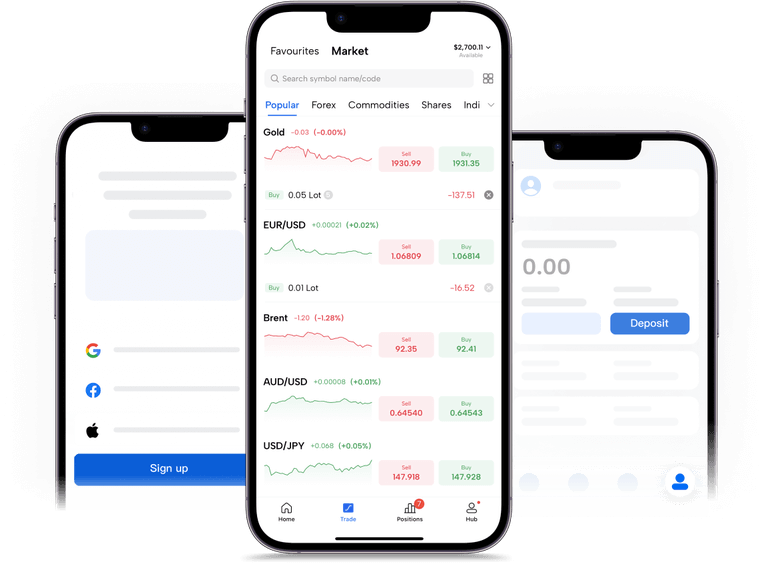
With Mitrade, active traders can use CFDs on Brent (UKOIL) and WTI (USOIL) to profit from rising or falling oil prices without having to actually own a barrel of oil, and set stop-loss orders to manage that risk.
★ Key events to watch
✅OPEC+ meetings, especially November's, December's and January's.
✅EIA inventory reports and STEO
✅Federal Reserve Meetings, especially October's, December's and January's.
✅China's crude imports
✅Hormuz shipping and export data


How to Trade Oil: Short-Term vs Long-Term
1- Short-term trading
Short-term traders have options to trade oil futures, energy ETFs, or contracts for difference (CFDs). CFDs offer the unique opportunity to profit from rising or falling oil prices without having to actually own a barrel of oil. If you are bearish on oil, you could profit from the decline. Keep in mind that if the price of oil falls more than $20 in a given month, it is a good opportunity to take advantage of.
2- Long-term investing
Long-term traders prefer ETFs or stocks for energy companies. ETFs help spread risk among multiple companies and reduce the impact of day-to-day price changes. These are good for people who want exposure to the energy cycle without constantly monitoring the market.
Summary
My outlook forecasts higher and more volatile oil prices through the rest of 2026, with lower average prices in 2027. I see Brent trading between $95 and $110 in the fourth quarter of 2026, and averaging between $78 and $88 in 2027, as Gulf supply recovers and inventories rebuild. Longer disruptions will keep prices above $100, while faster resolutions could take them into the $60s.
Mitrade offers trading on Brent (UKOIL) and WTI (USOIL) with tight spreads and the ability to trade both rising and falling markets. Oil moves fast. Mitrade offers a free demo account, no deposit required, for you to test your strategies on Mitrade's Brent and WTI demo accounts.
What is the oil price forecast for 2027?
Brent is expected to be in the range of $78-$88 and WTI in the range of $72-$82 for 2027. The EIA is projecting Brent prices to be $84 for 2027 and Goldman Sachs projects a price of $80. Most forecasters expect a surplus as Gulf supply recovers.
What is the difference between Brent and WTI?
Brent is the benchmark crude and WTI is the main crude price for the US. Because of where they are produced, WTI is usually discounted to Brent.
How does the US dollar affect oil prices?
Since oil is priced in US dollars, a rising dollar will place a downward pressure on oil prices. In a supply shock, oil price impact from the dollar will be negligible compared to the impact of the physical shortage.
Do oil prices affect gold?
Higher oil prices can boost expectations for inflation, which can be bullish for gold. However, if the oil price increase results in higher interest rates, then a stronger dollar, that can be bearish for gold.
When is a good time to enter the oil market?
There is no perfect timing. Many traders prefer to wait for pullbacks after panic-driven spikes, or to build positions gradually. Whatever your approach, set your exit and position size before you enter.
* The content presented above, whether from a third party or not, is considered as general advice only. This article should not be construed as containing investment advice, investment recommendations, an offer of or solicitation for any transactions in financial instruments.


