


Crude oil is one of those commodities that hold the most promise in terms of profit for traders in the current market environment—and you do not need actual barrels or vast amounts of cash to begin with either. The reality of the matter is that UAE traders can trade oil via CFDs, ETFs, and Futures.
However, high spreads and hidden fees can easily reduce your earnings. To help you trade efficiently and securely, this guide evaluates and ranks the top 5 oil trading platforms in the UAE based on regulations, costs, and local payment support.
*Try a Free $50,000 Demo Account and Claim Your $100 Welcome Bonus
Quick Summary at a Glance
Prior to analyzing each of the brokers individually, here is a summary comparing the leading oil brokers in the UAE, depending on factors such as regulations, trading fees, minimum deposit, and ease of payment in the country:
Stay ahead of oil market moves with Mitrade and explore trading opportunities as they emerge >>>
What is an Oil Trading Platform?
An oil trading platform is a digital gateway or software provided by online brokers that enables individuals to trade in oil prices without the need for delivery of the commodity.
What Markets Can You Trade?
When using an online oil trading platform, you typically do not buy physical barrels of oil. Instead, you trade various derivative instruments and assets, including:
Oil CFDs (Contracts for Difference): The most popular method for retail traders, allowing you to speculate on WTI or Brent price rises and falls with leverage without owning the underlying asset.
Oil ETFs (Exchange-Traded Funds): Funds that track the performance of oil indexes or commodity prices, ideal for longer-term investors.
Oil Futures Contracts: Agreements to buy or sell oil at a predetermined price at a specified future date, heavily used by professional traders and institutions.
Oil Stocks & Options: Shares in major oil corporations (like ExxonMobil or Saudi Aramco) or options contracts tied to energy commodities.
Who Uses Oil Trading Platforms?
Oil trading platforms cater to a wide spectrum of market participants, each with different strategies and goals:
Day Traders & Scalpers: Traders who open and close multiple positions within a single day to profit from short-term crude oil volatility driven by inventory reports or breaking news.
Swing Traders: Individuals who hold positions for a few days or weeks, riding medium-term trends caused by geopolitical events or OPEC+ decisions.
Long-Term Investors: Portfolios managers or retail investors using ETFs or stock options to gain exposure to the energy sector over months or years.
Hedgers & Commercial Entities: Companies or airlines looking to lock in fuel prices to protect against market fluctuations.
Key Factors to Consider When Choosing an Oil Trading Platform
There are many aspects which need to be considered while choosing the most appropriate oil trading platform in the UAE. These include:
Regulation & Safety: Choose brokers regulated by recognized authorities (e.g., DFSA, FSRA, FCA, or ASIC) to protect your capital.
Trading Costs: Check spreads on WTI/Brent crude, commission rates, and overnight swap fees.
Execution & Reliability: Ensure fast order execution and minimal slippage during volatile news events.
Funding Methods: Look for AED currency support, local UAE bank transfers, and low withdrawal fees.
Risk Management: Utilize features like stop-loss orders, take-profit levels, and negative balance protection.
Best 5 Oil Trading Platforms
Selecting a proper broker is important for oil trading. For your convenience, we selected the best platforms available in the UAE considering their regulation (SCA, DFSA, ADGM, ASIC), spreads on WTI/Brent, minimum deposit requirements, and local payments options. The following are the top 5 platforms for oil trading:
 Simple and user-friendly trading experience
Competitive spreads with a commission-free structureIntuitive proprietary platform featuring real-time market sentiment analysis
Risk-free demo account pre-loaded with $50,000 in virtual funds for strategy testing
 No MT4/MT5 or cTrader support
Not suitable for automated/algorithmic tradersLong-standing history and high credibility in financial marketsWide diversity of energy instruments and oil contractsExceptional analytical tools and educational content (IG Academy)Multi-asset platform enabling trading across multiple markets from one accountAccount opening and verification process can take longer compared to competitorsCustomer support response times can occasionally be slowEasily copy experienced oil and commodity traders automatically.Modern and intuitive web and mobile app interface.Regulated by top-tier authorities (FCA, CySEC, ASIC).A $5 withdrawal fee applies on fund transfers.Limited advanced technical charting tools for professional algorithmic traders.Full MT4, MT5, and cTrader integration.High liquidity and low slippage for active strategies.Ultra-tight spreads on oil and commodity CFDs.Complex interface for beginners.Occasional delays in deposit/withdrawal support.Predictable trading costs unaffected by market volatility.Features AvaProtect™ to guard against losing trades.Highly regulated across multiple global jurisdictions.Inactivity fees apply after extended periods of non-use.Swap/overnight fees can be high for long-term swing positions.
Step-by-Step Guide: How to Start Trading Crude Oil Online
Crude oil CFDs trading on the internet is quite simple. Below is how to go about it through the use of Mitrade platform:
Step 1: Open & Fund Your Account
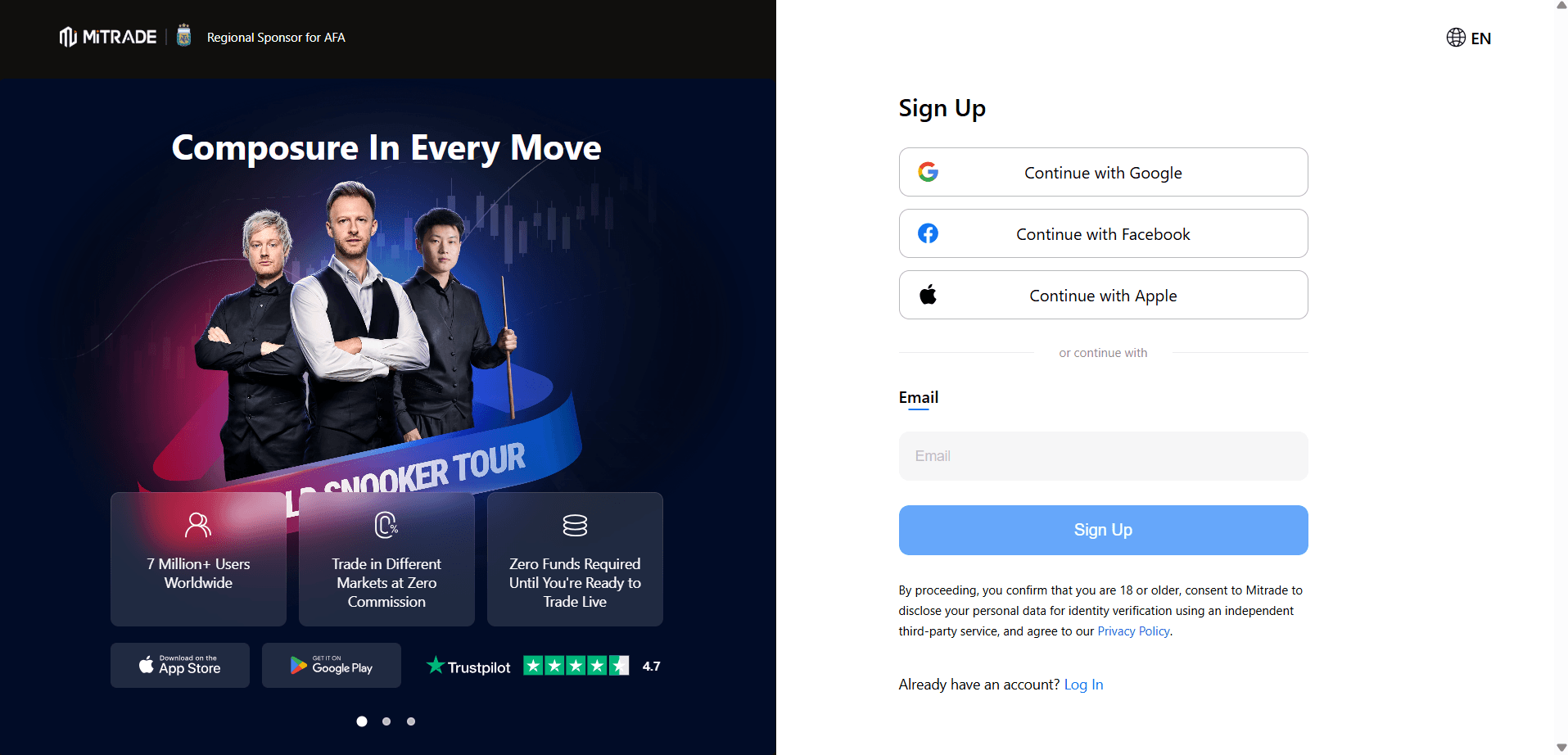
Visit the official Mitrade website or download the mobile app. Then Sign up and complete the identification procedure. Fund your trading account via local bank transfer, card, or any other electronic wallet (Skrill/Neteller), starting from a mere $50 deposit.
*Try a Free $50,000 Demo Account and Claim Your $100 Welcome Bonus
Step 2: Select Oil & Analyze the Market
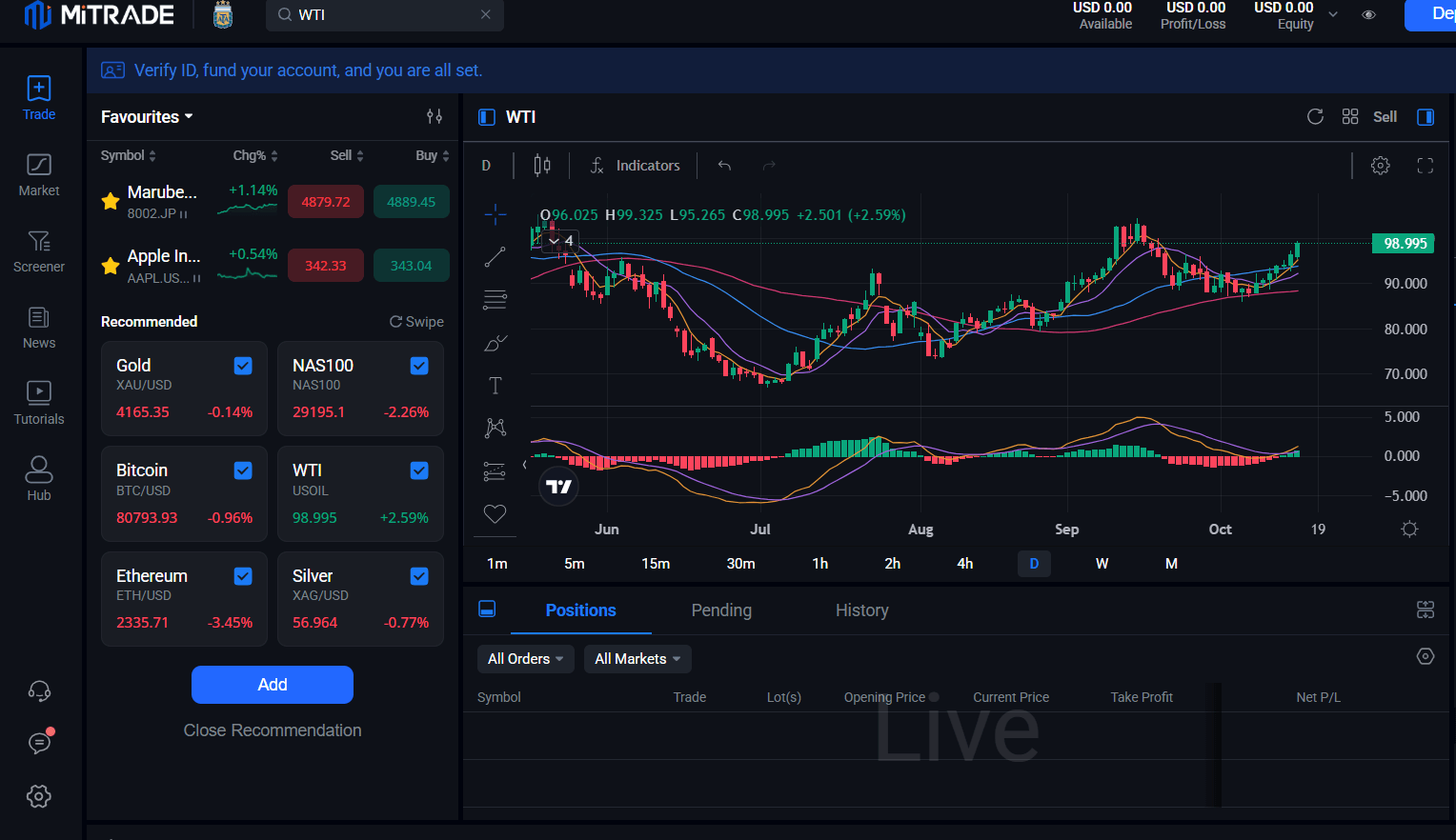
Search WTI and/or Brent Crude Oil in the Mitrade trading platform. Note the prices, spreads, and swaps on your trading platform. Before trading, utilize the research features provided by the Mitrade platform such as economic calendar, market news, market sentiment, and technical analysis to know what moves oil prices.
Step 3: Open a Position with Risk Management
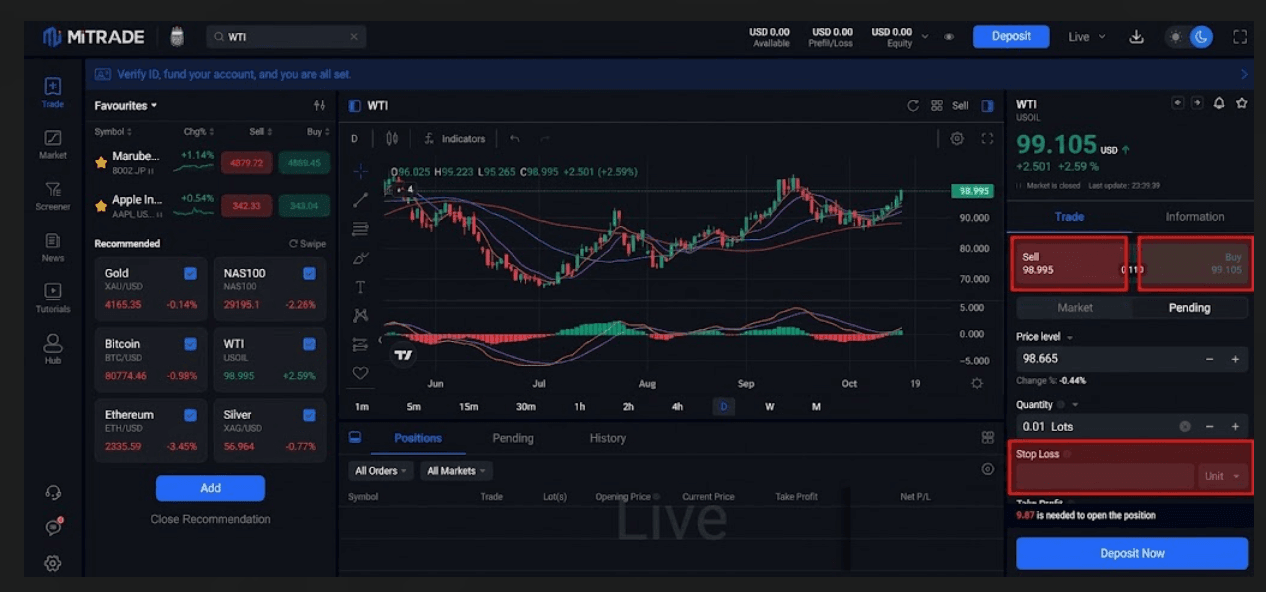
Start small with a micro lot (0.01 lots). Determine your action (Buy/Sell) but be sure to set up your Stop Loss and Take Profit before placing your trade. Use price alerts to monitor the movement of the market easily.
What Affects WTI and Brent Oil Prices?
Crude oil price drivers should be known to anyone involved in commodity trading. The two benchmarks of oil, namely WTI and Brent, are constantly affected by a variety of market and macroeconomic factors:
🔷 OPEC+ Decisions & Production Levels
OPEC+ manipulates the world oil supply via quotas and production cuts. Strict adherence to quotas by all members needs to be followed since overproduction might lead to lower prices.
🔷 Geopolitical Events & Supply Bottlenecks
Geopolitical risks in terms of conflicts, sanctions, or threats at sea, especially around important passages such as the Strait of Hormuz, the Bab al-Mandab Strait, or the Suez Canal, bring an extra premium into the picture, which pushes up the price.
🔷 U.S. Inventory Reports
The weekly inventories data from the American Petroleum Institute and Energy Information Administration have a direct effect on WTI prices. Falling inventories indicate higher demand, thus increasing prices, while rising inventories lower prices.
🔷 USD Strength & Federal Reserve Rates
Oil prices are denominated in U.S. Dollars; hence, a strong dollar leads to higher oil prices internationally. Increased interest rates slow down the economy and reduce energy demand, whereas a drop in interest rates helps consumption.
🔷 Global Oil Demand Drivers
Economic growth, industrial production, and travel activity in leading countries like China, the United States, and Europe continue to be essential for oil price dynamics in the long term.
Conclusion
The choice of the most suitable platform for trading oil in the UAE is based on your preferences and requirements. The following quick guide will help you select the right option:
🔸Mitrade is the ideal choice for beginners seeking a smooth experience and low entry barriers.
🔸Advanced traders that need exactness, liquidity and strong charting capabilities, then IG is where you will excel.
🔸If you are interested in learning from the best strategies in the market, eToro provides the leading platform in social trading..
🔸If algorithmic trading is your focus, Pepperstone delivers ultra-fast execution alongside tight spreads.
🔸If you have an aversion to risk and need fixed spreads, AvaTrade is perfect for you.
No matter which platform you choose, it is essential to backtest your trading strategy on a risk-free demo account—such as Mitrade’s demo account, which offers $50,000 in virtual funds and real-time market data—and never trade oil without setting a Stop-Loss.


* The content presented above, whether from a third party or not, is considered as general advice only. This article should not be construed as containing investment advice, investment recommendations, an offer of or solicitation for any transactions in financial instruments.


