


NZD/USD (NZDUSD) Is up 0.50% on Jul 13: Are Market Expectations Adjusting?
NZD/USD (NZDUSD) is up 0.50% at Jul 13 20:55(ET), now at $0.57773, with a 7-day up of 1.78%.
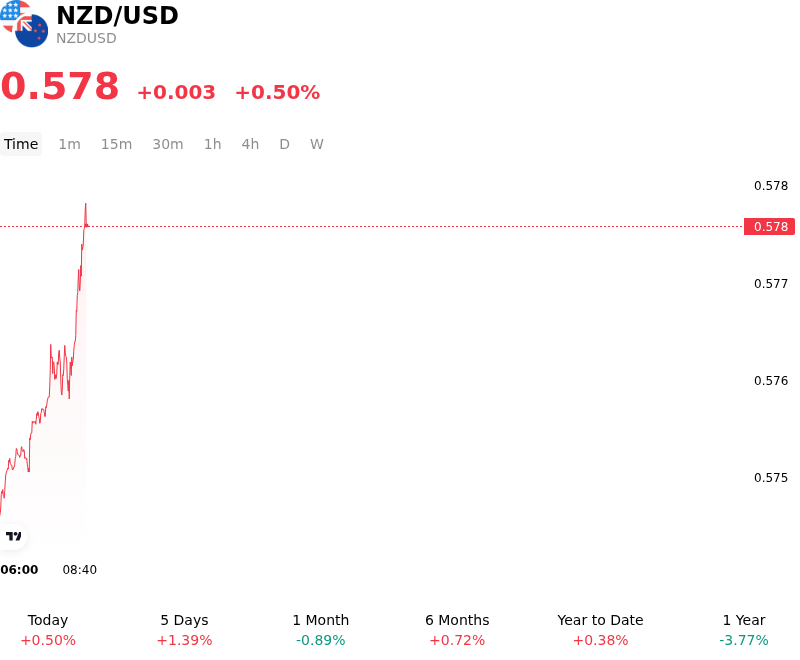
What is driving NZD/USD (NZDUSD)’s stock price up today?
The appreciation of the New Zealand dollar against the US dollar was primarily driven by a broad-based softening of the greenback as market participants recalibrated Federal Reserve interest rate expectations. Following a series of cooling inflation indicators and signs of a moderating labor market in the United States, institutional investors have increased bets on a more aggressive easing cycle from the FOMC. This downward shift in US Treasury yields has effectively narrowed the interest rate differential between the two nations, reducing the US dollar's carry advantage and encouraging capital flows into high-beta, pro-cyclical currencies like the kiwi.
The Reserve Bank of New Zealand’s policy outlook provided a complementary tailwind for the pair. While global central banks are largely pivoting toward a neutral or accommodative stance, the RBNZ’s perceived commitment to maintaining a restrictive monetary policy to ensure inflation returns to its target range has offered the New Zealand dollar a yield-backed cushion. This divergence in policy trajectories—where the Fed is seen as nearing a pivot while the RBNZ remains cautious about premature easing—has become a central theme for macro-driven currency strategies.
Risk sentiment across global markets also played a significant role in supporting the pair. As a currency highly sensitive to global growth prospects and commodity cycles, the New Zealand dollar benefited from a constructive move in equity markets and stabilization in regional trade dynamics. Positive developments regarding fiscal support measures in China provided an additional boost, as the kiwi often serves as a liquid proxy for the Asia-Pacific growth outlook and industrial commodity demand.
Furthermore, the price action was supported by institutional positioning and technical flows. The breach of key psychological resistance levels triggered automated buy orders and the unwinding of short positions by hedge funds that had previously capitalized on US dollar strength. While the current move is fundamentally supported by the shifting macro landscape in the United States, the sustainability of this trend likely depends on forthcoming domestic data releases, particularly New Zealand’s quarterly inflation and employment figures, which will determine if the RBNZ can maintain its hawkish relative value.
Technical Analysis of NZD/USD (NZDUSD)
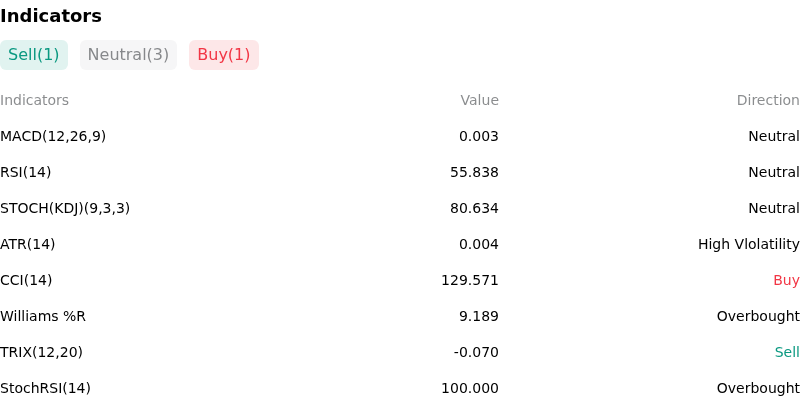
Technically, NZD/USD (NZDUSD) shows a MACD (12,26,9) value of 0.003, indicating a neutral signal. The RSI at 55.838 suggests neutral condition and the Williams %R at 9.189 suggests overbought condition. Please monitor closely.
More details about NZD/USD (NZDUSD)
Recent Events and Risks:
- Dovish RBNZ Policy Pivot: Heightened market expectations for a 50-basis-point rate cut in the upcoming October meeting, driven by cooling domestic inflation and weakening labor market data over the last 48 hours, are actively eroding the Kiwi's yield advantage.
- Fragile Chinese Demand Outlook: Recent data indicating a continued contraction in Chinese manufacturing activity and persistent deflationary pressures has weighed heavily on the NZD, which serves as a liquid proxy for Chinese economic health and commodity demand.
- Widening Yield Differentials: Stronger-than-anticipated US economic resilience, evidenced by recent retail sales and unemployment claims, has pushed US Treasury yields higher, narrowing the carry trade spread and triggering capital outflows from the NZD into the USD.
- Global Risk-Off Sentiment: Escalating geopolitical tensions in the Middle East and volatility in global equity markets have suppressed appetite for high-beta currencies, leading institutional desks to reduce exposure to the New Zealand Dollar in favor of safe-haven assets.
Recommended Articles


