


Cisco Q1 Earnings Preview: Revenue Expected to Grow 22%, Wall Street's Highest Price Target at $170
TradingKey - Cisco (CSCO) will report its first-quarter fiscal 2027 financial results after the U.S. market close on November 12, Eastern Time, and host an earnings conference call at 16:30 on the same day. The reporting period for this quarter ended October 24.
As of the close on November 10, Cisco shares stood at $98.15. Key focus areas for this earnings report include AI infrastructure orders from major cloud service providers, revenue growth in high-speed networking equipment, and the impact of AI-related product sales on overall gross margin.
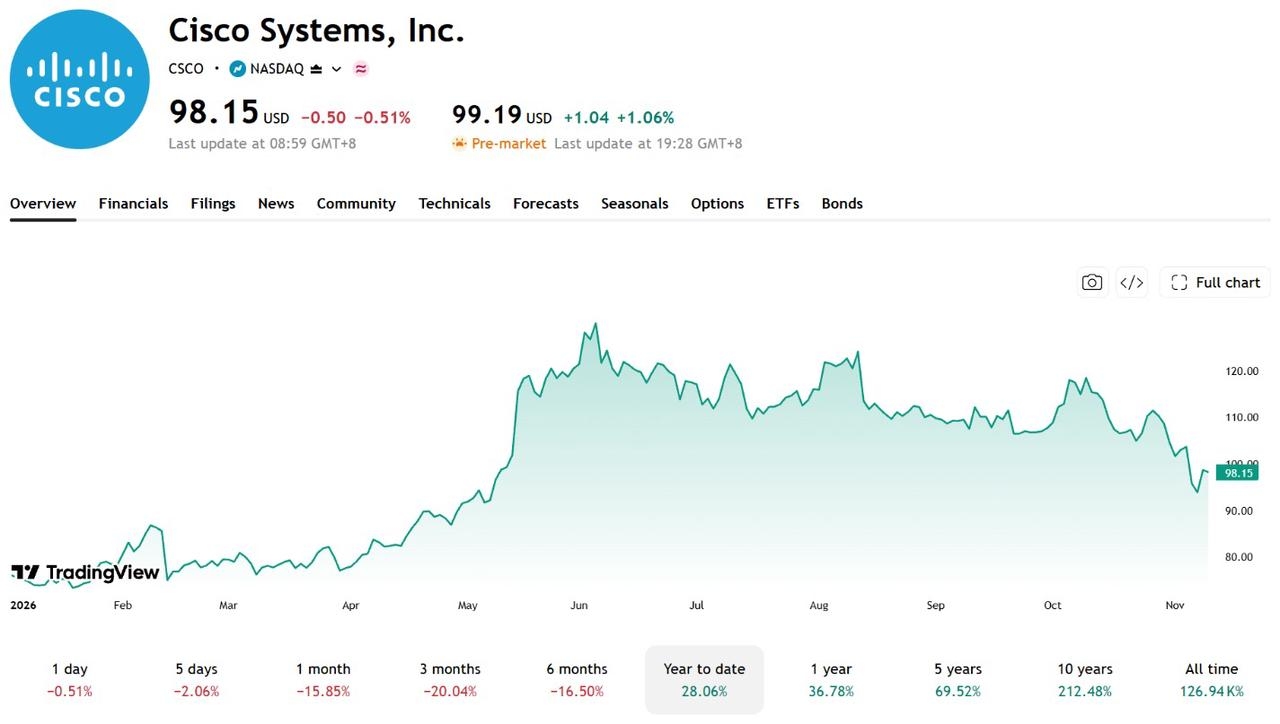
[Source: TradingView]
Cisco primarily provides switches, routers, data center networking equipment, cybersecurity solutions, and collaboration software. As major cloud service providers continue to expand their investments in AI data centers, growing demand for products such as high-speed switches and network interconnect equipment is expected to become a new growth driver for Cisco.
Revenue Estimates Near Midpoint of Company Guidance
The market expects Cisco's revenue for the quarter to be approximately $18.12 billion, up about 22% year-over-year, with non-GAAP earnings per share of around $1.32. The company previously guided first-quarter revenue of $18 billion to $18.2 billion and non-GAAP EPS of $1.32 to $1.34.
Revenue expectations are near the midpoint of guidance, while EPS expectations sit at the lower end of the range. The focus of this earnings report will be on whether AI orders can sustain growth and the impact of related product sales on gross margin.
Looking back at the previous quarter, Cisco's revenue grew 18% year-over-year to $17.252 billion, and non-GAAP EPS rose 23% to $1.22. Among business segments, networking revenue increased 28% to $9.791 billion, while security, collaboration, and observability revenues grew 14%, 12%, and 6%, respectively.
AI infrastructure orders performed strongly, with fourth-quarter orders from hyperscalers reaching $4 billion and cumulative orders totaling $9.3 billion for fiscal 2026.
However, non-GAAP overall gross margin declined from 68.4% to 66.3% in the previous quarter, while product gross margin dropped from 67.5% to 64.8%. This quarter, the focus will be on whether AI business growth can drive revenue higher while helping gross margins stabilize.
Key Earnings Highlights: AI Order Growth and Gross Margin Pressure
In the previous quarter, Cisco secured approximately $4 billion in AI infrastructure orders from hyperscalers, driving its total fiscal 2026 orders to $9.3 billion, with approximately $4 billion in related revenue actually recognized for the full year.
The company expects AI infrastructure revenue to increase to $7.5 billion in fiscal 2027. Key focuses for this earnings report include the scale of new orders, delivery progress, and whether revenue growth can meet expectations.
The networking business also warrants attention. Cisco's networking product orders grew 40% year-over-year in the previous quarter, with total product orders rising 35%; even excluding hyperscale cloud customers, product orders still increased 25%. This quarter, it will be important to watch whether order growth can continue and drive networking revenue higher.
In terms of gross margin, Cisco expects its first-quarter non-GAAP gross margin to be 65% to 66%, down from 66.3% in the previous quarter, with non-GAAP operating margin guidance at 35.5% to 36.5%.
A rising proportion of AI hardware sales and increasing component costs could continue to weigh on gross margins, and actual performance will influence market perceptions of the company's profitability.
In addition, Cisco's RPO reached $46.7 billion at the end of the previous quarter, up 7% year-over-year, with product RPO growing 9%. This earnings report will also require close attention to changes in the order backlog and full-year guidance. The company currently projects fiscal 2027 revenue of $72.2 billion to $73.4 billion and non-GAAP EPS of $5.05 to $5.11.
Wall Street's Highest Price Target Seen at $170
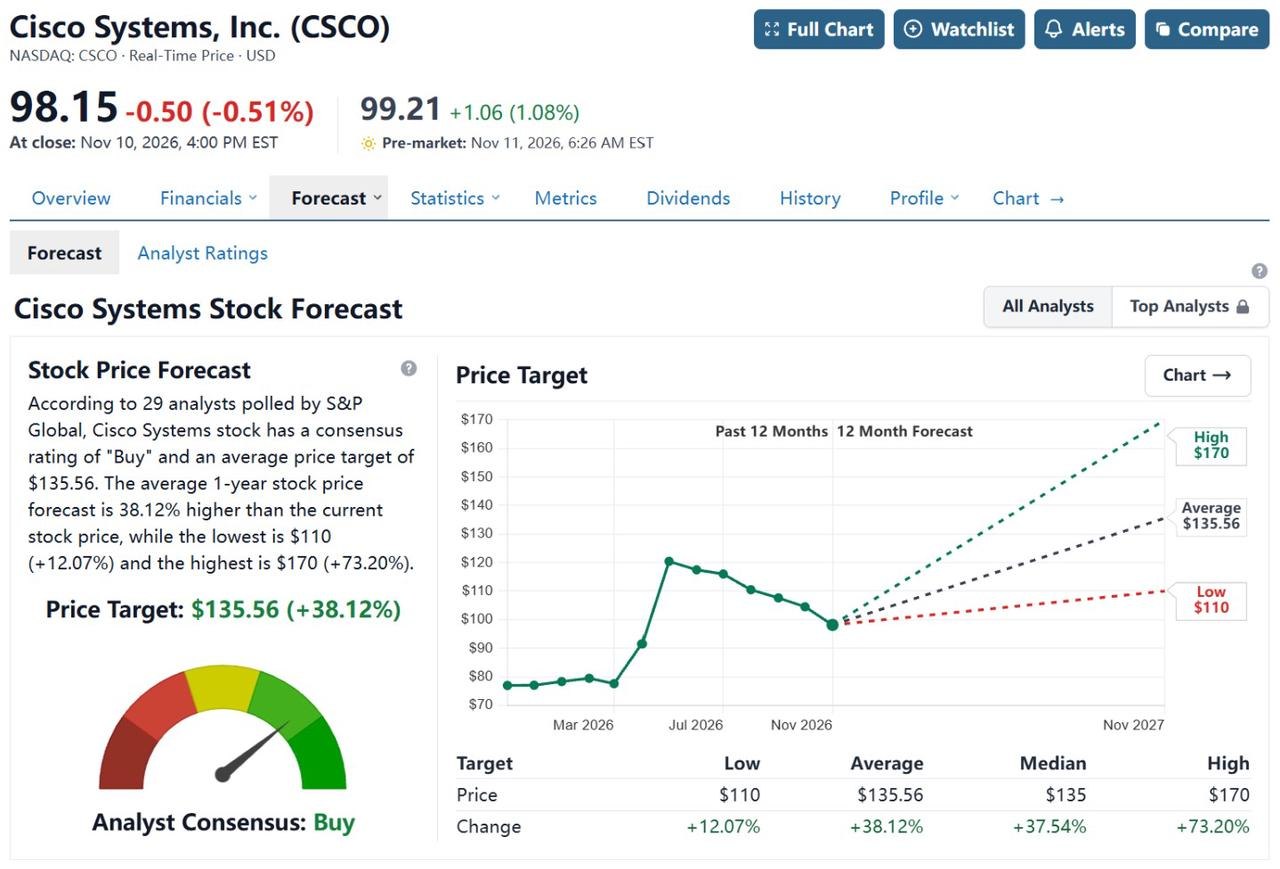
[Source: StockAnalysis]
According to 29 analysts compiled by StockAnalysis, the average 12-month price target for Cisco is $135.56, implying 38.12% upside from current levels, with a high price target of $170.
BofA Securities maintained its "Buy" rating and $150 price target, with its core thesis centered on optimism regarding networking equipment order growth fueled by AI infrastructure demand, as well as Cisco's business opportunities in the AI data center networking market. Meanwhile, Morgan Stanley downgraded the stock to "Equal-weight" on November 5 and cut its price target from $135 to $120, primarily citing concerns over elevated market expectations and the potential drag on gross margins from an increasing share of AI hardware sales.
If new AI orders continue to grow, revenue reaches the high end of guidance, and gross margin remains stable within the expected range, the stock may find support. Conversely, if order deliveries fall short of expectations or gross margin comes in below guidance, shares could still face pressure post-earnings, even if revenue meets targets.
Recommended Articles


