


Netflix's Problem Isn't Profits. It's Viewing Time.
Key Points
Netflix's earnings showed strong growth last quarter.
Investors are worried about viewing hour losses, especially to YouTube.
The stock looks cheap if you believe management can turn things around.
- 10 stocks we like better than Netflix ›
The stock market is near an all-time high, driven by a technology boom in artificial intelligence (AI). A prior leader of the technology boom -- Netflix (NASDAQ: NFLX) -- keeps slipping into one of its worst drawdowns ever.
Shares of Netflix are now down 54% from their highs, despite posting strong revenue growth and record profit margins in its recent quarterly earnings. So what is the problem for investors? Two words: eyeball share. Here's why viewing time is a potential problem, and what Netflix plans to do about it.
Missed Nvidia in 2009? This Rare Signal Is Flashing Again. In 2009, a "Double Down" signal flashed for a little-known chipmaker called Nvidia. For the first time in years, that same "Total Conviction" signal is flashing for a company 1/100th the size of Nvidia. Continue »
Earnings growth, watch hour stagnation
Looking at the headline financials, you could not find anything to complain about with Netflix's Q3 earnings results. Revenue grew 12% year over year to $12.9 billion, operating margin was a record at 34.6%, and management repurchased $4.8 billion worth of stock in the quarter with excess cash flow. This is the recipe for strong stock returns over the long haul.
Watch hours tell a different story. Netflix did not report growth in viewing hours in the quarter, and viewing hours are reportedly stagnating in the United States and possibly in other countries. Above all else, time spent on Netflix will correlate with the value users get from the service, enabling future price increases.
According to third-party estimates, Netflix's market share of TV viewing in the United States has not budged for the past two years or so, while YouTube's is growing significantly. With streaming growing as a percentage of TV watch hours, Netflix is actually seeing a decline in market share strictly for streaming on TV in the United States, a worrying sign for the company that has dominated the sector since its inception.
Image source: Getty Images.
Competing with YouTube and Instagram
To right the ship, Netflix has fired its head of content and head of film and is looking for different avenues to grow with its members. Of course, it wants to keep producing TV series and movies for people to watch, but the future may lie in other forms of video content.
These include investments in sports content, live events, podcasts/talk shows, and shorter series that have proven popular in international markets. It is competing heavily with Alphabet's YouTube, which has the advantage of an endless supply of niche content from around the globe, allowing it to gain significant market share even without a library of high-quality TV series and movies.
However, Netflix may also be competing with mobile phones and social media apps like Meta Platforms' Instagram and TikTok, which have won user attention through rapid entertainment scrolling. It will be more difficult for Netflix to compete directly with this entertainment form factor, which could pose a long-term risk to the business.
NFLX PE Ratio data by YCharts
Is Netflix stock a buy today?
Netflix's journey to global streaming giant has not been smooth sailing. There have been periods of missteps, overspending in the wrong areas, and other things that have temporarily dinged its stock price. However, every time, it eventually recovered.
The question is whether the company is in a position to recover today. I think it is, as long as it can start competing more effectively with YouTube for casual viewing and make the investment in sports rights. It doesn't need to replicate YouTube's library (which would be impossible), but it can license popular shows and pay creators better than YouTube's small advertising payouts, which would convince creators to go exclusive on Netflix.
Instagram and mobile phone use are certainly risks, but I think there will always be a place for TV, movies, and talk shows. Plus, Netflix is still in the early days of rolling out its advertising tiers worldwide, which should help it grow revenue even if it maintains viewing hours compared to the past.
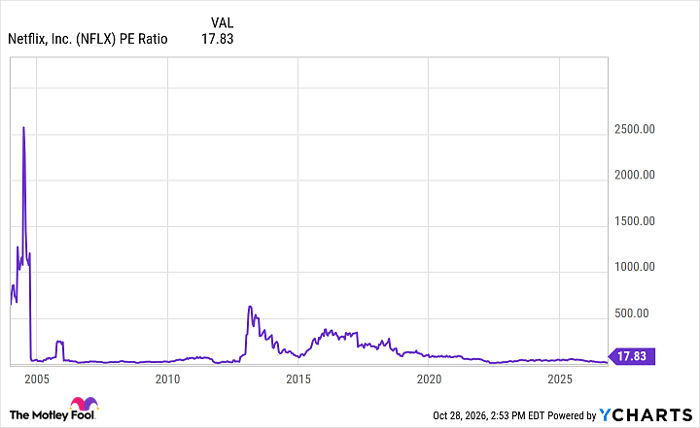
At a price of $61.60, Netflix has a market cap of $253 billion and a price-to-earnings ratio (P/E) of 18. This is cheap if you believe it can keep growing revenue in the double digits and return cash to shareholders through buybacks. For this reason, I think Netflix stock is a good buy today.
Should you buy stock in Netflix right now?
Before you buy stock in Netflix, consider this:
The Motley Fool Stock Advisor analyst team just identified what they believe are the 10 best stocks for investors to buy now… and Netflix wasn’t one of them. The 10 stocks that made the cut could produce monster returns in the coming years.
Consider when Netflix made this list on December 17, 2004... if you invested $1,000 at the time of our recommendation, you’d have $334,631!* Or when Nvidia made this list on April 15, 2005... if you invested $1,000 at the time of our recommendation, you’d have $1,312,844!*
Now, it’s worth noting Stock Advisor’s total average return is 893% — a market-crushing outperformance compared to 213% for the S&P 500. Don't miss the latest top 10 list, available with Stock Advisor, and join an investing community built by individual investors for individual investors.
See the 10 stocks »
*Stock Advisor returns as of October 31, 2026.
Brett Schafer has no position in any of the stocks mentioned. The Motley Fool has positions in and recommends Alphabet, Meta Platforms, and Netflix. The Motley Fool has a disclosure policy.
Recommended Articles


