


Japan, South Korea Stocks Fluctuate as KOSPI Reverses Gains; SoftBank Falls Over 5%, Kioxia Drops 2%
TradingKey - On August 7, Japanese and South Korean stock markets opened higher in early trading and then consolidated. The South Korea Composite Stock Price Index (KOSPI) opened 1.1% higher at 6,365.07 points, temporarily expanding its gains to 1.85% in early trading to touch 6,412.76 points, but later gave back most of those gains to stand at 6,307.40 points, up 0.17%.
Japanese stocks also opened higher, with the Nikkei 225 Index opening 0.1% higher before reversing course to trade lower, down 0.61% at 65,282.34 points.
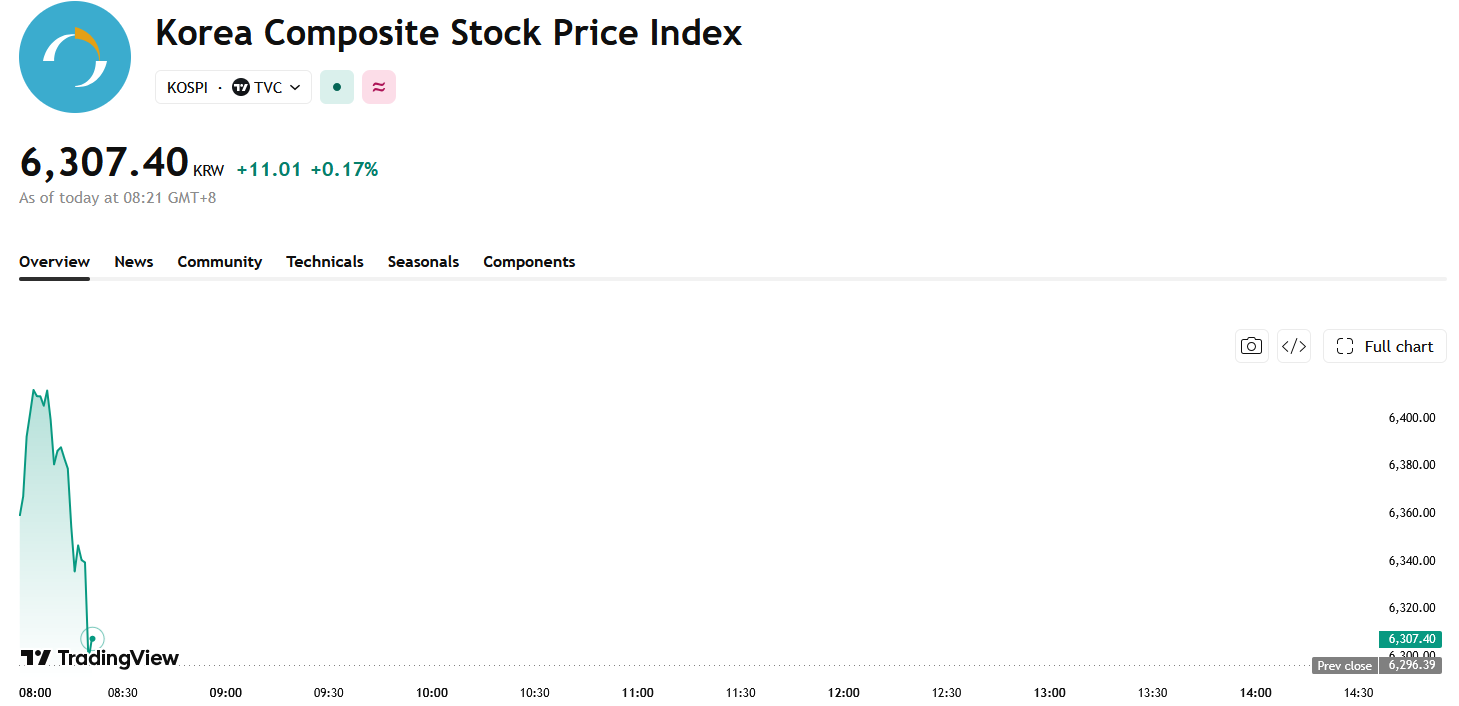
Source: TradingView
In terms of individual stocks, Samsung Electronics rose 1.52% to 234,000 Korean won (approx. $165); SK Hynix reversed its opening gains to fall 0.33%, trading at 1,490,000 Korean won.
Kioxia reversed earlier gains to drop 2.03% to 47,750 Japanese yen (approx. $302); SoftBank Group expanded its losses to 5.67%, trading at 5,372 Japanese yen.
The weak overnight performance of US stocks also put pressure on risk appetite in Asian markets. The three major US stock indexes closed down across the board, with the Dow Jones Industrial Average ending a five-day winning streak to close down 0.85%; the S&P 500 Index fell 0.18%, and the Nasdaq Composite Index edged down 0.06%.
The semiconductor and memory chip sectors continued to face pressure, with Western Digital ( WDC) plunging over 13%, and SanDisk ( SNDK) falling over 6%, with SK Hynix ADR ( SKHY) dropping nearly 5%, and Micron Technology ( MU) also sliding over 1%.
The continuous adjustment in the memory sector is mainly due to the market's repricing of industry growth expectations. Although SanDisk delivered better-than-expected quarterly results, its future guidance was conservative, prompting Citigroup ( C) and Jefferies ( JEF) to subsequently lower their price targets, triggering a sell-off in the sector.
Goldman Sachs ( GS) believes that the market has priced in high growth expectations in advance, making it prone to a 'good earnings, bad stock reaction' phenomenon if companies provide even slightly conservative outlooks for the next quarter.
Recently, AMD ( AMD ), SK Hynix, and Samsung Electronics have all experienced similar valuation adjustments after reporting stellar earnings. This was mainly due to increased capital expenditures, guidance failing to further exceed expectations, and the prior stock prices already fully pricing in the positive factors.
On the macro front, the situation in the Middle East remains a key focus for the market. US President Trump stated on August 6 local time that a relevant agreement regarding the reopening of the Strait of Hormuz has not yet been officially reached, but negotiations are progressing. Meanwhile, Iran stated that it is consulting with Oman on new shipping arrangements, emphasizing that the negotiations do not involve the United States.
In addition, the latest US employment data showed that initial jobless claims for the week ending August 1 stood at 199,000, slightly below market expectations, indicating that the US labor market remains resilient.
Recommended Articles


