


TradingKey Wall Street Weekly Report:Cooling Pce Confirms Inflation Is Easing, With U.S. Growth Sectors Leading the Gains
Previous Week’s Market Review & Analysis
TradingKey - The macroeconomic landscape during the week of July 27, 2026, was defined by the Federal Reserve's policy meeting concluding on July 29 Eastern Time. The central bank opted to maintain the federal funds rate at its current restrictive level, though the accompanying statement noted significant progress toward the two percent inflation objective. This shift in rhetoric, combined with a cooling PCE price index released on July 31 Eastern Time, reinforced the market's expectation that the tightening cycle has concluded and shifted the focus toward the timing of the first liquidity easing. Global macro drivers, including stabilizing manufacturing data from the Eurozone and consistent fiscal support signals from Asian markets, provided a supportive backdrop for risk assets.
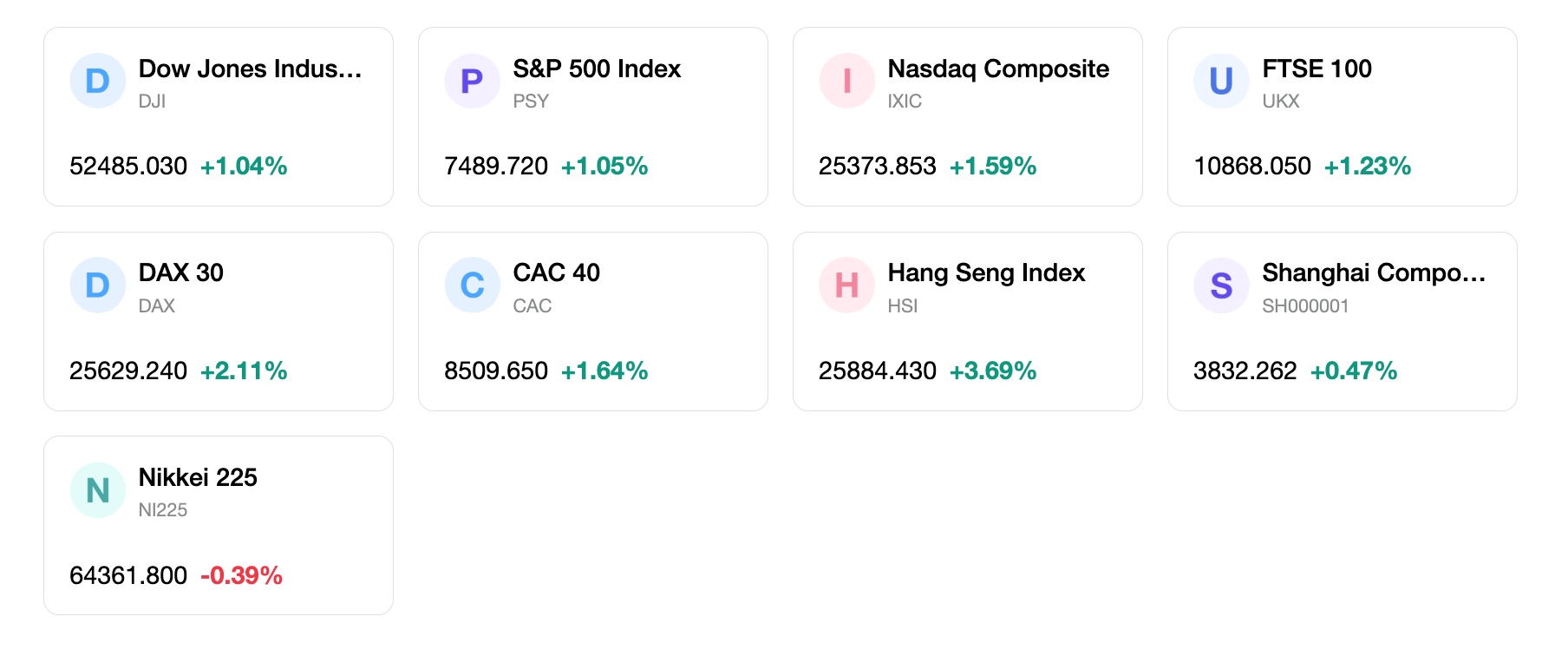
U.S. equity markets demonstrated resilience over the weekly period ending August 2, 2026, with major indices finishing the week in positive territory. Based on weekly candlestick data, the market exhibited a strong mid-week reversal following the Federal Reserve's communications. Growth-oriented sectors, particularly technology and communication services, outperformed the broader market as long-term yields retracted from their recent peaks. Conversely, defensive sectors such as consumer staples and healthcare saw more modest gains, reflecting a tactical shift by investors toward higher-beta names in anticipation of a favorable policy shift. Small-cap stocks also showed signs of life, ending a period of relative underperformance as the broadening of market breadth continued.
Key events during the reporting period centered on the heavy concentration of mega-cap technology earnings. Several leading firms reported second-quarter results that exceeded analyst estimates for both top-line revenue and earnings per share, primarily driven by the monetization of artificial intelligence infrastructure. However, the market reaction was nuanced, with investors rewarding companies that demonstrated disciplined capital expenditure while penalizing those with vague guidance regarding future margins. On July 29, the Federal Reserve announced it would keep interest rates unchanged, while Chairman Warsh emphasized a data-driven approach to policymaking and reiterated that the 2% inflation target leaves no room for flexibility. However, three voting members supported a rate hike, exposing growing internal divisions. Markets interpreted the overall tone as hawkish, sending all three major U.S. stock indexes lower, while long-term Treasury yields climbed.
Flows and sentiment indicators suggested a transition from cautious positioning to a more constructive outlook. Weekly fund flow data showed a notable acceleration into U.S. equity mutual funds and ETFs, marking the third consecutive week of net inflows. The CBOE Volatility Index trended lower throughout the week, settling at levels that indicate a decrease in the immediate demand for downside protection. Institutional positioning reached its highest level of the quarter, though retail sentiment surveys remained somewhat bifurcated, reflecting lingering concerns over the lag effects of previous rate hikes. Overall, the fear-and-greed dynamic shifted toward the greed quadrant as technical breakouts in key benchmark indices encouraged momentum-chasing behavior.
The overall assessment of the market suggests that U.S. equities are currently in a fundamental-driven expansion phase characterized by high earnings visibility and a stabilizing macro environment. The market logic has evolved from fearing "higher for longer" rates to pricing in a "soft landing" scenario where growth remains positive while inflation remains contained. This cyclical characteristic is typical of the mid-to-late stage of an economic expansion, where market leadership is often concentrated in high-quality companies with strong balance sheets. The current phase of market behavior reflects a high degree of confidence in corporate execution, though it leaves the market susceptible to disappointment if upcoming labor data suggests a sharper-than-expected economic deceleration.
Next Week's Key Market Drivers & Investment
Upcoming events for the week of August 3 will be dominated by the July non-farm payrolls report and the national unemployment rate. These figures will be critical in validating the Federal Reserve's recent assessment of the labor market and will likely dictate the trajectory of Treasury yields in the short term. Additionally, the final round of earnings from the retail and consumer discretionary sectors will provide a vital health check on the U.S. consumer's spending power amid the current interest rate environment. Several scheduled appearances by voting members of the FOMC will also be monitored for any nuanced interpretations of the recent policy statement.
Market logic is expected to project a continued emphasis on "quality" as the primary investment factor. As the initial excitement surrounding the Fed's July meeting subsides, the market will likely refocus on the micro-fundamental factors that drive long-term valuation. We expect the divergence between sector leaders and laggards to widen, particularly in the technology and industrial sectors where execution risks remain elevated. The evolution of macro conditions suggests that while the floor for equity prices has been raised by a more accommodative Fed stance, the ceiling will be determined by the ability of corporations to maintain margin expansion in a normalizing growth environment.
Strategy and allocation recommendations favor a balanced approach with a slight tilt toward growth at a reasonable price. We recommend that investors maintain core positions in large-cap technology and healthcare, which offer defensiveness through strong cash flows and growth through innovation. For risk-tolerant investors, the current environment presents an opportunity to selectively add exposure to mid-cap industrials and financials that are poised to benefit from a stabilizing yield curve. Equity ideas should focus on companies with high return on invested capital and those that have successfully integrated automated efficiencies into their operational models, as these firms are best positioned to navigate a period of moderate economic growth.
Risk alerts for the coming weeks include the potential for "good news is bad news" reactions to labor data, where excessively strong employment figures could reignite fears of a delayed rate cut. Geopolitical risks also remain a concern, as any escalation in regional conflicts could disrupt global supply chains and exert upward pressure on energy prices, complicating the disinflationary path. Furthermore, the high level of institutional concentration in a few mega-cap names creates a "crowded trade" risk, where any negative catalyst could lead to rapid, non-linear liquidations. Investors should also be mindful of seasonal liquidity patterns in August, which can lead to exacerbated price volatility on relatively low trading volumes.
Markets Weekly
5-Day Index Performance
Recommended Articles


