


Japan and South Korea Stocks Open Lower, KOSPI Drops Over 3%, SoftBank Falls Over 5%, SK Hynix and Kioxia Fall Nearly 4%
TradingKey - In early Asian trade on July 24, Japanese and South Korean stock markets opened lower and continued to slide. Affected by the sharp overnight pullback in US stocks and rising geopolitical risks in the Middle East, market risk-off sentiment intensified significantly.
South Korea's KOSPI index saw its losses widen to over 3% after the opening, trading at 6,858.40 points; Japan's Nikkei 225 index was also weak, falling 2.82% to 64,549.73 points.
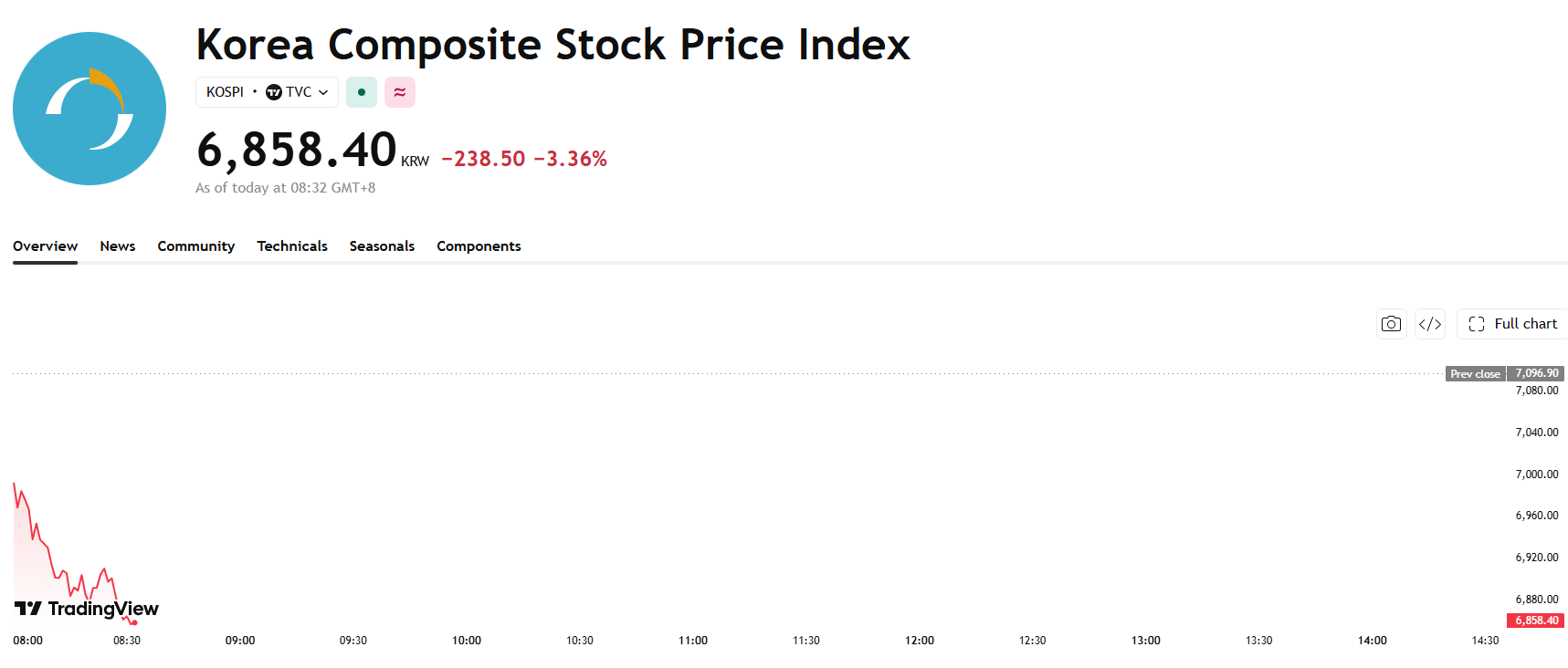
Source: TradingView
Heavyweight tech stocks were generally under pressure. In South Korea, Samsung Electronics fell 3.06% to trade at 262,000 won (approx. $189.0); SK Hynix slid 3.91% to trade at 1,844,000 won (approx. $1,330).
In the Japanese market, SoftBank Group fell 5.85% to trade at 5,572 yen (approx. $34.1); Kioxia fell 3.83% to trade at 59,510 yen (approx. $364.8), with the semiconductor sector overall performing sluggishly.
The sharp correction on Wall Street overnight became a major drag on Asian equities. As tensions between the US and Iran continued to escalate, investors locked in recent gains, leading the three major US stock indexes to close lower. The Nasdaq fell 2.15%, and the S&P 500 Index declined 1.21%, marking its largest single-day drop this month.
On the news front, US President Trump stated in a media interview that he is considering a military strike against Iran on a larger scale than before. Meanwhile, Yemen's Houthi rebels announced attacks on vessels in the Red Sea, further deteriorating the situation in the Middle East. International oil prices surged in response, with Brent crude futures briefly topping $100 per barrel.
Geopolitical risks have boosted global safe-haven sentiment, also putting significant profit-taking pressure on Asian tech stocks that had previously achieved substantial gains.
Recommended Articles


