


The Backwards Social Security COLA Rule That Will Probably Short-Change Seniors (Again) in 2027
Key Points
COLAs are based on a price index that actively excludes senior households.
There's a separate index, the Consumer Price Index for the Elderly (CPI-E), that tracks seniors' spending.
Switching to the CPI-E would increase COLAs in most years.
- The $23,760 Social Security bonus most retirees completely overlook ›
Social Security beneficiaries are likely to get an above-average benefit boost in January 2027, according to recent cost-of-living adjustment (COLA) projections. But it'll likely be less than what you were hoping for, especially with the high inflation we've seen so far this year.
A big part of this is the very unintuitive way the government calculates Social Security COLAs. It has cost seniors in the past, and it probably will again in 2027.
Missed Nvidia in 2009? This Rare Signal Is Flashing Again. In 2009, a "Double Down" signal flashed for a little-known chipmaker called Nvidia. For the first time in years, that same "Total Conviction" signal is flashing for a company 1/100th the size of Nvidia. Continue »
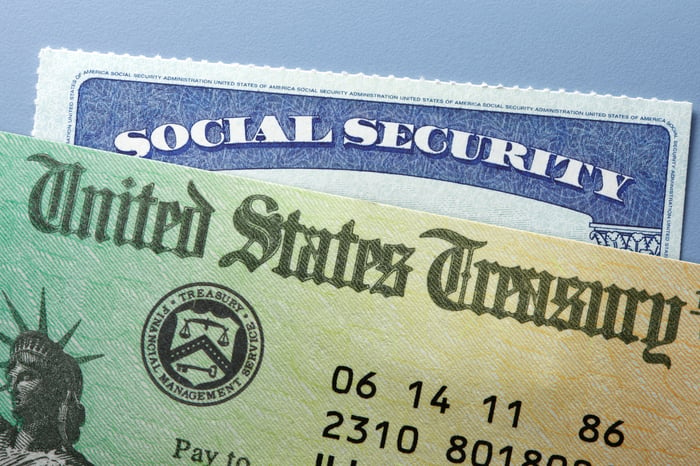
Image source: Getty Images.
COLAs don't take senior spending into account
You'd think that, as Social Security COLAs predominantly affect seniors, they'd be based on changes in seniors' spending over time. But that's actually not true.
The Social Security Administration uses the Consumer Price Index for Urban Wage Earners and Clerical Workers (CPI-W) when setting COLAs. This index focuses on urban households in which at least one member has been employed for at least 37 weeks in the previous year and in which at least 50% of household income comes from wages. That rules out most retiree households by default.
There's an index that tracks senior spending, the Consumer Price Index for the Elderly (CPI-E). It looks at the same categories as the CPI-W -- food, housing, transportation, clothing, and healthcare, among others -- but it weighs them differently to account for differences in senior spending patterns.
For example, seniors often spend more on healthcare than younger working adults. This matters because healthcare costs rise faster than those in other areas. Many seniors think COLAs should be based on the CPI-E to better reflect the costs they're facing.
A change like this would lead to higher COLAs in most years. Projections from The Senior Citizens League (TSCL), a nonpartisan senior group, estimate that a senior who retired in 2024 will get $12,000 more over their lifetime with CPI-E COLAs than they'd get with CPI-W COLAs. But what sounds like an easy change on paper is more complicated in reality.
Why a change to the CPI-E likely won't happen soon
Switching to CPI-E-based COLAs would require Congress to pass a new law, and it's unlikely to do that right now. Social Security is just six years away from insolvency, and Washington doesn't have a plan to avoid this yet. Switching to CPI-E COLAs could accelerate the insolvency date, leaving less time to come up with a strategy to keep the program sustainable.
This doesn't mean we won't ever see CPI-E-based COLAs, though. When Congress reforms Social Security in the near future, it's possible this change will be thrown into the mix as well.
The $23,760 Social Security bonus most retirees completely overlook
If you're like most Americans, you're a few years (or more) behind on your retirement savings. But a handful of little-known "Social Security secrets" could help ensure a boost in your retirement income.
One easy trick could pay you as much as $23,760 more... each year! Once you learn how to maximize your Social Security benefits, we think you could retire confidently with the peace of mind we're all after. Join Stock Advisor to learn more about these strategies.
View the "Social Security secrets" »
The Motley Fool has a disclosure policy.
Recommended Articles


