


Japan and South Korea Stocks Turn From Gains to Losses: SK Hynix, SoftBank, and Kioxia All Fall, With Samsung Alone Defying the Trend to Support the Market
TradingKey - Japanese and Korean stock markets turned from gains to losses, with SK Hynix, Kioxia, and SoftBank falling collectively, while Samsung alone bucked the trend to rise.
During the Asian trading session on July 6, Japanese and Korean stock markets opened higher but moved lower, ultimately closing with slight losses. Among them, the KOSPI index rose nearly 3% at one point in early trading before finally closing down 0.41% at 8,051.34 points; the Nikkei 225 index fell 0.01%, losing the 70,000-point mark to close at 69,737.47 points.
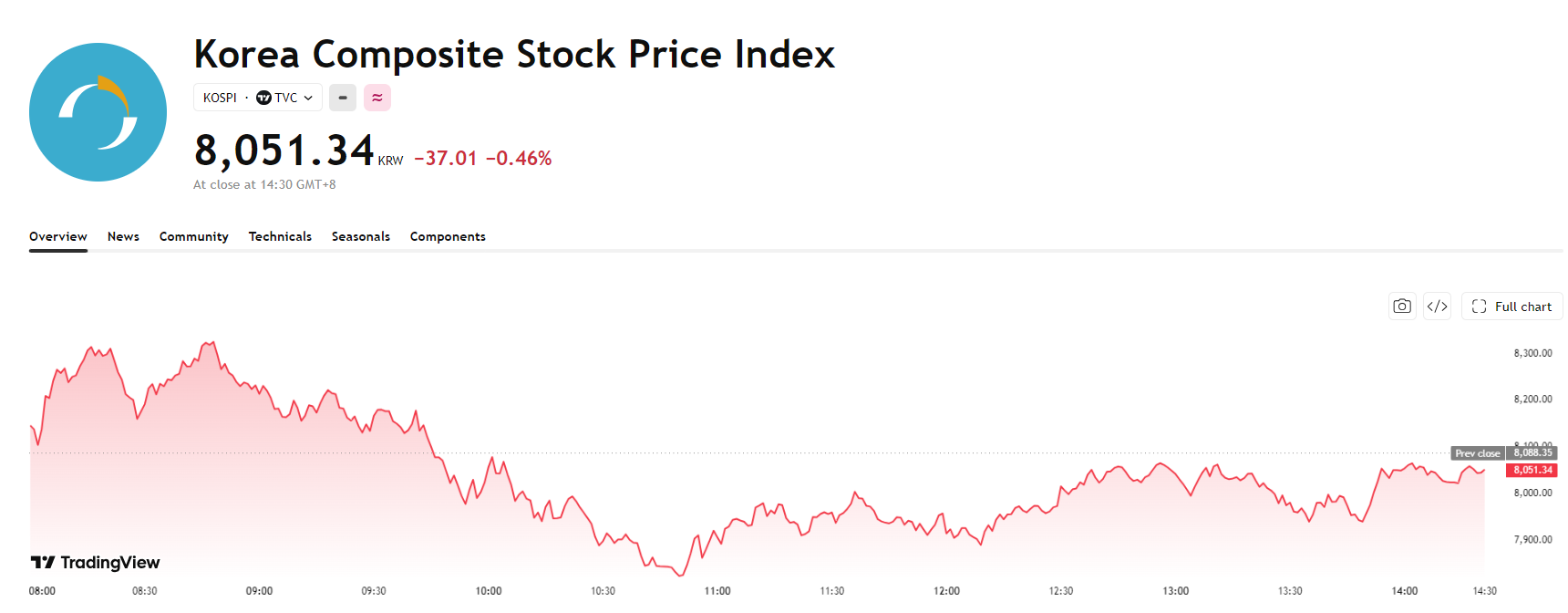 KOSPI Index Chart, Source: TradingView
In terms of individual stocks, except for Samsung Electronics which rose, other heavyweights generally fell. Among them, Samsung Electronics surged over 4% in the morning, with the final gain narrowing to 2.75% to close at 318,000 KRW; SK Hynix turned from gains to losses, falling 3.38% to close at 2,343,000 KRW; Kioxia fell 2.05% to close at 81,590 JPY; SoftBank fell 3.08%, losing the 6,000 JPY threshold to close at 5,979 JPY.
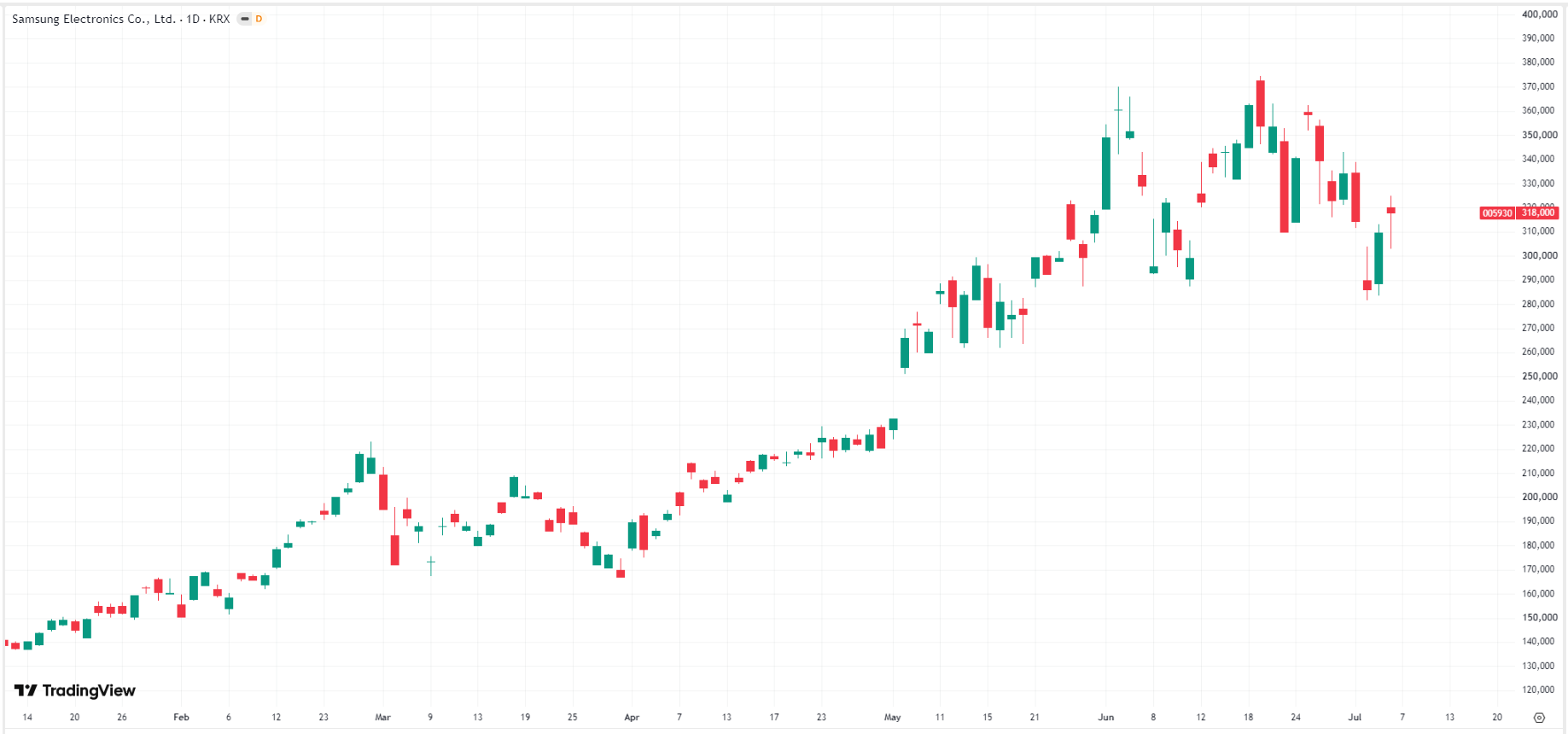 Samsung Electronics Stock Price Chart, Source: TradingView
The Japanese and Korean stock markets showed a significant "inverted V" pattern today, quickly retreating after surging intraday. This was mainly driven by the combined effects of profit-taking selling pressure and the backlash of leveraged capital. Notably, a South Korean lawmaker warned that the KOSPI index "has degenerated into a casino" and called for the delisting of leveraged ETFs, throwing cold water on bullish market sentiment.
In addition, the market is currently in a highly sensitive state, choosing to wait for the upcoming release of Samsung Electronics' second-quarter earnings report, the results of which will serve as a key touchstone for the market to judge whether AI memory demand is truly stabilizing.
Recommended Articles


