


Following Samsung, SK Hynix Evaluates Introducing ChatGPT as Semiconductor Industry Accelerates AI Embrace
TradingKey - Following Samsung Electronics' announcement on June 11 to open external generative AI services to all employees, SK Hynix has also confirmed it is evaluating the feasibility of implementing ChatGPT Enterprise and Microsoft Copilot. The semiconductor industry is shifting from the supply of AI chips toward deep integration within corporate operations and management.
Secondary markets reacted positively to the AI strategies of both companies. During the Asian trading session on June 12, as of press time, Samsung Electronics' shares surged over 12%, while SK Hynix climbed approximately 8.42% to 2.278 million won, lifting the South Korean KOSPI index. Notably, the market rally was driven by multiple tailwinds; overnight, U.S. stocks surged on cooling U.S.-Iran tensions, prompting a subsequent rally in Asian equities.
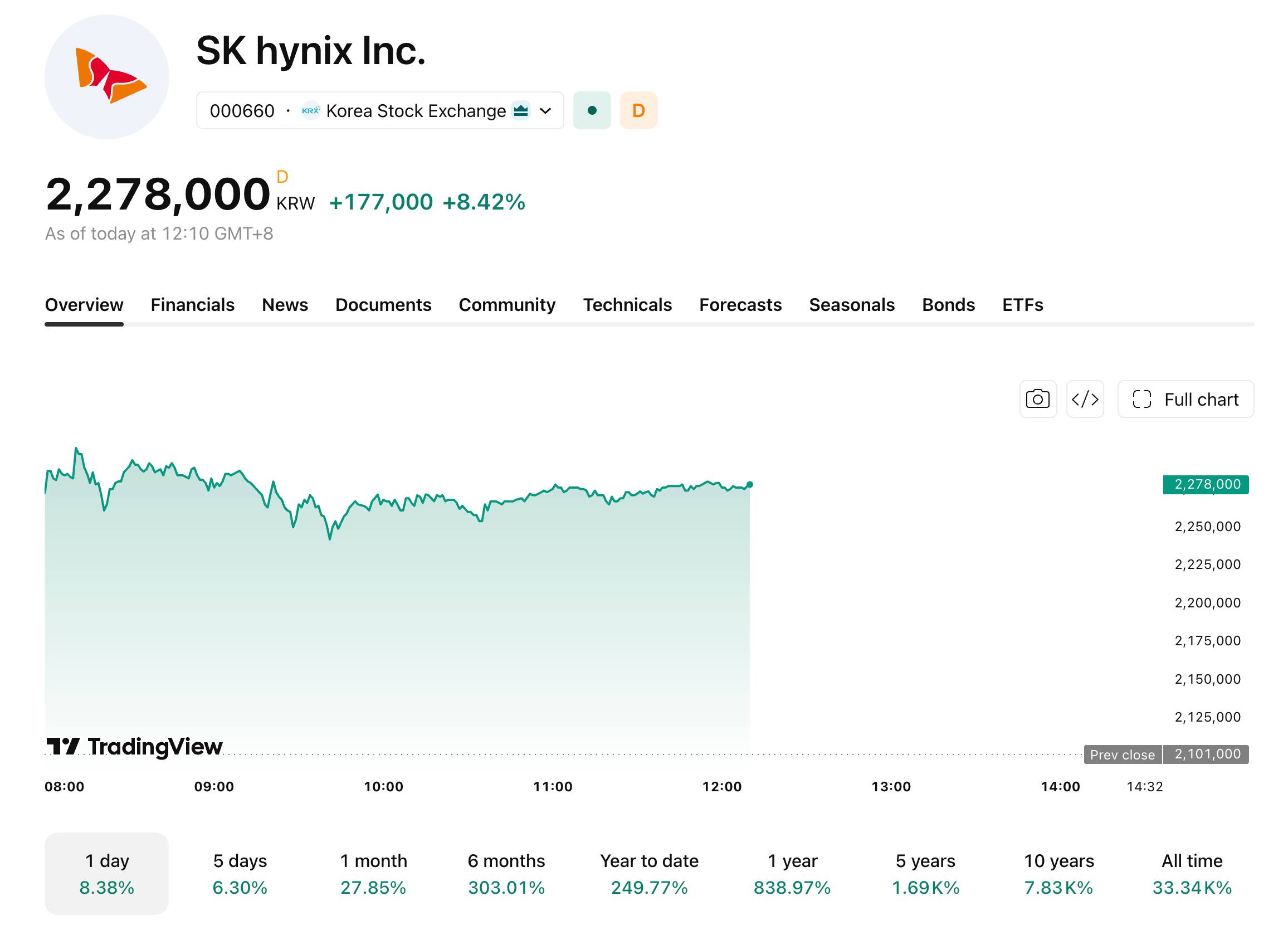
[Source: TradingView]
Samsung Electronics officially lifted its year-long ban on the use of AI tools in early June, providing employees access to enterprise versions of ChatGPT, Google Gemini, and Anthropic Claude across eight business sectors, including R&D, manufacturing, and marketing. Following this, OpenAI CEO Sam Altman announced a visit to South Korea on June 15 to discuss further collaboration with Samsung and Kakao.
SK Hynix CEO Kwak Noh-jung revealed at a recent internal forum that the company is evaluating the feasibility of introducing external generative AI tools, focusing on security and system architecture. He indicated a phased approach, starting with pilots in non-core technical fields before a broader rollout. Currently, SK Hynix operates in-house AI services based on open-source models; the introduction of established commercial platforms will provide employees with a more diverse range of AI models.
Analysts noted that AI's ripple effect is spreading from computing chips across the entire industry chain. The latest spring forecast from the World Semiconductor Trade Statistics (WSTS), released in June, projects the global semiconductor market will reach $1.51 trillion by 2026—a nearly 90% year-on-year surge—with the memory chip market expected to expand approximately 3.5 times to $803.9 billion. The strategic moves by Samsung and SK Hynix suggest that generative AI is not only being utilized in chip manufacturing but is also accelerating the overhaul of internal corporate operations, signaling a full-scale acceleration of AI transformation within the semiconductor industry.
Recommended Articles


