


KOSPI Index Slumps Over 8% in Circuit Breaker, Nvidia Announces AI Cooperation With SK Hynix, LG, Naver on Same Day
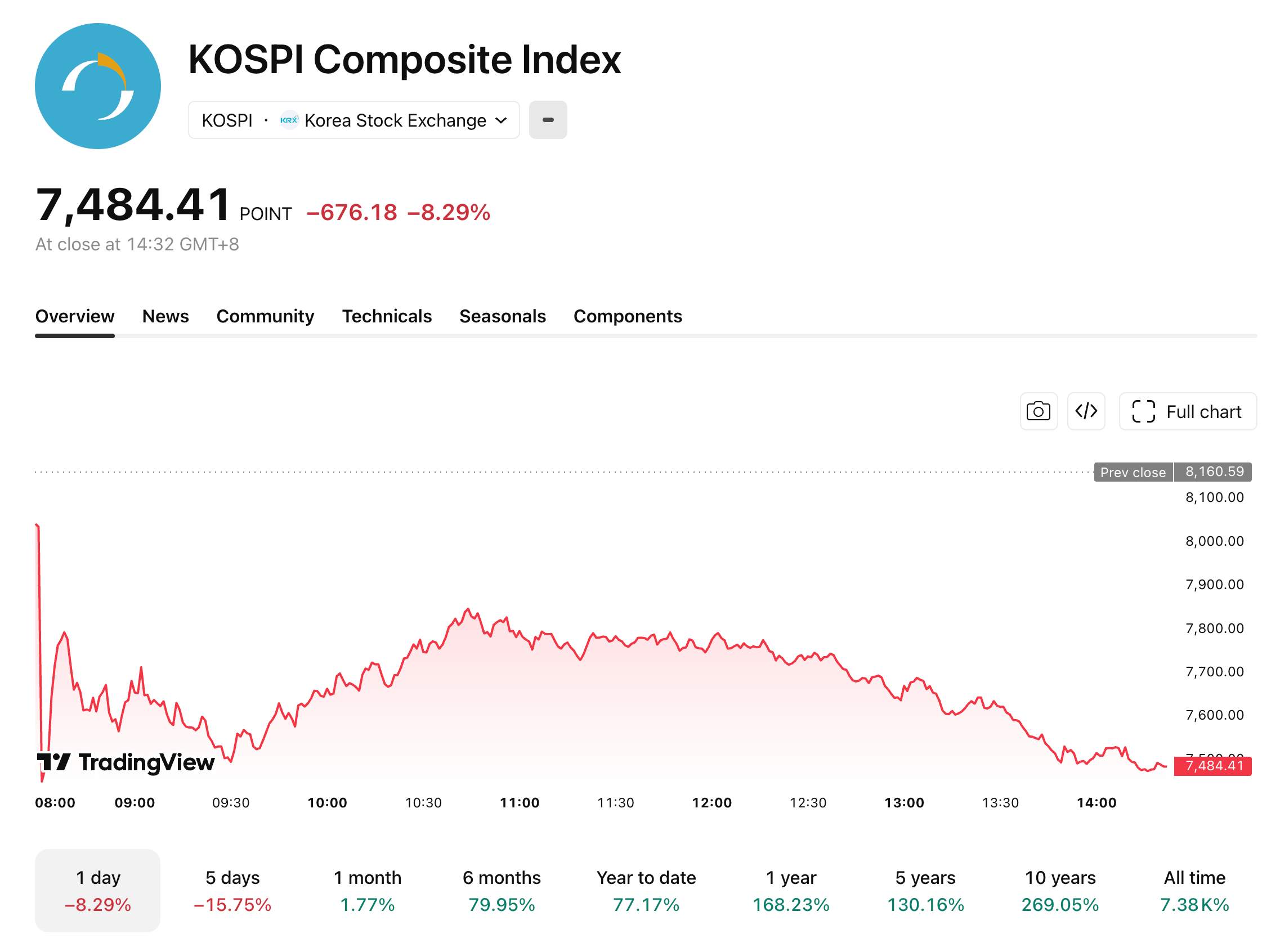
TradingKey - During the Asian trading session on June 8, South Korean stocks plummeted, with the KOSPI index triggering an intraday circuit breaker and finishing 8.29% lower at 7,484.41 points. The KOSDAQ index closed down 9.08% at 911.39 points, having triggered a circuit breaker in the afternoon session.
The KOSPI index triggered a Level 1 circuit breaker at 9:03:42 a.m. local time at 7,474.74 points, down 8.40% from the previous close, resulting in a 20-minute trading halt. Intraday declines for South Korea's two heavyweight chip stocks both reached 10% at one point, with Samsung Electronics closing down 10.18% at 295,500 KRW and SK Hynix finishing approximately 7.68% lower at 1.911 million KRW.
[Source: TradingView]
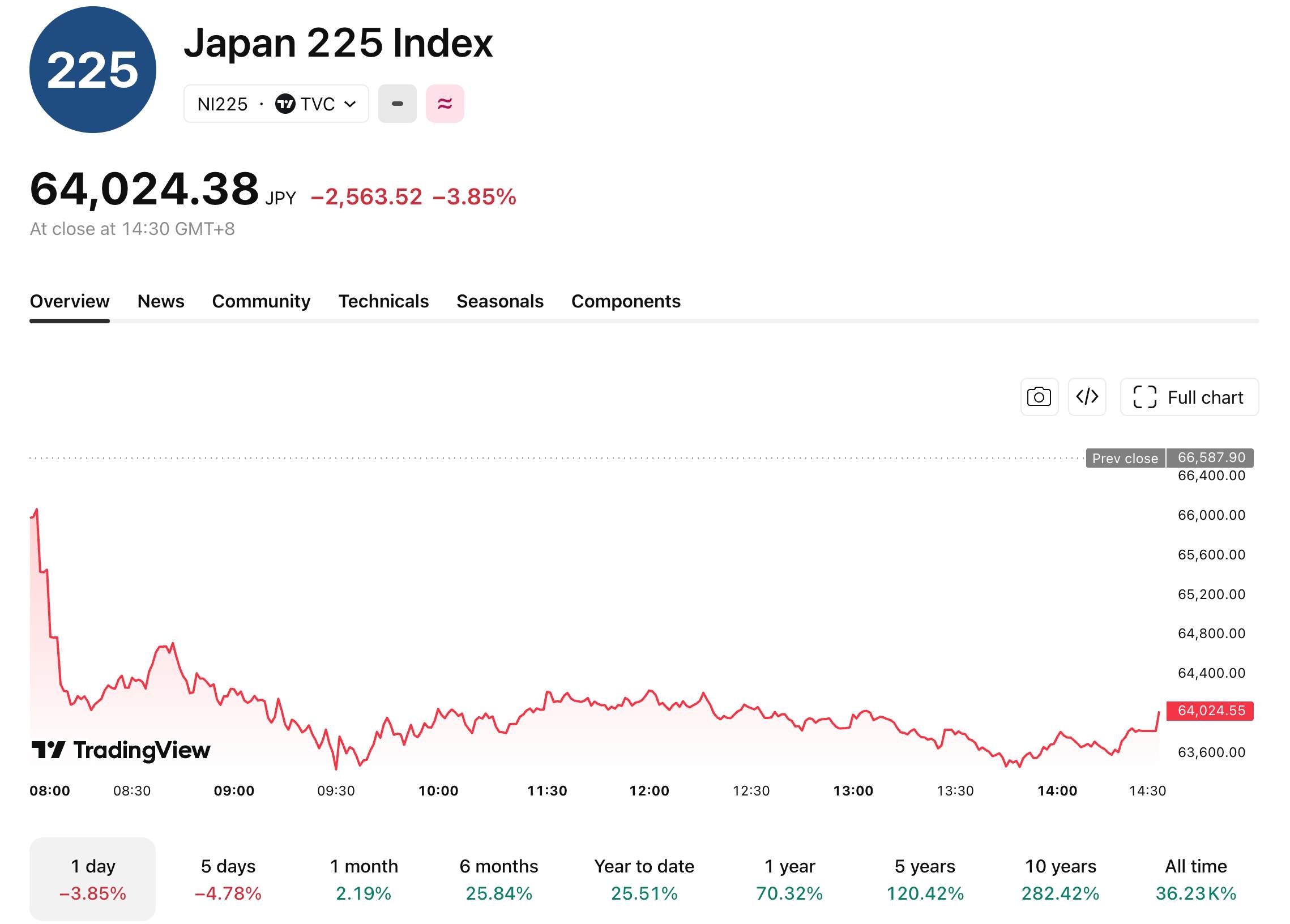
Japanese markets were also under pressure. The Nikkei 225 index closed down 3.85% at 64,024.38 points, after slumping about 3,000 points intraday. Memory chipmaker Kioxia dropped more than 10% at one point before closing down 8.01%; SoftBank Group fell 6.06%, and Tokyo Electron declined 7.45%. The yen's fall past the 160 level against the dollar weighed on export-oriented technology stocks.
[Source: TradingView]
The crash in Japanese and South Korean markets was driven by spillover pressure from U.S. stocks last Friday. On June 5, Broadcom ( AVGO) issued AI chip sales guidance that missed expectations, which, combined with U.S. May non-farm payroll data significantly exceeding forecasts and fueling rate-hike concerns, sent the Philadelphia Semiconductor Index plunging 10.26% and the Nasdaq Composite down 4.18%.
Foreign Outflows from South Korean Equities: Structural Pressure Rather Than Fundamental Deterioration
Although the KOSPI index once led global gains earlier this year, foreign capital has continued to withdraw on a large scale. Goldman Sachs estimates that as of the end of May, the total net outflow of foreign capital from the KOSPI market reached approximately $62 billion.
According to data from CNBC and the Korea Exchange, as of 11 a.m. Monday, foreign investors net sold approximately 1.24 trillion won (about $801 million) worth of KOSPI components that day.
Multiple strategists and fund managers pointed out that the foreign sell-off is driven more by structural factors than a deterioration in South Korean corporate fundamentals. Chetan Seth, Asia-Pacific equity strategist at Nomura Securities, stated that as the KOSPI surged, South Korea's weight in global benchmark indices rose sharply, forcing active fund managers to trim their Korean stock positions to manage portfolio exposure; he described the current selling as "more of a passive technical rebalancing."
Nick Wilcox, managing director of discretionary equities at Man Group, added that some investors' holdings in individual stocks hit regulatory ceilings, resulting in passive position reductions.
However, foreign selling has been significantly offset by domestic South Korean buying. Wilcox noted that South Korean retail inflows have reached approximately $70 billion this year, with the number of brokerage accounts surging. Seth of Nomura stated that investors do not hold a negative view of South Korea; the current sell-off is more of a mechanical adjustment, and foreign capital is likely to wait for a price pullback to seek entry points.
The Korean won opened at 1,555.2 per dollar, down 16.1 won from the previous session's close, marking its lowest level in nearly 17 years since March 2009. South Korean authorities have issued warnings regarding this and stand ready to intervene should volatility persist.
NVIDIA signs multiple AI partnerships on the same day
On the same day the market experienced severe volatility, NVIDIA ( NVDA) CEO Jensen Huang announced a flurry of AI partnership agreements with South Korean companies in Seoul.
NVIDIA and SK Hynix have officially signed a multi-year technical cooperation agreement to conduct joint R&D on next-generation memory required for global AI factories. Huang stated that the company procures billions of dollars worth of chips from SK Hynix annually, and procurement volume will increase significantly this year.
Following a meeting with LG Group Chairman Koo Kwang-mo, Huang confirmed that the two sides will collaborate in the fields of humanoid robotics and data centers, jointly planning next-generation data center architecture. LG Electronics plans to leverage NVIDIA's robotics platform to enhance its humanoid robot R&D capabilities.
South Korean internet giant NAVER announced it will expand its AI infrastructure based on the NVIDIA DSX platform and has become the first South Korean company to join the NVIDIA Nemotron alliance.
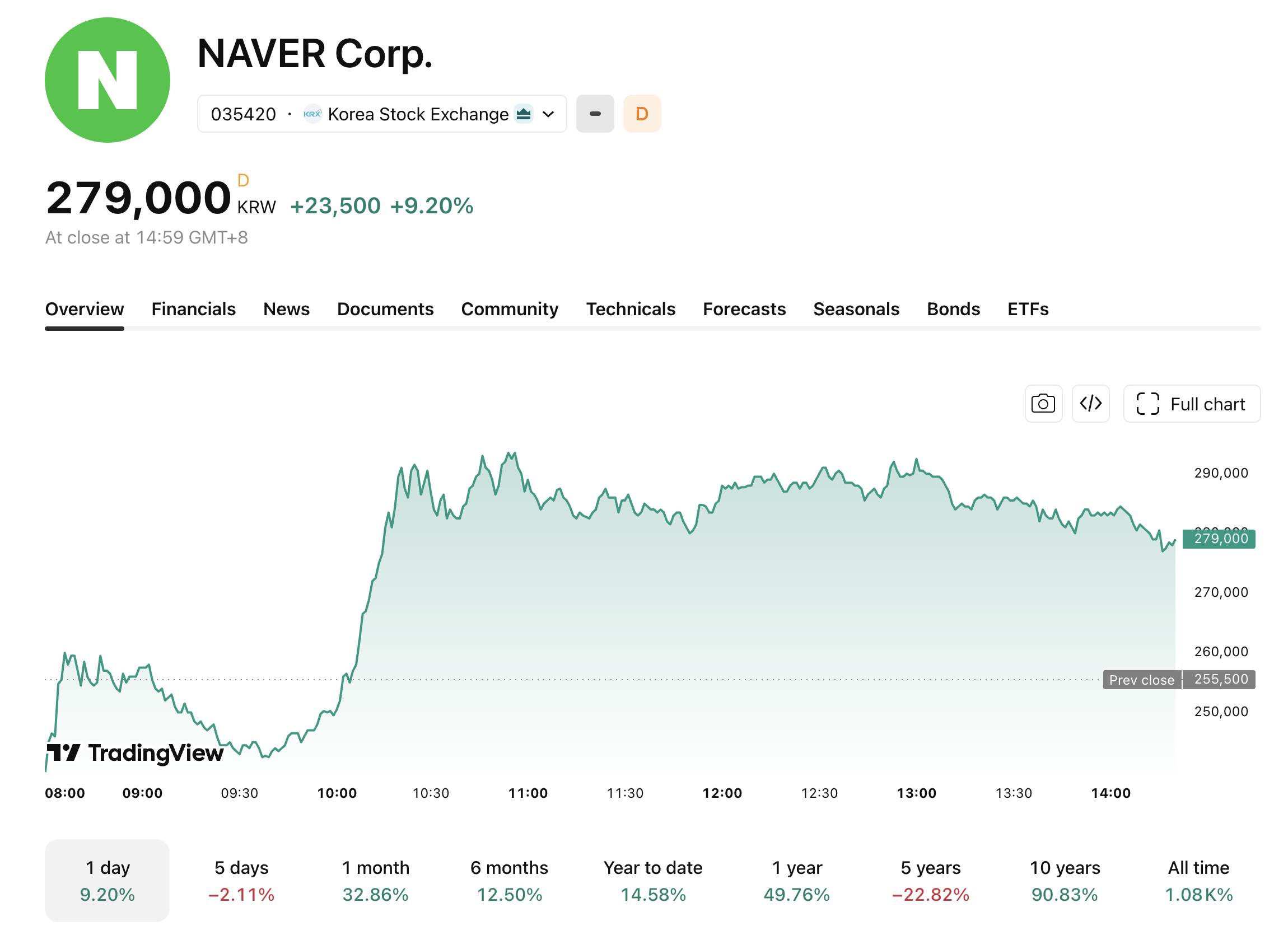
Buoyed by the news, NAVER's share price surged nearly 14% intraday and closed up 9.2% at 279,000 won, becoming one of the few bright spots in the South Korean stock market that day.
[Source: TradingView]
In addition, Huang also met with Samsung Electronics Vice Chairman Jun Young-hyun that same day to discuss HBM supply matters.
Recommended Articles


