


Berkshire Bets Another $10 Billion on AI, Why Are Investors Voting With Their Feet?
TradingKey - On June 1, Eastern Time, Google's ( GOOGL) parent company Alphabet announced plans for an equity financing of up to $80 billion to expand its AI computing infrastructure. Berkshire ( BRKb) will subscribe to $10 billion of these shares through a private placement.
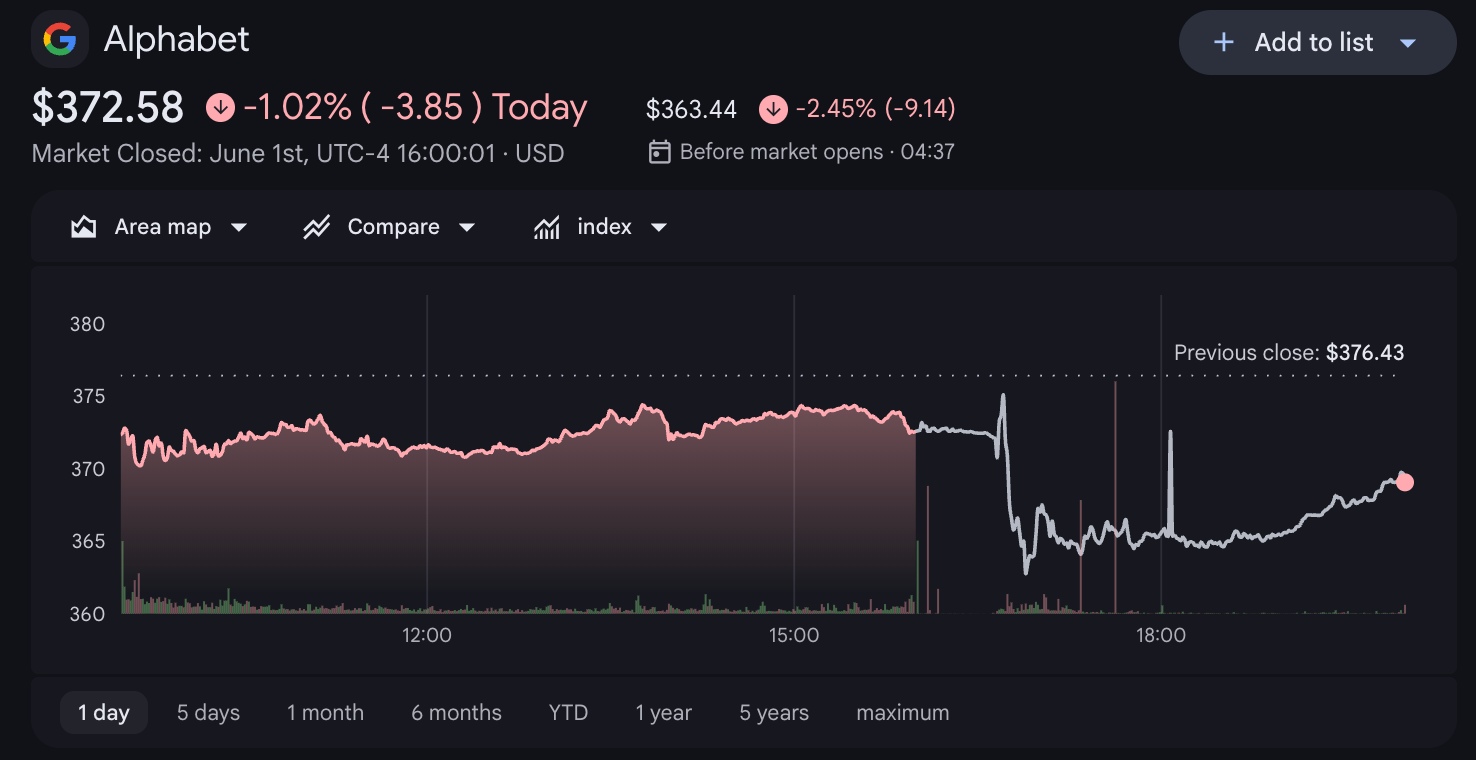
Under the leadership of CEO Greg Abel, Berkshire Hathaway is reshaping the insurance giant's capital allocation style with a more aggressive stance. Following Alphabet's announcement of the massive $80 billion financing, its shares fell more than 2% in after-hours trading to approximately $363, before narrowing the losses slightly. During pre-market trading on June 2, ET, the stock price still fell over 2.5% at one point.
According to the financing plan disclosed by Alphabet, Berkshire subscribed to $5 billion in Class A common shares at $351.81 per share and $5 billion in Class C capital shares at $348.20 per share.
This also represents Berkshire's largest single investment in the tech sector to date since Greg Abel articulated a concentrated holding strategy at the shareholder meeting this May. The total amount is equivalent to last Sunday's $6.8 billion acquisition of homebuilder Taylor Morrison (Taylor Morrison), marking yet another massive move.
Alphabet stated that funding capital expenditures through direct equity financing marks a shift in the tech giant's financing model from prioritizing operating cash flow to incorporating secondary equity offerings.
Berkshire Hathaway first established a position of approximately 17.85 million Alphabet shares in the third quarter of 2025, worth nearly $4.3 billion; it subsequently increased its stake by 204% in the first quarter, bringing the market value of the holding to $15.6 billion. With this latest addition, Berkshire's total stake in Alphabet is expected to rise to approximately $32 billion, joining its top five public holdings alongside its long-held Coca-Cola position. Meanwhile, Greg Abel net-divested about $8.1 billion in stocks and liquidated positions in Amazon, Visa, and UnitedHealth.
Alphabet's cloud business revenue grew 63% year-over-year this fiscal quarter, as accelerated investment in AI infrastructure pushes order backlogs to record highs. Compared to Warren Buffett's strategy, which focuses more on consumer brands and traditional value investing, Greg Abel is attempting to reshape portfolio management by shifting a portion of the nearly $400 billion cash reserve into leading tech companies to find more efficient capital return channels to boost performance that has long trailed tech stock indices.
Market concerns intensify
Judging by the capital market's reaction to this news, investors have heightened concerns over potential downward pressure on the stock price.
This $80 billion equity financing will significantly dilute existing shares in the short term; in particular, the $40 billion At-The-Market (ATM) offering plan may continuously supply shares to the market over an extended period, creating a potential suppressive effect on the stock price.
Tech giants are utilizing equity financing to support capital expenditures, as financing models shift from reliance on operating cash flow to secondary offerings, meaning investors will need greater patience to wait for AI investments to translate into sustained profitability.
Market concerns regarding an AI bubble are also intensifying. As of May 2026, the actual AI adoption rate among U.S. companies was only 19.8%, and expectations for the next six months rose to just 22.8%, showing that AI penetration into the real economy is clearly lagging behind the enthusiasm of financial capital.
Meanwhile, capital expenditures on AI infrastructure by leading cloud service providers exceeded $200 billion in 2026, yet revenues from AI-driven products and services required to justify these massive outlays have been slow to materialize at the same pace. The capital market is re-examining whether these colossal investments can generate sufficient returns.
From a fundamental perspective, Alphabet's AI demand remains resilient. In the first quarter of this year, Google Cloud revenue grew 63% year-over-year to $20 billion, and its backlog nearly doubled quarter-over-quarter to over $460 billion, with more than 50% expected to convert into actual revenue within the next 24 months.
The company expects capital expenditures to range between $180 billion and $190 billion in 2026, with a further significant increase projected for 2027. This $80 billion equity financing is a critical component of this expansion plan.
Yet this is where the market's core conflict lies: the explosion in AI demand is driving real orders and earnings growth, while rapid capital expenditure expansion leads to potential equity dilution and delayed profitability. Greg Abel's bet reflects a long-term conviction in AI.
Recommended Articles


