


Jensen Huang Backs Software Ecosystem: AI Is Not a Threat But an Opportunity, Software Stocks Rally Pre-Market
TradingKey — Global software stocks staged a strong rebound on Monday Eastern Time, as tech shares previously weighed down by AI-related anxieties shook off the gloom and rose collectively in pre-market trading.
The direct catalyst for this rally was the keynote speech delivered by NVIDIA CEO Jensen Huang at Computex in Taipei, where he refuted concerns that AI tools would disrupt the software industry, providing a significant boost to market sentiment.
In U.S. pre-market trading that day, software stocks were up across the board, with ServiceNow ( NOW) shares surging 10% and IBM ( IBM) jumping as much as 15% at one point to lead the sector. The iShares Expanded Tech-Software Sector ETF, which tracks the software industry, rose 4.7% overall, marking its best monthly performance since October 2001.
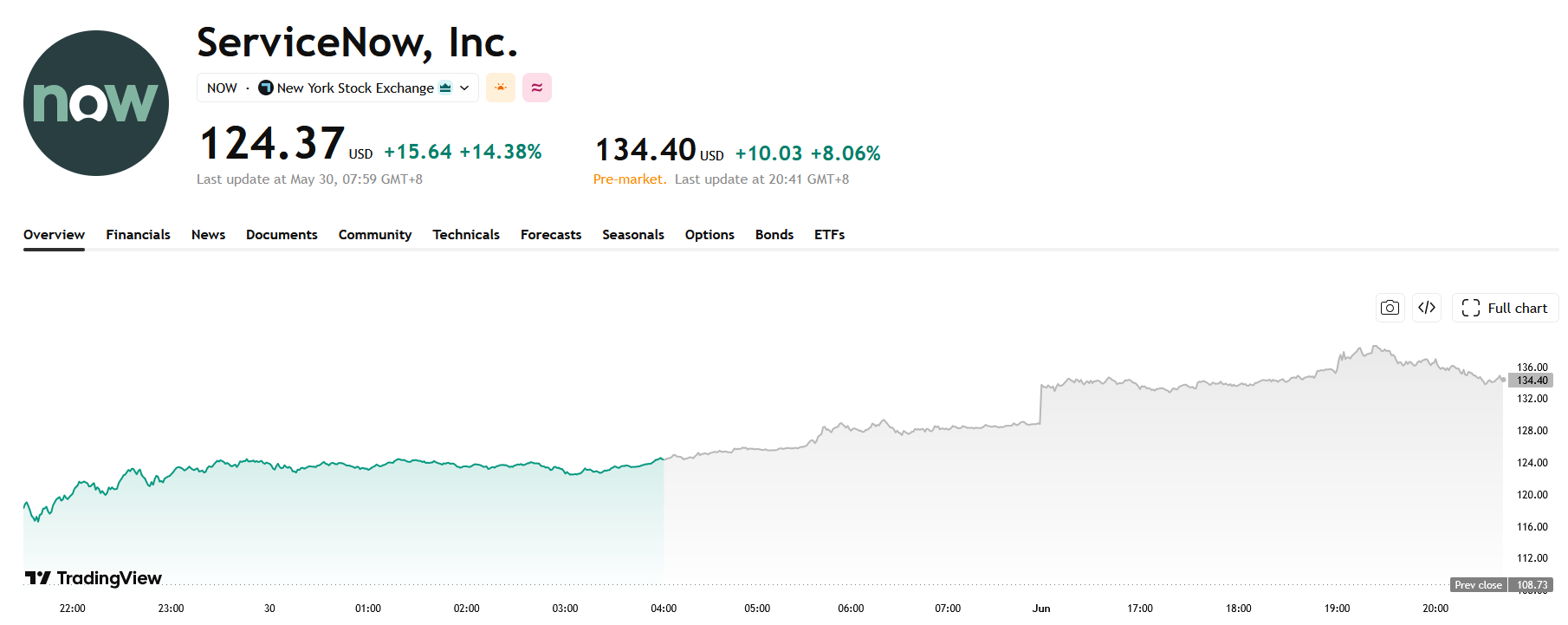
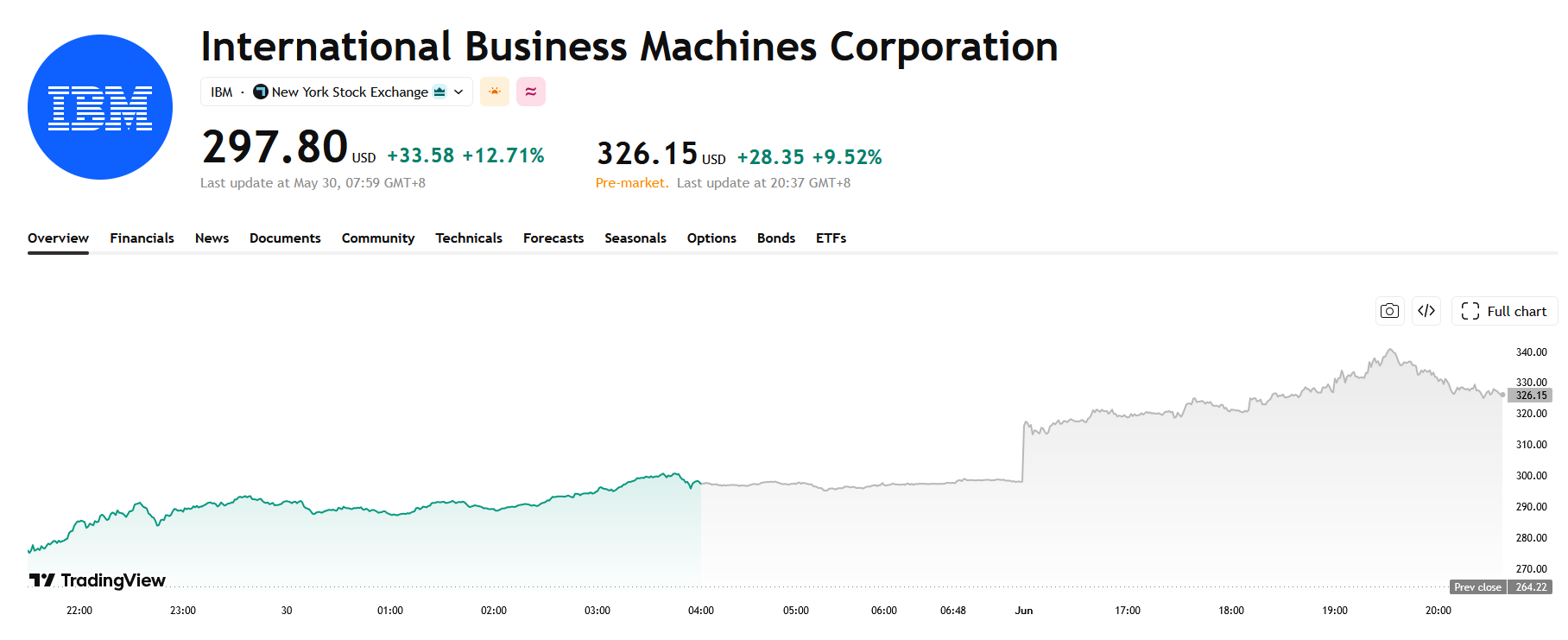
Meanwhile, Salesforce ( CRM) rose 6.5%, Atlassian ( TEAM) and HubSpot ( HUBS) each gained 6%, Adobe ( ADBE) and Workday ( WDAY) both rose 5%, and Palantir ( PLTR) also recorded a 2% gain.
In his speech, Jensen Huang stated: "For software companies, this is actually a once-in-a-lifetime opportunity. Many people ask me, with the era of AI agents approaching, will software companies go out of business? My answer is quite the opposite. Precisely because a vast number of AI agents will emerge in the future, the world will no longer be limited by the availability of human resources. Therefore, these agents will need various software tools more than ever before."
These remarks come as the debate over whether AI agents will replace traditional software applications intensifies in the market. Huang believes that the mass adoption of AI agents will not only not weaken demand for software tools, but will instead drive further expansion. Citing companies like ServiceNow as examples, he noted that leading software firms are best positioned to integrate AI tools into their existing ecosystems, optimizing workflows by fine-tuning agents rather than being disrupted by AI.
AI-Driven Valuation Recovery for Software Stocks
Looking back over the past year, software stocks faced significant valuation pressure due to the "vibe coding" craze. With products from companies like Anthropic and OpenAI, users can now build applications and websites in minutes, and market focus shifted almost entirely to the impact AI would have on the prospects of software companies, causing the share prices of some industry leaders to plummet.
Recently, however, market sentiment has shifted notably. Since hitting a low in April, the IGV has rebounded by approximately 24.6%, and software leaders like ServiceNow, which suffered large previous declines, have recovered some lost ground. Wall Street has begun to re-examine the software industry, particularly companies deeply integrated with AI.
Last week, Snowflake ( SNOW ), MongoDB ( MDB ), Okta ( OKTA) and other AI infrastructure providers continued to report earnings and guidance that exceeded expectations; Snowflake's share price rose 48.4% in a single week, while Okta's rose 33.6%.
As hardware stock valuations climb to historical highs, some capital is beginning to seek out the next layer of opportunities with more attractive valuations. The software sector had previously undergone a thorough shakeout, with many companies' valuations retreating to historical bottoms. At this stage, as long as performance does not continue to deteriorate, it is easier for the sector to absorb this returning capital.
Furthermore, recent earnings reports from a group of representative software companies have shown the market that the AI narrative is now translating more directly into growth and bookings. For example, Palantir raised its full-year revenue guidance in early May, increasing its 2026 revenue forecast to $7.65 billion–$7.66 billion, with first-quarter revenue growing 85% year-over-year and U.S. commercial revenue surging 133%.
This AI-driven industry transformation may be redefining the value of software companies. Those that can actively embrace the AI transition and integrate agent technology into their product ecosystems will not only avoid being rendered obsolete but will instead become beneficiaries of the AI wave. As Jensen Huang noted, a future where software and AI thrive in symbiosis is already clearly visible.
Recommended Articles


