


UnitedHealth Just Proved Warren Buffett Right -- Again
Key Points
UnitedHealth Group was struggling when Buffett bought the stock last year.
The healthcare giant's Q1 results announced on Tuesday appear to indicate the start of a turnaround.
Buffett's strategy of buying good businesses on sale while ignoring the noise appears to be paying off yet again.
- 10 stocks we like better than UnitedHealth Group ›
Flashback to the second quarter of last year. The wheels seemed to be coming off for UnitedHealth Group (NYSE: UNH). The healthcare giant first revised its full-year outlook downward, then yanked the guidance altogether. Its CEO was shown the exit door. Reports surfaced about an investigation by the U.S. Department of Justice. UnitedHealth's stock was sinking fast.
But there was at least one major investor who wasn't worried. Warren Buffett initiated a $1.6 billion stake in the health insurance stock for Berkshire Hathaway's (NYSE: BRKA) (NYSE: BRKB) portfolio. Buffett saw an overreaction related to temporary issues facing a company that remained fundamentally strong.
Will AI create the world's first trillionaire? Our team just released a report on the one little-known company, called an "Indispensable Monopoly" providing the critical technology Nvidia and Intel both need. Continue »
Now, let's return to the present. UnitedHealth Group reported its first-quarter results on Wednesday. And the investing world got to see why Buffett earned the nickname "the Oracle of Omaha." UnitedHealth proved Buffett right -- again.
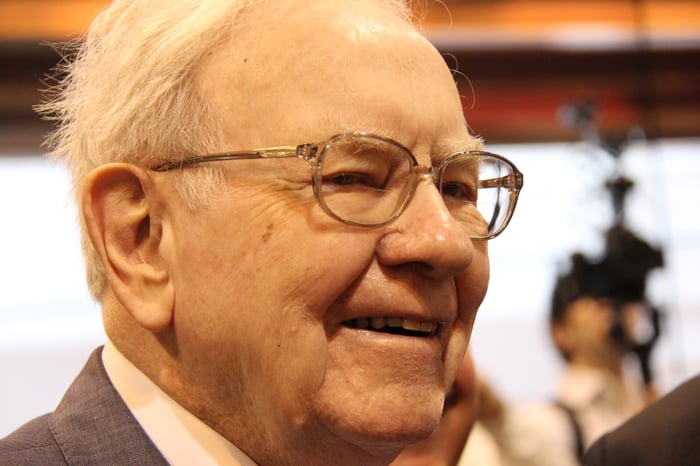
Image source: The Motley Fool.
Anatomy of a turnaround
Berkshire Hathaway is a leader in the property & casualty (P&C) insurance market. Although P&C is different from health insurance, Buffett knew of one common denominator: when insurers' bottom lines suffer, they can nearly always raise rates to fix the problem.
UnitedHealth said last year that it planned to raise rates. It followed through with that promise, and it showed in the Q1 results. The company's medical cost ratio (calculated by dividing total medical care costs by total premium revenue collected, less taxes and fees) fell from 84.8% in the prior-year period to 83.9% in the recent quarter.
This improvement wasn't the result of declining medical costs. Tim Noel, CEO of the company's UnitedHealthcare business, said in the Q1 earnings call, "We continue to see the utilization patterns continuing with high, elevated levels that we experienced in 2025."
UnitedHealth Group delivered better-than-expected revenue and earnings in Q1. The company also raised its full-year earnings guidance. CEO Stephen Hemsley painted a picture in the earnings call of the early stages of a bona fide turnaround story.
Chalk up another good call for Buffett
UnitedHealth's Q1 update was a big win for the company and its shareholders. It should also serve as a reminder of why Buffett's investing strategy works.
Buffett didn't pay attention to the noise last year. He didn't worry about the uncertainty. The legendary investor understood UnitedHealth's business well enough to realize that its issues were only temporary. He also did enough research to know the company remained financially strong.
By the way, Buffett didn't panic and sell earlier this year when the Centers for Medicare and Medicaid Services (CMS) announced ridiculously low proposed Medicare Advantage rates for 2027. He waited. CMS ultimately came back with much higher rates.
The big takeaway for investors here is to buy great businesses when they're on sale and hold the stocks through any turbulence. This approach has paid off for Buffett over the long term. It can pay off for other investors, too.
Should you buy stock in UnitedHealth Group right now?
Before you buy stock in UnitedHealth Group, consider this:
The Motley Fool Stock Advisor analyst team just identified what they believe are the 10 best stocks for investors to buy now… and UnitedHealth Group wasn’t one of them. The 10 stocks that made the cut could produce monster returns in the coming years.
Consider when Netflix made this list on December 17, 2004... if you invested $1,000 at the time of our recommendation, you’d have $499,277!* Or when Nvidia made this list on April 15, 2005... if you invested $1,000 at the time of our recommendation, you’d have $1,225,371!*
Now, it’s worth noting Stock Advisor’s total average return is 972% — a market-crushing outperformance compared to 198% for the S&P 500. Don't miss the latest top 10 list, available with Stock Advisor, and join an investing community built by individual investors for individual investors.
See the 10 stocks »
*Stock Advisor returns as of April 23, 2026.
Keith Speights has positions in Berkshire Hathaway. The Motley Fool has positions in and recommends Berkshire Hathaway. The Motley Fool recommends UnitedHealth Group. The Motley Fool has a disclosure policy.
Recommended Articles


